That little pump tucked away in your basement or crawlspace does more than you think—it’s your home’s number one defense against flooding. For any homeowner in Salinas and Seaside, proactive sump pump maintenance is an absolute must, especially when our famous atmospheric rivers decide to roll in from the Pacific. A pump in good working order is often the only thing standing between a dry, safe home and a full-blown water damage nightmare.
Your First Line of Defense Against Monterey Bay Weather
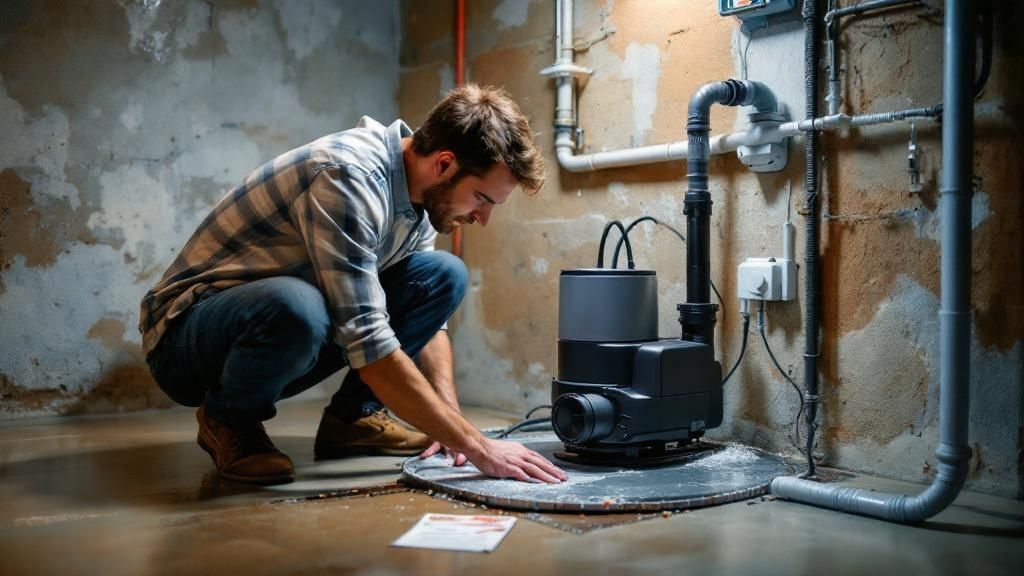
Here on the Central Coast, we get our fair share of heavy downpours that can saturate the ground in no time. A sump pump has a simple but vital job: it automatically kicks on to remove groundwater that collects in a basin (the sump pit) before it can ever find its way into your home. This is what stops basement flooding, which is hands-down one of the most destructive and expensive problems you can face as a homeowner.
As a family-owned business that's been serving Monterey County since 1988, we've seen it all. We’ve answered the frantic, late-night emergency calls in Watsonville and Prunedale where a pump that hadn't been checked in years finally gave out during a major winter storm, leading to thousands of dollars in damages.
A failed sump pump isn’t just an inconvenience; it’s a direct threat to your home’s foundation, your indoor air quality, and your family’s safety. The cost of a professional check-up is a tiny fraction of what you’d pay for water extraction, mold remediation, and structural repairs.
The Real Cost of Neglect
Putting off sump pump maintenance is a serious gamble. A flooded basement can destroy furniture, electronics, and priceless family keepsakes in a matter of minutes. But the immediate damage is just the start of the problem.
Lingering moisture creates the perfect breeding ground for dangerous mold and mildew, which can trigger serious health problems and require specialized, costly removal services. Over time, that same water can even weaken your home's structural integrity, leading to cracks in the foundation.
It’s no surprise that the demand for these pumps is soaring. In fact, the global sump pump market grew to an estimated $14.17 billion in 2024, largely because more homeowners understand the critical role they play in flood prevention.
Professional Service Is Peace of Mind
Investing in routine maintenance gives you confidence that your system is ready to work when you need it most. While you might wonder about the initial cost, understanding the factors that influence the cost of professional sump pump services helps you budget for this essential home protection.
It's a small, proactive step that lets you rest easy, knowing your home in Carmel-by-the-Sea or Pacific Grove is protected from whatever the next big storm throws at us.
A Seasonal Maintenance Plan for Your Monterey Bay Home
Your sump pump’s needs change right along with our local Monterey Bay seasons. A little bit of proactive attention can make a world of difference, making sure your pump is ready for our intense winter rains instead of just sitting dormant during the dry summers. Honestly, having a simple seasonal rhythm for sump pump maintenance is one of the smartest things a homeowner in Carmel Valley or Castroville can do.
This plan isn't about getting your hands dirty with complex repairs. It's about awareness. It’s knowing what to look for so you can spot trouble early and call a professional before a small problem turns into a watery catastrophe.
Prepping for the Rainy Season (Late Summer/Early Fall)
As summer starts to wind down, it's the perfect time to get your pump ready for the demanding wet season just around the corner. This is when our phones at Alvarez Plumbing really start to light up, as savvy homeowners know the downpours are coming.
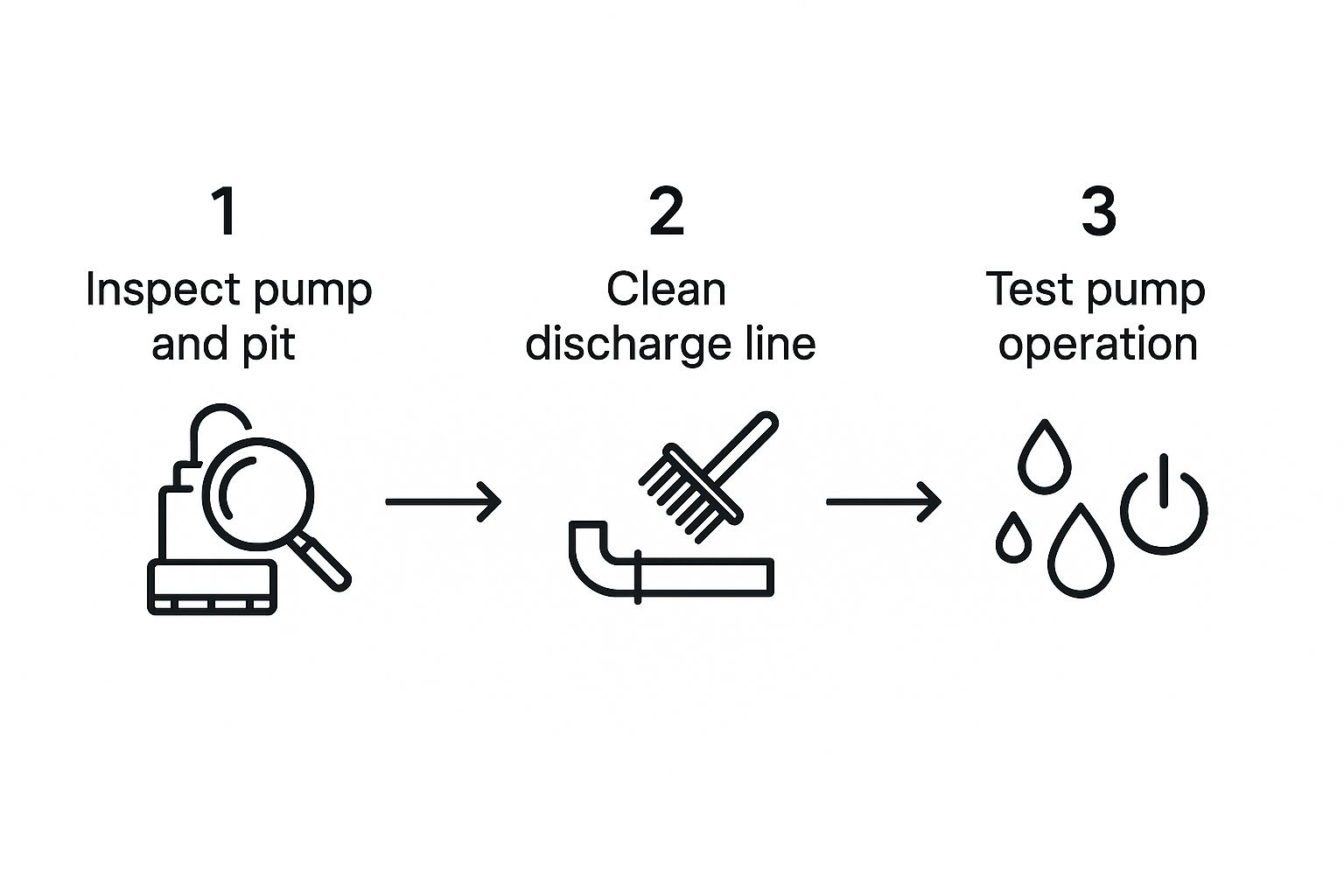
Before that first big storm rolls in, a few quick checks are in order. This isn't a DIY guide, but a quick visual inspection can help you spot obvious red flags.
- Clear the Discharge Line: Briefly check where the pump’s discharge pipe lets water out. Ensure it's clear of leaves, built-up dirt, or even animal nests that could cause a serious blockage.
- Check the Power Source: Make sure the pump is plugged securely into a working ground-fault circuit interrupter (GFCI) outlet.
- A Quick Visual Inspection: Peer down into the sump pit. Obvious debris like small rocks, sediment, or kids' toys that might have fallen in can jam the float switch or damage the pump's impeller.
This infographic gives you a simple visual of the key maintenance checks.
If you notice anything amiss during these brief checks, it's a clear sign to call a licensed plumber. That's the foundation of keeping your system reliable when you need it most.
Post-Rainy Season Check-Up (Late Spring)
Once the heavy rains have finally passed, it's a great idea to schedule a professional once-over. Your pump has worked hard all winter, and it deserves expert attention to make sure it's clean and ready for the drier months ahead.
A professional tune-up is the only way to be certain your pump's electrical components and mechanical parts are in top condition. A simple visual check can’t spot a worn-out motor bearing or a deteriorating check valve.
A huge part of this check-up involves ensuring all your drainage systems are working as they should. If you're worried about hidden clogs or notice things are draining slowly, you can get more details in our guide on how to avoid floods with proper drain maintenance.
While your own seasonal awareness is fantastic for spotting obvious problems, it just can't replace an expert's eye. Since 1988, our family has been helping homeowners all across Monterey County with professional tune-ups that verify the system’s complete mechanical and electrical health. We make sure your pump is truly ready for anything, giving you that priceless peace of mind all year long.
Recognizing The Warning Signs Of Sump Pump Failure

A sump pump that’s on its last legs will almost never quit without giving you a few hints first. In our experience, learning to "listen" to your system is one of the most crucial parts of effective sump pump maintenance. These little clues are your chance to call for help before your basement or crawlspace is under inches of water.
Sure, the most obvious sign of failure is a pump that won't turn on at all. But there are much quieter, more subtle signs that scream trouble to a professional. Paying attention can be the difference between a simple repair and a full-blown flood emergency—something no homeowner in the Marina or Seaside area ever wants to deal with.
Strange Noises And Excessive Vibration
Your sump pump should be a quiet workhorse. If you suddenly hear new or unusual sounds coming from the pit, it's time to call in a pro.
- Grinding or Rattling: This often points directly to a jammed or damaged impeller, which is the spinning part that shoves water out. Debris like small rocks or kids' toys getting into the pit is a common cause.
- Loud Humming: A strong, persistent hum can signal that the motor is struggling or about to burn out.
- Excessive Vibration: If the pump looks like it's trying to shake itself apart when it runs, the impeller is likely bent or broken, throwing the whole unit off balance.
These aren't just annoying background noises. They're audible cries for help from a machine under serious mechanical stress. Ignoring them is just asking for a breakdown during the next big storm.
A Real-World Example From Watsonville
We once got a call from a Watsonville homeowner who’d been hearing a strange gurgling sound for weeks. They thought it was just the pump being noisy. It turned out to be a severely clogged discharge line. The pump was trying its best, but the water had nowhere to go. We cleared it just in time before a storm hit, preventing what would have been a serious flood.
Irregular Pumping Cycles
The rhythm of your pump is another dead giveaway. If its normal operating cycle changes, that’s a major red flag. For instance, a pump that runs constantly, even when it’s bone dry outside, might have a stuck float switch or a bad check valve that's letting all the water flow right back into the pit. That kind of non-stop operation will fry the motor in no time.
On the other hand, a pump that kicks on for very short, frequent bursts—a problem we call short-cycling—is also a sign of trouble. This can be caused by a float switch that's set wrong or a discharge line that's partially blocked.
If you spot any of these warning signs, it’s time to take action. A professional inspection can get to the root of the problem and tell you if a repair will do the trick or if a full replacement is the smarter, more cost-effective move. You can learn more about the factors that influence the cost of professional sump pump services to get a better idea of your options. Don't just cross your fingers and hope the problem goes away—in plumbing, it rarely does.
What a Professional Sump Pump Inspection Includes
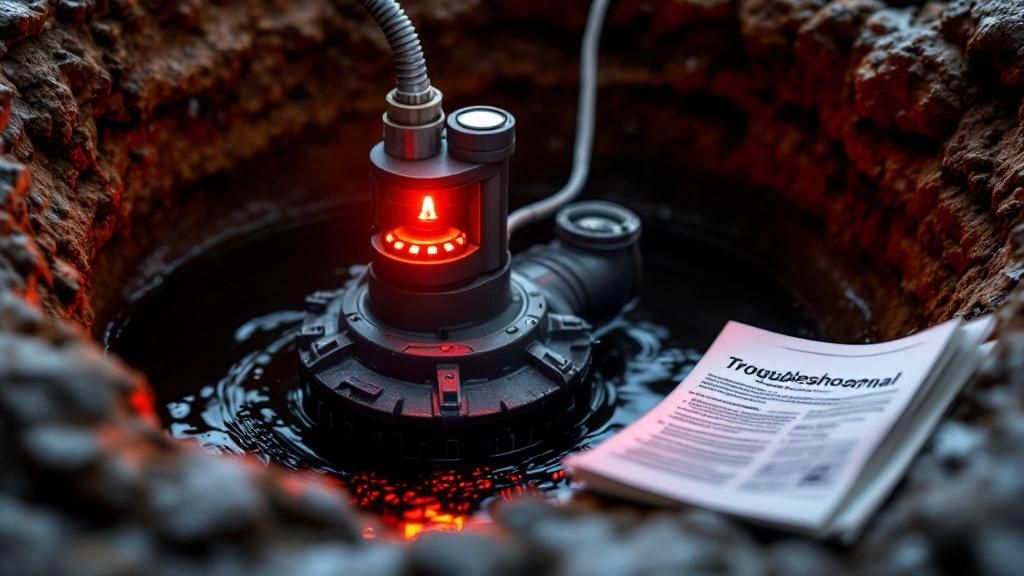
So, you’ve decided to book a professional service call. Smart move. But what actually happens when an Alvarez Plumbing technician shows up? Our goal is to go way beyond a quick glance. We perform a deep, systematic inspection to make sure your sump pump is reliable, safe, and ready for whatever Mother Nature throws at it. This is where our 35+ years of hands-on experience really comes into play.
A professional inspection isn't just a reaction to a problem; it's a proactive investment in preventing a catastrophe. It's no surprise the industrial sump pump market is valued at around $3.5 billion in 2024. Businesses know that preventive maintenance is the key to avoiding expensive damage and downtime. For homeowners, the logic is exactly the same—prevention is always cheaper and less stressful than an emergency flood. You can learn more about how maintenance impacts large-scale systems in this market report.
Going Beyond the Basics
While your own quick visual checks are great for catching obvious problems, our professional sump pump maintenance gets into the guts of the machine—the mechanical and electrical systems. We don’t just look. We test, we clean, and we verify every single critical part is working exactly as designed.
Here’s a glimpse of what our comprehensive service covers:
- Deep Cleaning the Sump Pit: First things first, we pull the pump out to get full access to the pit. We then get to work clearing out all the gunk—sediment, gravel, and sludge—that’s built up over time. This stuff can get sucked into the pump and absolutely shred the impeller.
- Inspecting the Impeller and Screen: With the pump out, we meticulously clean and check the impeller, which is the spinning component that actually shoves water out. Any damage or clogging here is a primary cause of pump failure.
- Verifying the Check Valve: This little part is a big deal. It’s a one-way valve that stops water in the discharge pipe from flowing right back into the pit after the pump cycles off. A bad check valve forces your pump to work way harder, drastically shortening its lifespan.
A professional inspection is designed to catch the silent problems. Corrosion on a wire or a weakening motor won't make a sound until it's too late. We find these issues before they can cause a flood.
Electrical Safety and Backup System Testing
The job isn't finished until we’ve made sure the entire system is electrically sound and your backup is ready to roll. This is especially critical for our coastal communities.
Living in places like Pacific Grove and Marina means dealing with salty air, which can speed up corrosion on electrical connections. This isn't just a pump failure risk; it's a serious fire hazard. We carefully inspect all the wiring, plugs, and the GFCI outlet to make sure they are safe and secure.
Finally, we put the battery backup system through its paces. We simulate a power outage to confirm the backup pump kicks on instantly and runs strong. We also test the battery’s health and clean the terminals, ensuring you have a reliable second line of defense. It’s this level of detail that delivers true peace of mind.
The Critical Role of Battery Backups and Alarms
When a classic Central Coast winter storm barrels in off the Pacific, it often brings more than just heavy rain—it brings power outages. We’ve all been there. One minute you’re listening to the wind and rain, the next, everything goes dark and silent. This is the exact moment a battery backup for your sump pump goes from a "nice-to-have" feature to an absolute must-have.
Your primary sump pump runs on electricity, plain and simple. When the power goes out, it becomes useless—just a piece of equipment sitting in a pit as water levels rise. A backup system is your home's insurance policy against this all-too-common scenario, giving you protection right when you need it most.
Why a Backup System Is Non-Negotiable
Just think about the intense squalls that pound coastal communities like Carmel-by-the-Sea or Pacific Grove. Those are the times your pump is working its hardest, and it's also when the power grid is most likely to fail. A professionally installed backup system is the only way to guarantee that even when the lights go out, your basement stays dry.
You have a couple of options for backups, but the most common is a secondary, battery-powered pump.
- Battery Backup Pumps: This is a separate, smaller pump that sits right next to your main one. It’s wired to a heavy-duty, deep-cycle marine battery. The instant it senses a power failure, it kicks on automatically to take over the job.
- Water-Powered Pumps: These are less common but clever. They use your home's own municipal water pressure to create a siphon effect that pulls water out of the sump pit. While they don't need electricity or batteries, they can use a fair amount of city water to operate.
A backup system isn't just for power outages. It also acts as a critical failsafe if your primary pump gives out for any other reason, like a motor burning out or an impeller getting jammed.
The Rise of Smart Alarms
Beyond a backup pump, a high-water alarm is another essential piece of the sump pump maintenance puzzle. A basic alarm will shriek loudly inside your home if the water level rises too high, giving you a heads-up that something's wrong. But today's technology offers even more peace of mind.
Modern smart-home alarms connect to your Wi-Fi and shoot a notification straight to your phone the second a problem is detected. Whether you're at work in Salinas or away for the weekend, you'll know immediately that your sump pump needs attention. This early warning gives you precious time to act and head off a disaster. If you get an alert, our team is always on standby for 24/7 emergency plumbing services to protect your home.
At the end of the day, a power outage during a heavy storm is a high-stakes situation. Relying on a single, electric-powered pump is a gamble no homeowner should be willing to take. Investing in a quality battery backup and a smart alarm system is the only way to be truly certain your home is protected.
Your Sump Pump Questions Answered
We get it. When you’re a homeowner, you’ve got questions about keeping your property safe. After years of serving our neighbors here in Monterey County since 1988, we’ve heard just about all of them. Here are some straight-up, expert answers to the most common things people ask us about sump pump maintenance.
How Often Should I Service My Sump Pump?
For most homes here in Salinas and the surrounding communities, we strongly recommend getting a professional inspection and tune-up from a licensed plumber at least once a year. The perfect time to get this on the calendar is late summer or early fall, just before our wet winter season decides to show up.
Now, if your home is sitting in a known high water table area, like some parts of Watsonville or Castroville, or if you notice your pump kicking on a lot even during light rain, it’s a smart move to schedule checks twice a year. That extra check-in provides a serious layer of protection and peace of mind.
Why Does My Sump Pit Smell Like Mildew?
That musty, mildewy smell? That's definitely not normal—it's your sump pump's way of telling you something is wrong. Stagnant water left sitting in the sump pit during our dry spells can quickly turn into a breeding ground for mold and bacteria. That's not just unpleasant; it can seriously impact your home's indoor air quality.
A persistent, nasty odor could also be a red flag for a more serious problem, like a broken seal in the system allowing sewer gas to sneak into your home. This is more than a bad smell; it's a potential health hazard that needs a professional to look at it, and fast.
During a maintenance visit, our technicians will give the pit a thorough cleaning and inspect the whole system to pinpoint and wipe out the source of the smell. It's a simple step, but it’s crucial for keeping the air in your home clean and safe for your family.
Can I Just Install a New Sump Pump Myself?
Look, while it might seem like a great way to save a few bucks, we have to strongly advise against DIY sump pump installation. This is one of those jobs where having a pro really, truly matters. A proper installation isn't just about connecting a few pipes; it requires a solid understanding of plumbing, electrical work, and the specific local building codes in places like Monterey and Carmel-by-the-Sea.
An incorrect installation can spiral into a whole bunch of expensive headaches:
- Premature Pump Failure: If a pump isn't set up just right, it can burn out its motor or simply fail to activate when you need it most.
- Serious Electrical Hazards: Messing up the wiring is a huge risk. It can lead to shocks or, even worse, a fire.
- Insurance Complications: Let’s say a DIY installation fails and causes a flood. There's a good chance your homeowner's insurance policy won't cover the damages.
At the end of the day, a pump failure often turns into an urgent situation. It helps to understand what counts as a plumbing emergency so you know when to make that call. This is a job best left to the licensed, experienced professionals on our team at Alvarez Plumbing to ensure it's done right the first time.
Don't leave your home’s safety to chance. For expert sump pump maintenance and the peace of mind that comes with it, trust the local team that's been serving Monterey County since 1988. Contact Alvarez Plumbing today to schedule your service.