Beneath your home in Salinas or Carmel-by-the-Sea, a network of pipes works silently, all thanks to one unchanging force: gravity. But for gravity to do its job, your drain pipes need just the right slope—what we plumbers call drainage pipe pitch. Get it wrong, and you’ve got the recipe for plumbing headaches, from the slow drains we see in Seaside and Castroville to sewer backups when El Niño storms batter Monterey County.
Why Drainage Pipe Pitch Is Your Plumbing’s Foundation
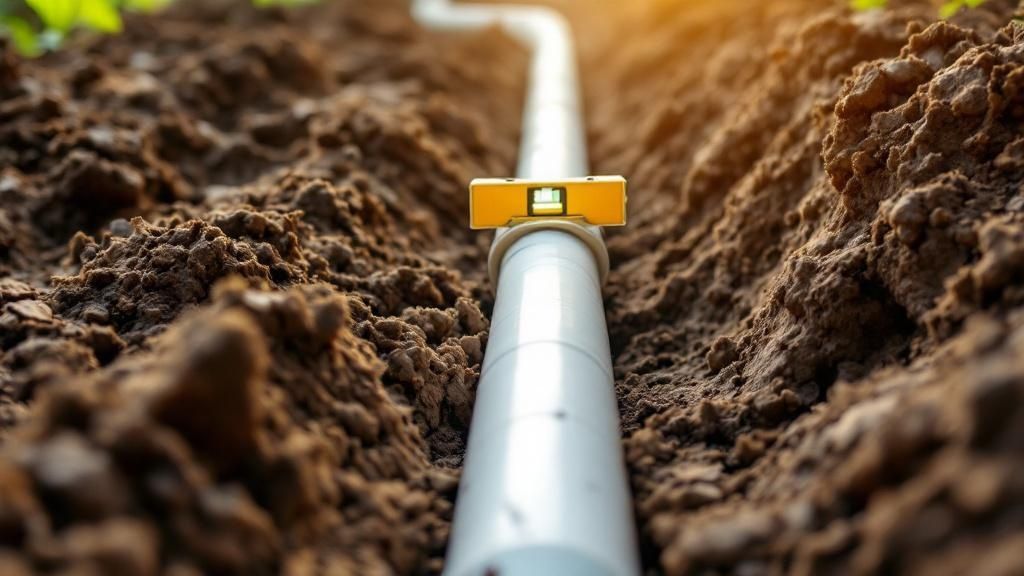
Think of your home’s drainage system as a miniature, private river flowing downhill. For that river to deliver water and solids away from your foundation, it needs a consistent, gentle slope (per Salinas Plumbing Code Section 904.1 and Monterey County Code Title 9.24). This pitch—our drainage pipe pitch—is the single most critical factor in preventing clogs, odors, and even structural damage.
We’ve seen firsthand—working near the Monterey Bay Aquarium and Old Fisherman’s Wharf—how a tiny error in slope can snowball into a major disaster. From Prunedale farms to hillside homes in Pacific Grove, a mis-pitched pipe is a ticking time bomb.
The Science Behind the Slope
It sounds simple, but calculating the perfect slope blends engineering standards with on-the-ground know-how. The Uniform Plumbing Code, the International Plumbing Code, and California Title 24 all call for a minimum slope of ¼ inch per foot (about a 2% grade) on most residential drain lines. That grade moves wastewater fast enough to carry solids but not so fast that water outruns debris.
What Happens When the Pitch Is Wrong?
An incorrect slope is a recipe for a whole host of frustrating—and messy—problems. Knowing what can go wrong is the first step toward a professional solution.
- Slope is too shallow: Water barely crawls along, letting grease, toilet paper, and food scraps build up. That’s how folks in Watsonville and Marina end up with recurring clogs and sewer smells.
- Slope is too steep: Water races away, leaving solids stranded high and dry. You get the same stubborn blockage.
- A “belly” in the line: Shifting soils—common around Carmel Valley and unincorporated pockets near Spreckels—create a sag where waste pools. This permanent dip is a magnet for clogs.
When it comes to a healthy plumbing system, precision is everything. A pipe that’s off by even a fraction of an inch per foot can throw the drainage for an entire section of your house out of whack.
If you’re seeing slow drains, gurgling toilets, or mysterious odors, it’s time for a video camera inspection. That’s the only way to know if your drainage pipe pitch is the real culprit.
The Hidden Risks of an Improper Pipe Slope
Getting the drainage pipe pitch right is a game of precision. When that slope is wrong, it sets off a domino effect that can range from annoying to catastrophic. Imagine a pipe that’s too flat under your Seaside kitchen—wastewater slows to a crawl, leaving grease and food particles behind until you’ve got a clog no store-bought cleaner can touch.
When Too Steep Is Just as Bad
It’s a common misconception that steeper is better. In Carmel-by-the-Sea and Prunedale, we’ve removed pipes pitched so aggressively that liquids zipped away and solids clumped into the worst blockages we’ve seen.
Environmental and Structural Dangers
Standing water in a poorly pitched pipe invites trouble in coastal neighborhoods like Pacific Grove:
- Tree Root Intrusion: Leaky sections lure roots from Monterey cypress and eucalyptus, which wrap around and crush pipes.
- Soil Instability: Sandy loam near Castroville or clay in Salinas can shift when it gets over-saturated. That movement undermines your foundation and landscaping.
A gurgle or persistent sewer smell is your system’s early warning. Don’t ignore it—address it before heavy winter rains or spring runoff turn it into a major flood event.
Our team solves these issues with professional drain cleaning in Monterey before they get a chance to escalate.
How Professionals Ensure the Perfect Drainage Slope
Precision isn’t guesswork. To hit that 2 ft/sec self-cleansing flow in a 4-inch sewer line, you need a slope between 1/8 and 1/4 inch per foot, depending on pipe size and code. Here’s how we guarantee it:
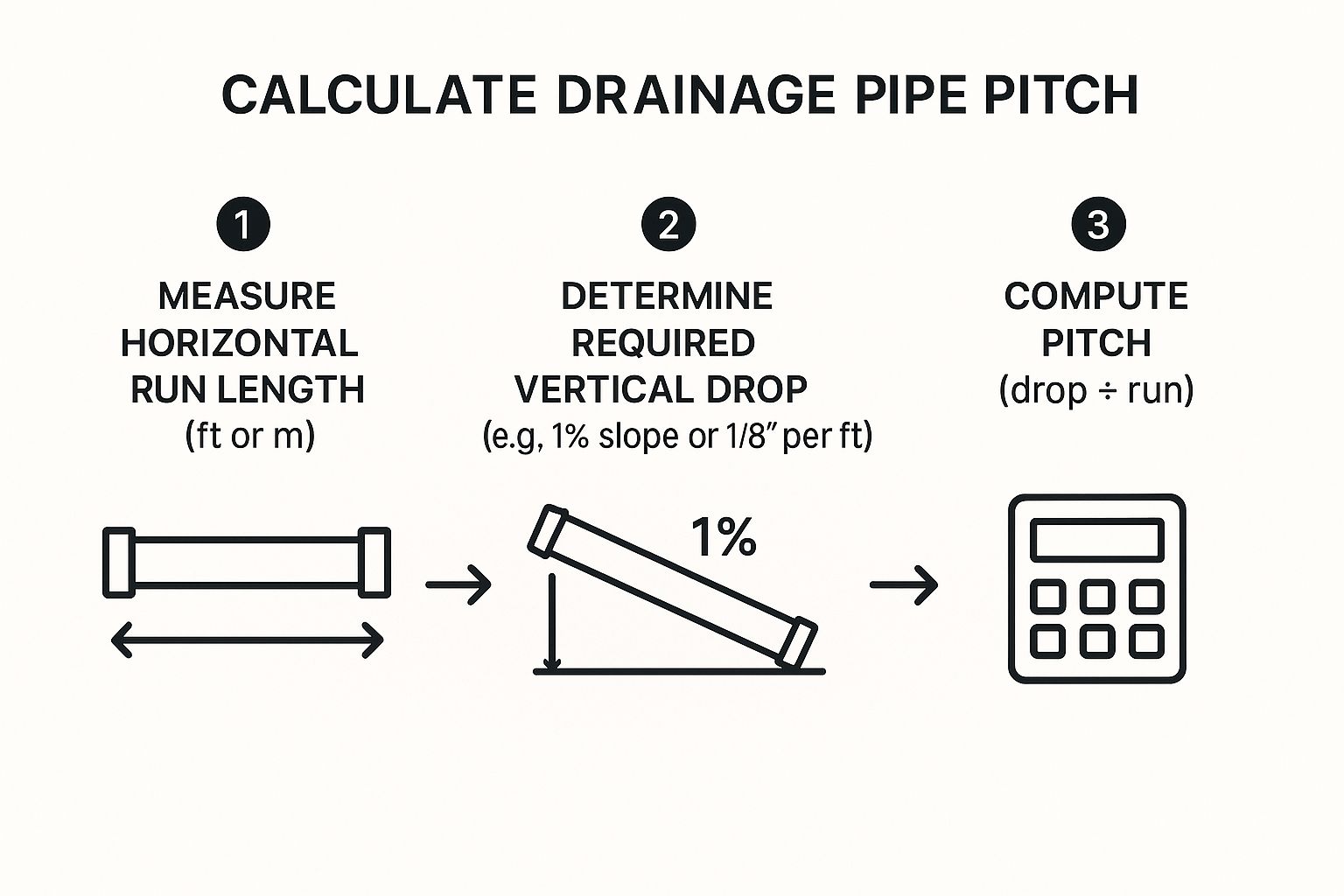
- Measure the run: We calculate the total horizontal distance and vertical drop required under Monterey County permits.
- Set grade with laser and transit levels: One small dip or “belly” ruins the flow.
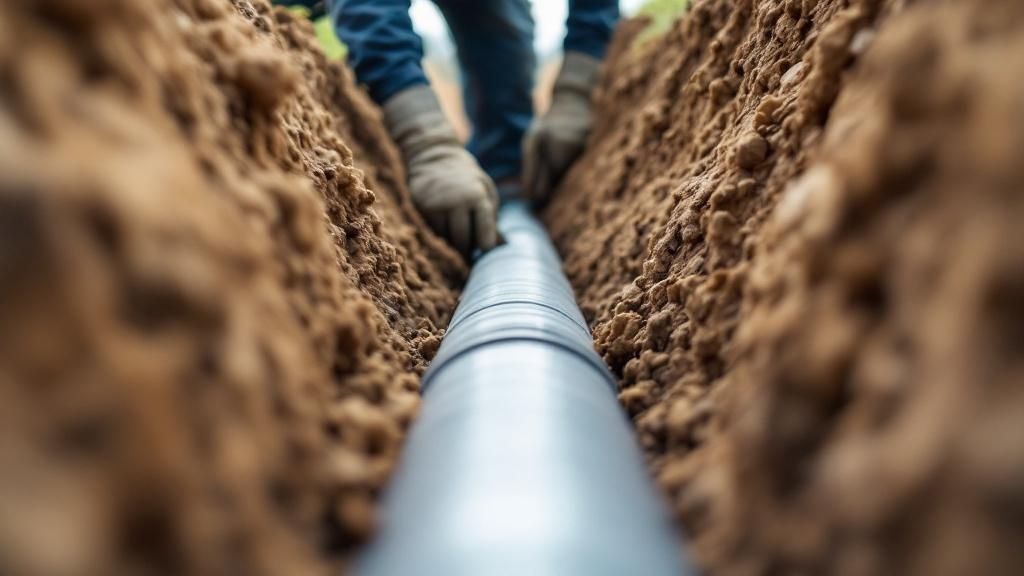
- Compact and support: Proper trenching depth, backfill compaction, and pipe hangers prevent future sag.
- Verify with camera: We re-inspect to confirm a consistent slope from end to end.
This isn’t a weekend DIY project. Mistakes can fail inspections, force a full re-dig, and trigger chronic plumbing problems. Fixing an incorrect slope always costs more and takes longer than getting it right the first time.
Common Pitch Problems and Professional Solutions
| Symptom in Your Home | Likely Pitch Problem | How Alvarez Plumbing Solves It |
|---|---|---|
| Frequent Clogs & Slow Drains | Too Flat: Not enough gravity to move solids. | Video camera inspection pinpoints the “belly.” We re-trench and re-lay at the correct grade. |
| Gurgling Noises & Sewer Odors | Too Steep: Water outruns solids. | Camera inspection spots fast-flow areas. We adjust the pitch to slow it to 2 ft/sec. |
| Backup in Showers/Tubs | Sagging Pipe (“Belly”) | HD cameras find the exact dip. We excavate, re-support, and re-grade. |
| Wet Spots or Foundation Issues | Negative Slope (Wrong Direction) | We map the line with locating gear, then re-pipe to ensure water flows away from the house. |
Before any major work—or if you’re fed up with clogs—get a professional look. Learn what you need to know about sewer drain inspections so you can tackle the real issue once and for all.
Why Proper Drainage Is a Community Priority
Your home’s drainage is the first link in a chain that ties into Salinas and Monterey municipal storm drains. When one system fails—thanks to a bad drainage pipe pitch—it can contribute to neighborhood flooding from Marina to Carmel Valley.
A good slope eases the load on public infrastructure, especially when our winter rains peak during Santa Lucia winds or spring runoff up Big Sur Canyon. It’s not just local: the global drainage market hit USD 8.5 billion in 2023 and is set to reach USD 12.6 billion by 2033 (The Brainy Insights). That boom underscores how crucial basics like proper slope are everywhere.
A well-installed drainage system protects your property, our shared infrastructure, and the precious Central Coast environment. It’s community care in action.
Stay proactive to avoid floods with proper drain maintenance. As a family-owned business since 1988, we’re committed to building a safer Monterey County—one correctly pitched pipe at a time.
Warning Signs That Point to a Pitch Problem
Your plumbing system usually whispers first: a gurgle, a trapped P-trap, or a whiff of sewer gas. When it comes to bad drainage pipe pitch, these little hints signal a much bigger issue.
- Recurring Clogs: Plunge and snake all you want, but if the same drain keeps blocking, suspect a mis-pitched main line.
- Slow Drains Everywhere: Multiple sluggish fixtures—from Salinas sinks to Watsonville tubs—point to a bad grade in the sewer main.
- Persistent Odors: Dry or siphoned P-traps let sewer gas rise when air pressure goes haywire in an improperly sloped pipe.
- Gurgling Sounds: Flush your toilet and hear a shower gurgle? That displaced air means your drain flow isn’t right.
Ignoring these signs in Carmel-by-the-Sea or Prunedale is a gamble. A slow drain today can become a sewer backup tomorrow.
Why DIY Fixes Are a Bad Idea
Chemical cleaners can clear a temporary clog, but they won’t fix a structural slope issue—and they can damage your pipes. Correcting a bad drainage pipe pitch usually means excavation, precise levelling tools, and code-compliant piping. It’s a job for licensed pros.
Learn how we handle clogged drain repair in Monterey with high-definition camera inspections that pinpoint sags, bellies, or wrong grades—then fix them for good.
Your Local Drainage Questions Answered
As a family-owned business serving Salinas, Monterey, Marina, Seaside, Prunedale, Castroville, Carmel-by-the-Sea, Carmel Valley, Pacific Grove, Watsonville, and nearby unincorporated communities since 1988, we’ve fielded dozens of questions about drainage pipe pitch. Here are the top ones:
Can a Drainage Pipe Have Too Much Slope?
Yes. A pipe pitched too sharply in areas like Pacific Grove will drain water so fast it leaves solids behind. Over time, those solids turn into the most stubborn clogs imaginable. For most residential lines, the sweet spot is a drop between 1/8 and 1/4 inch per foot.
How Do You Know If My Pipe Has a Belly?
A belly is a sag or dip that traps water and debris. The only sure way to spot one is a professional sewer camera inspection. We feed a high-def camera through your line to see real-time footage of any low spots without unnecessary digging.
A camera inspection is like an X-ray for your plumbing. It tells us exactly what’s wrong, so you avoid wasted time and money on fixes you don’t need.
My House Is Old. Should I Be Worried About Its Pipe Pitch?
If you live in a historic cottage in Carmel Valley or an early-century home in Salinas, absolutely. Ground settling, seasonal soil shifts, and root growth from mature Monterey pines can all change your original slope over decades. If your drains keep acting up, it’s smart to have the pitch professionally inspected.
A proper drainage pipe pitch is the foundation of a healthy, worry-free plumbing system. If you’re tired of slow drains, strange gurgling noises, or clogs that keep coming back in your Monterey County home, don’t wait for it to turn into a messy emergency. The expert team at Alvarez Plumbing has the local knowledge, code expertise, and professional tools to diagnose and solve the problem correctly the first time.
Ready for a permanent solution? Contact us online or give us a call today to schedule a professional drain inspection!