For any business in Monterey County, from Salinas to Carmel-by-the-Sea, your plumbing isn't just a network of pipes—it's a critical lifeline. A slow drain in a Watsonville restaurant or a tiny, hidden leak in a Seaside retail shop can snowball into a full-blown emergency, shutting down your operations and hitting you with thousands in unexpected costs. The single most effective way to sidestep these disasters is with proactive commercial plumbing maintenance, keeping your business humming along smoothly, day in and day out.
Why Proactive Plumbing Is Key For Monterey Bay Businesses

Think about the unique pressures on your commercial plumbing. A popular restaurant in Carmel-by-the-Sea is always one busy night away from a grease trap failure during tourist season. A Salinas Valley agricultural packing house can’t risk a main line clog in the middle of a frantic harvest. These are more than just minor annoyances; they're operational catastrophes that can bring a business to a dead stop.
We get it. As a family-owned company serving this community since 1988, we've seen every plumbing challenge imaginable. We've helped hotels in Pacific Grove manage high-demand water heaters and retail centers in Seaside deal with the constant wear and tear on public restrooms. The issues are as diverse as the businesses themselves.
The Shift From Reactive To Strategic
Waiting for a pipe to burst or a drain to back up is a gamble you simply can't afford. This reactive stance almost always ends in higher costs for emergency repairs, significant business downtime, and even potential health code violations. A proactive maintenance plan, on the other hand, is a strategic investment in your business’s long-term stability.
It’s about far more than just patching leaks. A truly strategic approach involves:
- Systematic Inspections: We catch small issues, like mineral buildup from our local hard water, before they become major blockages.
- Scheduled Cleaning: Services like hydro jetting for drains in Watsonville restaurants prevent the grease and food debris accumulation that inevitably leads to backups.
- Component Testing: We ensure vital equipment like backflow preventers—mandatory in many Monterey County municipalities—are working perfectly to protect public water supplies.
The real power of a maintenance plan is in changing your perspective from "expense" to "investment." You aren't just paying to fix things; you're investing in uninterrupted revenue, a safe environment for your team, and a positive experience for your customers.
The plumbing industry as a whole is moving toward smarter management. With revenue projected to hit $169.8 billion in 2025, much of that growth comes from an emphasis on efficiency and conservation. Modern maintenance now incorporates smart leak detectors and water-saving fixtures, which actively lower your day-to-day operational costs.
Reactive vs. Proactive Commercial Plumbing Approach
The difference between waiting for a disaster and preventing one is stark. The choice you make directly impacts your budget, your operations, and your stress levels. Here's a look at how the two approaches stack up.
| Concern | Reactive Approach (Emergency Call) | Proactive Approach (Maintenance Plan) |
|---|---|---|
| Cost | High emergency rates, plus potential for secondary damage repair (flooring, drywall). | Predictable, budgeted cost. A fraction of emergency repair expenses. |
| Downtime | Unplanned and immediate shutdown of operations until the problem is fixed. | Scheduled during off-hours or slow periods, resulting in zero downtime. |
| Reputation | Negative customer experiences, potential health code violations, and public complaints. | Consistent, reliable service that protects your brand and customer trust. |
| Asset Lifespan | Equipment runs to failure, leading to premature replacement and higher capital costs. | Regular upkeep extends the life of fixtures, pipes, and water heaters. |
Ultimately, a proactive plan puts you in control. You dictate the schedule and the budget, turning potential catastrophes into manageable tune-ups.
Automating For Efficiency
Just like you automate payroll or inventory, a structured maintenance plan automates your plumbing’s health checks. Nothing gets missed. By creating a predictable schedule, you can budget for the year and tackle potential issues on your own terms—not during a 2 AM emergency call. For a deeper dive into this concept, check out the real-world benefits of automating maintenance.
At the end of the day, a proactive strategy is your best defense against sudden closures and staggering repair bills. Our dedicated commercial plumbing services are designed to give you that peace of mind, tailored specifically for the demands of your Monterey County business.
Your Commercial Plumbing Maintenance Checklist
As a property manager or business owner, you don't have to be the one to fix a complex plumbing issue. Your job is to be the expert on your own building—to know what to look for, spot trouble early, and understand when it’s time to call in a professional. Think of this checklist less as a DIY guide and more as a strategic plan to protect your investment and keep business flowing smoothly.
Sure, your staff can (and should!) keep an eye out for the obvious things like a toilet that won't stop running or a dripping faucet. But true commercial plumbing maintenance goes much deeper. It takes the trained eye and specialized tools of a licensed plumber to tackle the real threats. For example, our local water is notoriously hard, and that high mineral content can quietly build up destructive scale inside your pipes and fixtures if it's not managed by a pro.
High-Traffic Restrooms
Public and employee restrooms are ground zero for plumbing problems. They see constant, heavy use, and for a busy retail center in Seaside or an office park in Salinas, having a restroom out of commission is more than an inconvenience—it’s a major disruption.
Here’s what a professional inspection should cover:
- Flushometers: These are the workhorses of any commercial toilet or urinal. We check them to make sure they aren't silently wasting water or, just as bad, failing to provide a powerful, sanitary flush.
- Fixtures and Faucets: We’re looking for the subtle, hidden leaks at the base of toilets or under sink countertops. A slow drip you never notice can easily lead to serious subfloor damage and mold growth.
- Floor Drains: It’s easy to forget about these until you really need them. Regular professional snaking is crucial to keep them clear of debris and ready to handle an overflow or mop water.
An annual professional inspection of your high-use restrooms can prevent 90% of the sudden failures that lead to closures. It's about proactive care, not reactive panic.
Commercial Kitchens and Food Service Areas
For any restaurant, café, or food processing facility from Watsonville to Carmel-by-the-Sea, the kitchen's plumbing is its lifeline. A breakdown here doesn't just halt service; it can bring on health code violations. The constant assault of grease, food solids, and high-temperature water puts an incredible strain on these systems.
A professional maintenance plan for a commercial kitchen has to include:
- Grease Traps and Interceptors: This is absolutely non-negotiable. Regular, professional pumping and cleaning is the only way to prevent nasty backups, foul odors, and expensive fines from the city. How often you need it depends entirely on your kitchen's output.
- Dishwasher Lines & Drains: The combination of hot water and food scraps can quickly degrade drain lines and cause stubborn clogs. We inspect all the connections and make sure drains are flowing exactly as they should.
- Handwashing & Food Prep Sinks: These drains take a beating from small food particles and constant soap use. Routine snaking is essential to keep them sanitary and functional.
A great way to support your professional maintenance is to create clear Standard Operating Procedures for equipment maintenance for your own team. This ensures they follow best practices for daily upkeep, which makes our job easier and your plumbing more reliable.
Utility Rooms and Mechanical Spaces
Tucked away and out of sight, the equipment in your utility room works around the clock. This is where you’ll find some of your most critical—and most expensive—plumbing assets.
- Commercial Water Heaters: We give these units a thorough check-up, looking for any sign of corrosion, testing the pressure relief valve for safety, and flushing the tank to get rid of sediment. This simple maintenance extends the heater's life and guarantees your guests or staff always have hot water.
- Backflow Prevention Devices: This is a big one. As required by Monterey County and nearly all local municipalities, these devices have to be tested once a year by a certified professional. It's a legal must-have that protects the public water supply from contamination. If you fall out of compliance, you could face hefty fines and even have your water service shut off.
- Sump Pumps: For buildings in low-lying areas or with basements, a working sump pump is your best friend during our seasonal rains. We test them professionally to ensure they’ll kick on and do their job the moment you need them to prevent a flood.
This checklist gives you a solid framework, but the most effective maintenance plan is always one that's customized to your property. For a more detailed breakdown, you can review our yearly plumbing checklist for more ideas to discuss with our team. Partnering with us means you have an expert who understands the specific demands of your Prunedale warehouse or Pacific Grove hotel, creating a plan that works for you.
A Maintenance Calendar For Monterey County Businesses
Any smart business owner knows timing is everything. When it comes to your plumbing, aligning maintenance with the seasons and your own business cycles is a game-changer. It turns what could be a reactive, emergency expense into a planned, strategic investment that protects your bottom line. We've put together a practical, year-round schedule that's built for the unique challenges we face here on the Monterey Bay.
Thinking seasonally helps you get out in front of problems before they can shut you down. Our foggy winters can be surprisingly hard on pipes, and the summer tourist rush tests every single fixture you own. Having a proactive calendar means you're always one step ahead.
This is exactly what professional, preventative maintenance looks like in action—it's the core of any solid commercial plumbing strategy.
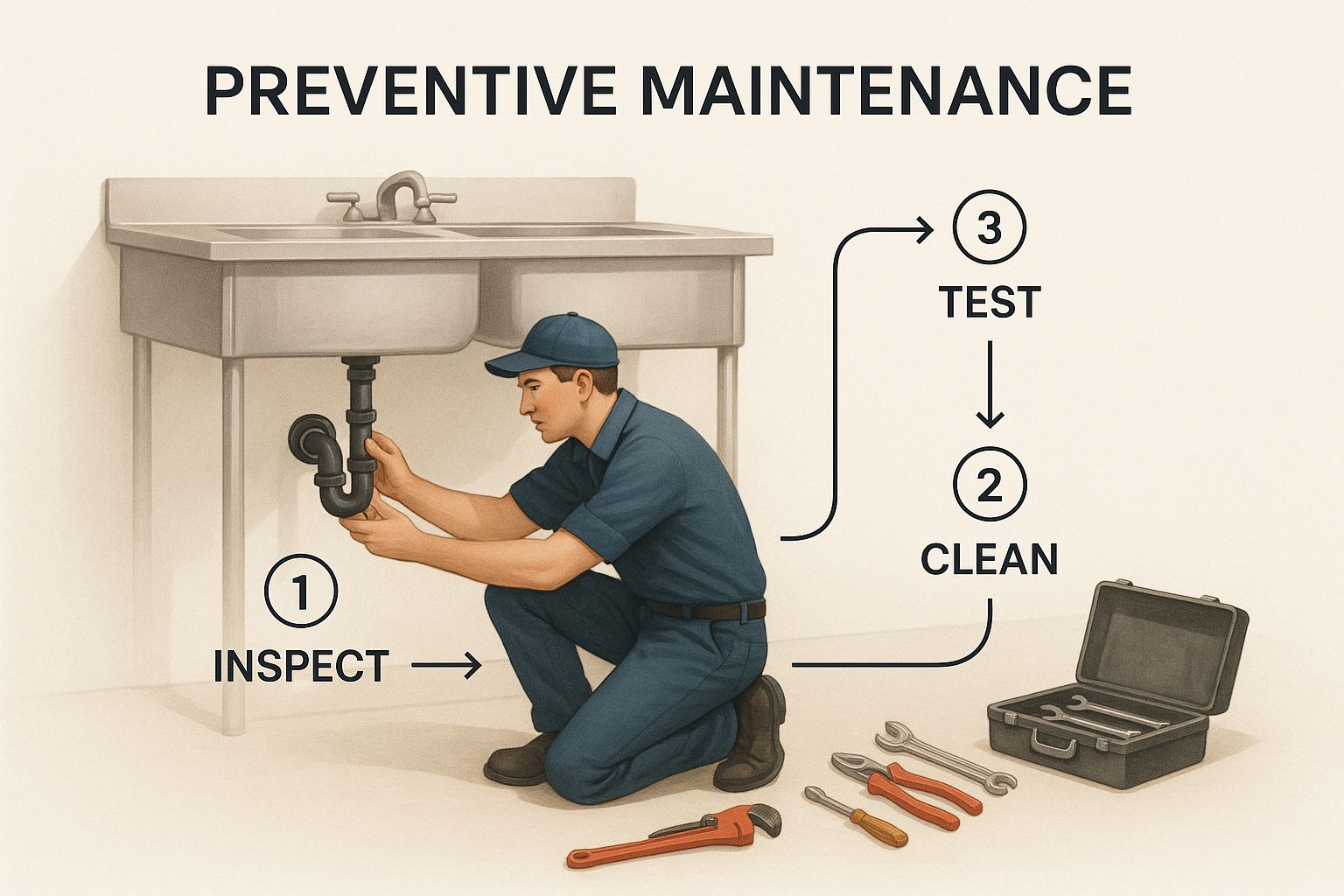
An organized, expert approach is what keeps a commercial plumbing system humming along reliably, no matter the season.
Fall Prep Before The Rush
For many businesses, especially in hospitality, autumn is the calm before the storm. As the leaves start to turn in Carmel Valley, restaurants and hotels should be thinking about one thing: the upcoming holiday rush.
This is the perfect window to schedule hydro jetting for your main drain lines. Clearing out a year’s worth of accumulated grease, food solids, and debris before you’re slammed with Thanksgiving and Christmas parties is one of the smartest moves you can make. It all but guarantees you won't face a catastrophic backup during your most profitable weeks of the year.
Winter Watch For Cold And Rain
Our winters might be mild compared to the rest of the country, but they bring their own set of plumbing headaches. For businesses in cooler spots like Prunedale or the higher elevations of Carmel Valley, a cold snap can still pose a real threat to exposed pipes.
In winter, our focus pivots to protection and proper drainage:
- Pipe Insulation: We get hands-on, checking and beefing up the insulation on any vulnerable exterior pipes or those running through unheated spaces. This simple step is crucial to prevent freezing and bursting.
- Storm Drain Clearing: Once the rains start, storm drains clogged with autumn leaves and debris can quickly cause parking lot floods and water damage. We make sure they're clear and ready to handle whatever the season throws at them.
A single flooded entryway can shut down a business for a day or more, costing thousands in lost revenue and cleanup. A simple pre-season drain check is your best insurance policy.
We've seen it happen time and again. If you want to dive deeper into how professional cleaning prevents these exact nightmares, you can learn more here about how to avoid floods with proper drain maintenance.
Spring Cleaning And Compliance
When spring rolls around, it's time for renewal, efficiency checks, and taking care of legal requirements. This is when we handle the mandatory system tests that protect not just your business, but the community’s water supply as well.
This is our prime season for performing state-mandated annual backflow prevention testing for clients all over the Monterey Peninsula, from farms in Castroville to medical buildings in Salinas. It's also the perfect time to check and tune up irrigation systems to make sure they're not wasting water, a major concern for every business in our drought-conscious region.
Summer Readiness For Peak Season
Summer in Monterey means one thing: tourists. And lots of them. That influx puts an enormous strain on your plumbing, especially for businesses along Cannery Row or in downtown Pacific Grove, where restroom and kitchen use can skyrocket.
Our summer readiness plan is all about making sure your systems can take the heat. We'll stress-test high-use fixtures, check your water heaters to ensure you have a constant supply of hot water for guests, and confirm your kitchen drains are flowing freely. This proactive once-over helps guarantee your business runs smoothly during the most critical revenue-generating season.
Keeping up with a schedule like this year after year can be a lot to manage on top of everything else. Some businesses find it helpful to automate scheduling and reminders. For example, looking into how document automation software can create recurring tasks might be a good way to make sure these critical maintenance dates never get missed.
Understanding Your Commercial Plumbing Systems
To keep your commercial plumbing in top shape, you first have to know exactly what you’re dealing with. It’s a common mistake to think of commercial systems as just bigger versions of what you have at home. The reality is they are specialized, heavy-duty workhorses designed for constant use while meeting strict public health codes.
Getting a handle on these core components is the first real step toward a smart maintenance plan. It helps you see how a seemingly small issue can ripple outward, impacting your entire operation. This is especially true for the unique equipment you find in commercial spaces, like grease traps and backflow preventers.
The Critical Role of Grease Traps
For any business that serves food, from a small Marina cafe to a large Seaside restaurant, the grease trap is an absolute unsung hero. These devices are essential for capturing fats, oils, and grease (FOG) before they have a chance to escape into the main sewer lines. If that FOG gets out, it cools, hardens, and creates monster blockages that can shut down your drains and cause major problems for the city's sewer system.
Because of this risk, local health departments are incredibly strict about their upkeep. Professional cleaning isn't just a good idea—it's a mandatory requirement. Fall behind, and you could be looking at serious fines or even a forced closure. Your maintenance plan has to include scheduled pumping and inspection to keep your trap working and your business compliant.
Commercial Water Heaters: A Different Beast
Think about the water heater in a Monterey hotel or a Salinas gym. It works far harder than any residential unit, needing to supply a constant, reliable stream of hot water to potentially hundreds of people every single day. A failure isn't just an inconvenience; it means angry customers, damaging online reviews, and a direct hit to your bottom line.
In the commercial world, you'll typically run into two main types:
- Tank-Style Heaters: These are the big, reliable workhorses that store a large volume of hot water, ready for periods of high demand. Their biggest maintenance need is routine flushing to clear out sediment buildup, a common headache given our local water supply.
- Tankless Heaters: These modern units heat water on demand, which makes them incredibly energy-efficient while providing a limitless supply. To keep them running smoothly, they need periodic descaling to prevent mineral deposits from clogging up the works.
If you start noticing inconsistent water temperatures or hearing strange noises, those are clear warning signs. It’s your system telling you it needs professional attention right away. You can find more information on our various plumbing services in Salinas, CA, and the surrounding areas to see how we can help.
Backflow Preventers: Protecting Our Water
You might not even know you have a backflow preventer, but it's one of the most important safety devices on your property. Its job is simple but absolutely vital: it stops contaminated water from your site from ever flowing backward into the public water supply. This is a massive deal for businesses in agricultural hubs like Castroville or any facility that handles chemicals.
By law, these devices must be tested annually by a certified professional. This isn't a suggestion; it's a legal mandate to protect public health. A failed backflow test can lead to your water service being shut off until the device is repaired or replaced.
The entire plumbing industry is also getting more sophisticated, driven by new diagnostic tools and a major focus on sustainability. The global plumbing fixtures market hit $89.8 billion in 2023 and is still climbing, with a huge push toward water-saving solutions. This means that a modern maintenance plan has to go beyond just checking for leaks; it should also assess the performance of low-flow fixtures to ensure you’re meeting local conservation standards. You can discover more insights about these plumbing industry trends to see where things are headed.
When you understand the complexity of these systems, it becomes obvious why you can’t leave their care to just anyone. It takes professional expertise from a team with over 35 years of local experience to do it right.
The True Cost of Neglecting Your Plumbing

It’s easy to look at a maintenance appointment on the calendar and see it as just another expense. A line item you could push off to save a little cash this quarter. But after more than 35 years serving businesses here in Monterey County, we’ve seen how that kind of thinking backfires.
Time and time again, we've seen that neglecting your plumbing isn't saving money. It’s just putting a down payment on a much bigger, messier, and more expensive emergency down the road.
The real cost isn't just the price of the emergency repair. It's the cascade of other financial hits that can cripple a business. We've been on the front lines of these situations, and they serve as powerful, real-world proof that getting ahead of problems is always the smarter financial move.
The Salinas Retail Center Shutdown
Think about a busy retail center right here in Salinas. The property manager noticed a few of the public restroom drains were getting sluggish. The budget was tight, so they decided to "wait and see." That gamble came due on a packed Saturday afternoon.
A major sewer line blockage—something a routine hydro jetting session would have easily cleared—caused raw sewage to back up into the facility. It was a public health nightmare. Multiple stores had to shut down for the entire weekend, which meant thousands in lost sales for their tenants.
Here's how the costs stacked up from that one preventable problem:
- Emergency Service Fees: Calling a crew out on a weekend for a major backup costs significantly more than a scheduled cleaning.
- Business Interruption: Two full days of lost revenue for several retail shops adds up fast.
- Reputation Damage: Bad news travels quickly. The center’s image as a clean, safe shopping destination took a serious hit on social media.
- Cleanup Costs: This wasn't a job for a mop and bucket. Specialized biohazard cleaning and restoration services added thousands more to the final invoice.
A simple commercial plumbing maintenance plan would have cost just a tiny fraction of that total bill.
The Monterey Hotel Water Heater Disaster
In the competitive hospitality world of Monterey, guest experience is everything. A historic hotel tried to squeeze a little more life out of their old water heater, postponing the annual service to save a few hundred dollars. There were warning signs—some sediment in the water, spotty temperatures—but nothing seemed critical.
Of course, it failed during a fully booked weekend. Guests woke up to cold showers. The fallout was swift and brutal, with negative online reviews popping up almost immediately and directly hurting future bookings.
A single bad review can influence hundreds of potential customers. For a hotel, a plumbing failure isn't a maintenance issue; it's a full-blown public relations crisis.
Not only did the hotel have to pay a premium for an emergency replacement, but they also had to issue discounts and refunds to frustrated guests, digging the financial hole even deeper.
The Watsonville Food Processor Backflow Incident
A food processing plant over in Watsonville learned a tough lesson about staying compliant. They let their legally required annual backflow preventer test slide. When a sudden pressure change hit the municipal water main, their faulty device failed, creating a backflow event and a serious contamination risk.
The consequences were immediate and severe:
- An instant shutdown order from the health department.
- The forced disposal of an entire batch of product.
- Hefty fines for not complying with public health codes.
These aren't just hypotheticals; they're the kind of real stories we've seen play out in our community. These examples show exactly why the commercial plumbing fixture market is booming, projected to hit around $15 billion globally in 2025. Businesses are waking up to the fact that reliable, well-maintained systems are essential.
These emergencies, especially when they strike during your busiest season, can be absolutely devastating. For more on how to prepare, check out our guide on plumbing tips to avoid a holiday emergency. Think of proactive care not as an expense, but as the best insurance policy your business can have.
Your Commercial Plumbing Questions Answered
We get it. As a business owner or property manager, you have a million things on your plate. Plumbing is usually one of those "out of sight, out of mind" systems—right up until it isn't. To help you stay ahead of the curve, we’ve put together answers to the questions we hear most often from our clients across Monterey County.
How Often Does My Business Need Plumbing Maintenance?
There's no single magic number here. The right schedule really comes down to your specific business and how hard your plumbing system has to work every day.
For example, a busy restaurant in Carmel-by-the-Sea with a high-volume kitchen will probably need its grease trap serviced every quarter. On the other hand, a small professional office in Seaside might just need a single, thorough inspection once a year.
Our approach always starts with a full system evaluation. We look at everything—from the unique agricultural demands of a business in Salinas to the heavy tourist loads on a hotel in Monterey. From there, we build a custom commercial plumbing maintenance schedule that actually protects your investment without over-servicing.
What Is The Difference Between Commercial And Residential Plumbing?
The biggest differences are scale, complexity, and what’s at stake. Commercial plumbing is built for much higher usage, often includes specialized equipment like grease interceptors or industrial-grade water heaters, and has to meet strict local health and safety codes.
A plumbing failure at home is a huge pain. A similar failure at your Watsonville business can shut down your entire operation, leading to lost revenue and potential health code violations. Our commercial plans are designed specifically to manage these high-stakes systems.
Can My Maintenance Staff Handle Basic Plumbing Tasks?
Your on-site staff is absolutely your first line of defense. They're the ones who will spot a dripping faucet or hear a toilet that won't stop running, and that's incredibly valuable.
However, when it comes to actual hands-on repairs or maintenance, you really need a licensed commercial plumber. This isn't just about getting the job done right; it’s about making sure the work is fully up to code, which protects your business from serious liability. A simple mistake by someone who isn't trained can snowball into major property damage or a serious safety hazard.
What Are The Warning Signs Of A Plumbing Problem?
You don’t want to wait for a full-blown emergency. Give us a call right away if you or your team notices any of these red flags:
- Multiple slow drains across your building
- Gurgling or bubbling sounds coming from drains
- Foul odors near drains or sewer lines
- A sudden, unexplained drop in water pressure
- New water stains on ceilings or walls
Catching these signs early is the absolute key to turning a potential disaster into a minor, manageable repair.
When you need a professional partner you can trust to protect your investment, turn to Alvarez Plumbing. As a family-owned business since 1988, we have over 35 years of experience keeping Monterey County businesses running, and we're ready to help. Visit us online to schedule your consultation at https://alvarezplumbingsalinas.com.