
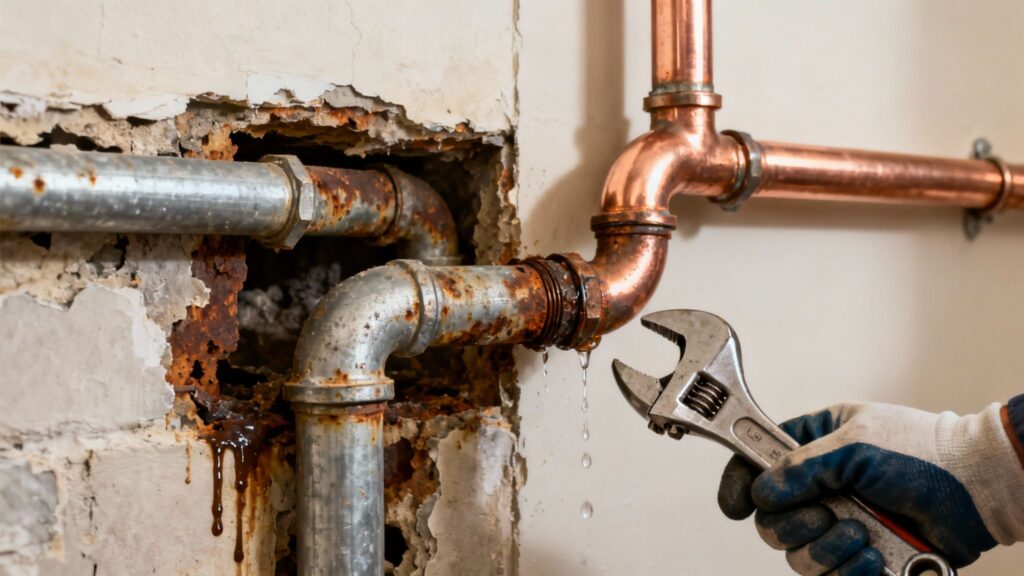
If your home in Salinas, Monterey, or Carmel was built before 1985, you're not just living with vintage charm; you're also living with vintage plumbing. With rising interest rates and limited housing inventory, more of us are staying put and investing in our current properties. The average U.S. home is now more than 40 years old, and our local housing stock in communities like Watsonville and Pacific Grove is no exception. While that means great character, it often hides a network of aging pipes and fixtures just waiting for a crisis.
Many of these older homes were built with materials like galvanized steel pipes, which were standard at the time but are now well past their expected lifespan. Over decades, these systems corrode, crack, and clog, creating a host of plumbing issues common in 40+ year-old homes. These problems can show up as low water pressure, discolored water from your taps, slow drains, or even hidden water damage. This isn't just an inconvenience; it's a direct threat to your property's value and your family's comfort.
Understanding these common plumbing challenges is the first step toward protecting your investment. As a family-owned business since 1988, Alvarez Plumbing brings over 35 years of regional experience to every job. We specialize in diagnosing and upgrading the unique systems found in older Salinas-area homes. This guide will help you identify the 8 most frequent problems we see, from bad pipes to failing water heaters. We'll detail the specific signs to look for and explain your options for a modern, lasting solution, ensuring your home's plumbing is reliable for years to come.
1. Galvanized Steel Pipe Corrosion and Deterioration
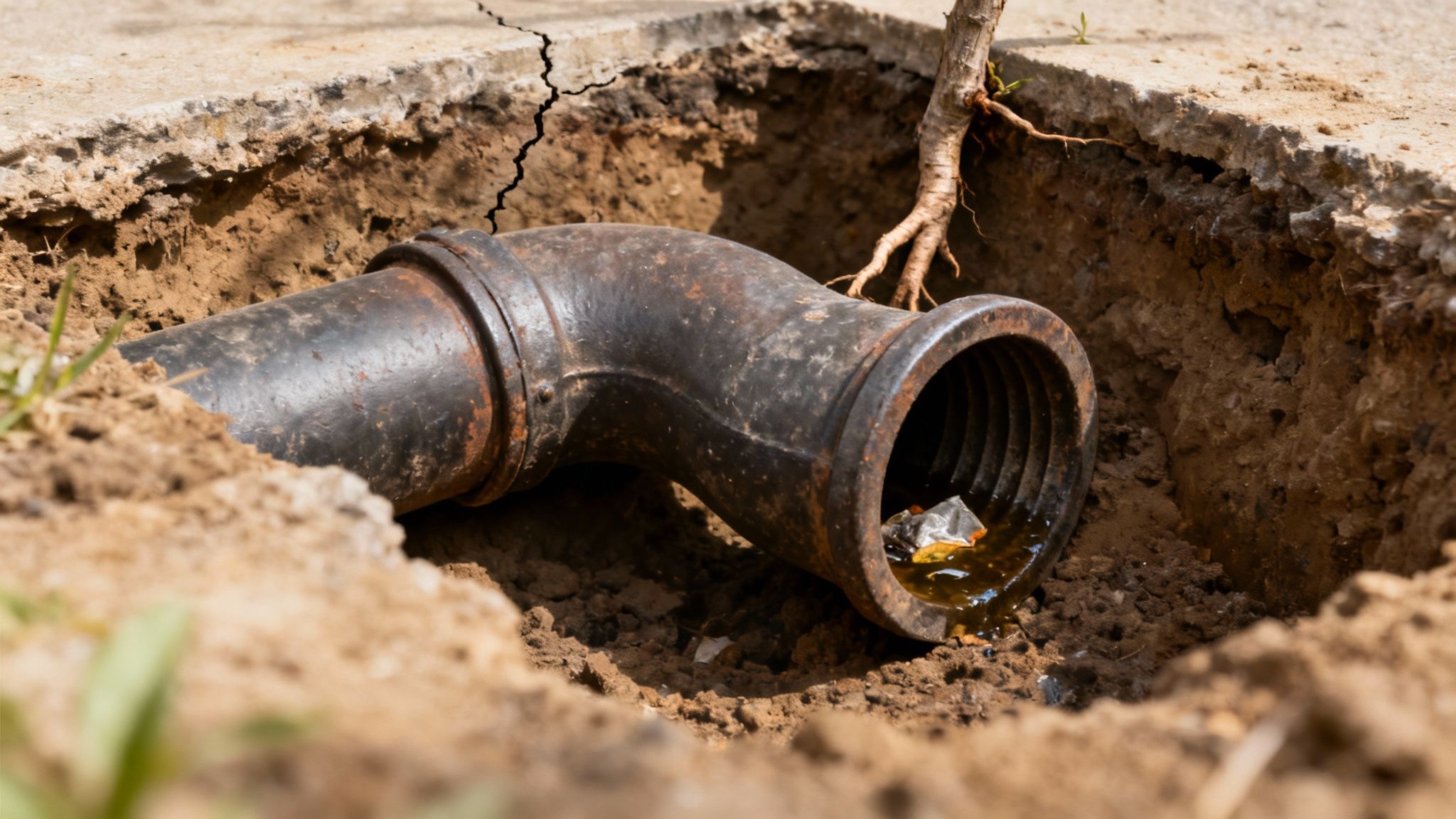
If your Salinas or Monterey County home was built before the 1980s, there’s a strong chance it has galvanized steel pipes. While this was the standard for decades, these pipes have a limited lifespan of about 40 to 60 years. The zinc coating that protects the steel from rust eventually wears away, exposing the raw steel to water and oxygen. This is a classic example of one of the most significant plumbing issues common in 40+ year-old homes.
This internal corrosion creates a cascade of problems. Rust, or scale, builds up inside the pipes, restricting water flow and causing frustratingly low water pressure. You might also notice a brownish or reddish tint to your water, especially when you first turn on a faucet, which is a clear sign of rust contamination.
Why Galvanized Pipes Fail
The breakdown isn't just about rust; it's a structural failure waiting to happen. Over time, the corroded sections become thin and weak, making them highly susceptible to pinhole leaks or even major bursts. These leaks often start small and hidden behind walls, leading to significant water damage, mold growth, and costly repairs before they are even discovered. In communities like Pacific Grove and Carmel-by-the-Sea with many historic homes, this issue is particularly common.
What You Can Do
If you suspect you have aging galvanized pipes, you shouldn't try to fix them yourself. Here's what to look for before calling a pro:
- Check for Visible Signs: Look at any exposed pipes in your basement, crawlspace, or under sinks. Galvanized pipes are a dull, grey, metallic color and a magnet will stick to them.
- Note Water Discoloration: Consistently rusty-looking water is a major red flag.
- Monitor Water Pressure: Is the pressure noticeably weaker than it used to be, or weak in multiple fixtures at once?
The only permanent solution for failing galvanized pipes is a whole-home repipe. While this sounds like a big job, modern materials like PEX tubing make the process faster and more affordable. As more homeowners choose to renovate rather than move, upgrading outdated plumbing is a wise investment. Alvarez Plumbing has specialized in repiping older Salinas-area homes since 1988, providing durable, long-term solutions. You can learn more about when to upgrade your home’s plumbing system and how a professional can help you avoid a plumbing emergency.
2. Cast Iron Drain Pipe Deterioration and Bellied Sections
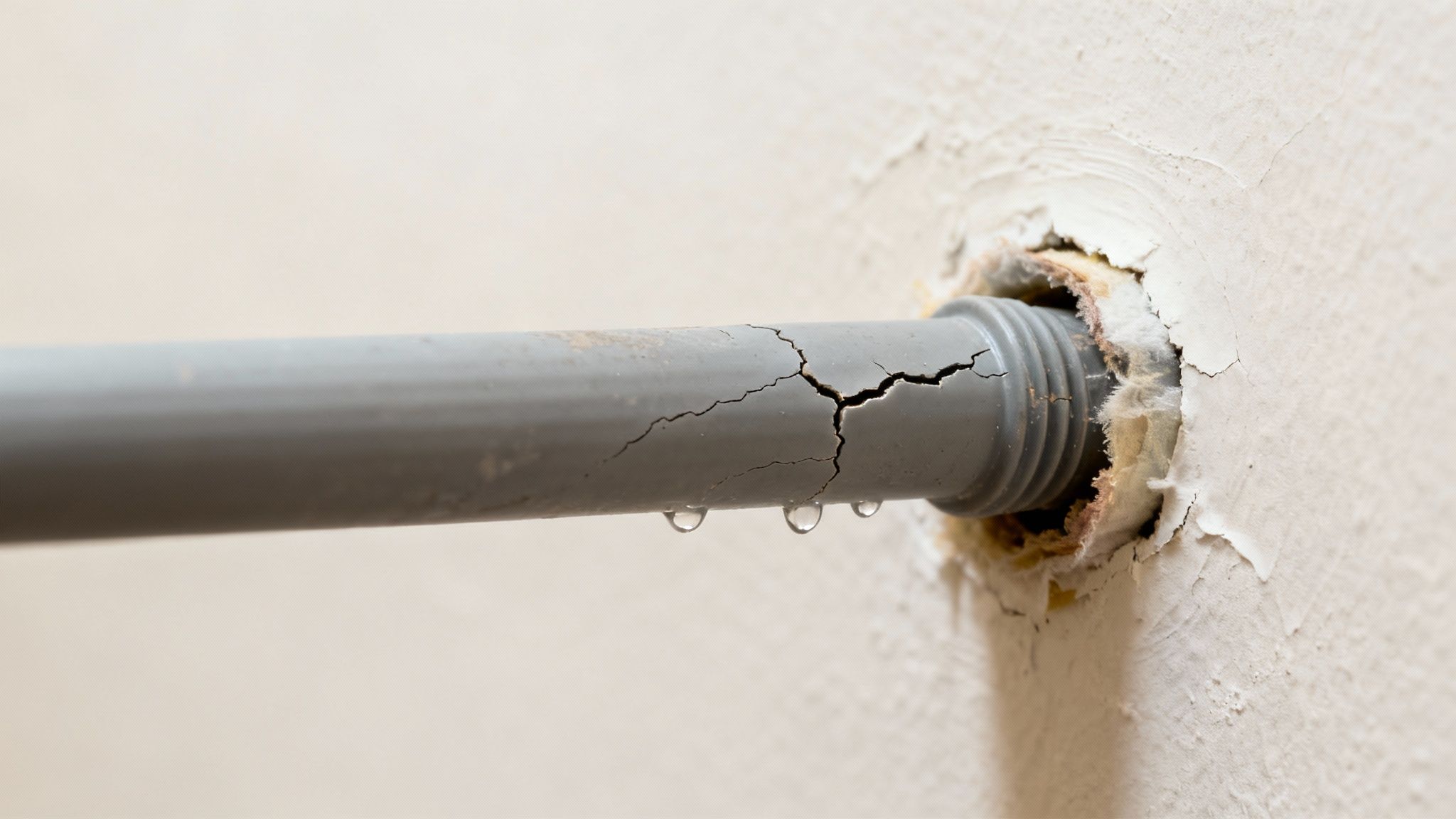
While galvanized pipes handled the water coming in, cast iron pipes were the standard for handling wastewater going out in homes built before the 1980s. Extremely durable in its prime, cast iron has a limited lifespan of 50 to 75 years. Over decades, constant exposure to water, chemicals, and waste causes the material to corrode from the inside out, become brittle, and eventually fail. This breakdown is one of the most serious plumbing issues common in 40+ year-old homes, often going unnoticed until major problems arise.
The corrosion leads to cracks, channeling, and structural weakness. In areas with shifting soils, like many parts of Monterey County, this weakness can cause sections of the pipe to sink or sag. This creates a "belly" in the line where waste and water collect, leading to severe, recurring blockages. Worse yet, tree roots can easily break through the weakened pipe joints, causing further damage and creating stubborn clogs.
Why Cast Iron Drains Fail
A failing cast iron drain line is a significant health and structural hazard. Cracks and bellied sections allow raw sewage to leak into the soil around your foundation. This can contaminate groundwater, cause foul odors, and create unsanitary conditions. The constant blockages from bellies and root intrusion can also lead to frequent sewer backups inside your home, a costly and unpleasant emergency. From historic Victorian homes in Pacific Grove to 1960s suburban houses in Salinas, this silent problem is a ticking time bomb beneath the surface.
What You Can Do
Diagnosing underground drain issues requires professional equipment. If your older home has frequent drain problems, here's how to proceed:
- Look for Symptoms: Are you dealing with slow drains in multiple fixtures, gurgling sounds from toilets, or sewer odors in your yard or basement?
- Avoid Harsh Chemicals: Chemical drain cleaners can speed up the corrosion of old cast iron, making the problem worse.
- Schedule a Camera Inspection: A professional video camera inspection is the only way to see the true condition of your sewer line and identify cracks, root intrusion, or bellied sections.
The only reliable solution for a failing cast iron line is replacement. Alvarez Plumbing uses modern video inspection technology to accurately diagnose these hidden issues and offers trenchless sewer replacement options to minimize disruption to your property. Ensuring your drainage system has the correct slope is critical for longevity; you can learn more about proper drainage pipe pitch and see how our expertise prevents future problems.
3. Polybutylene (PB) Pipe Brittle Cracking and Failure
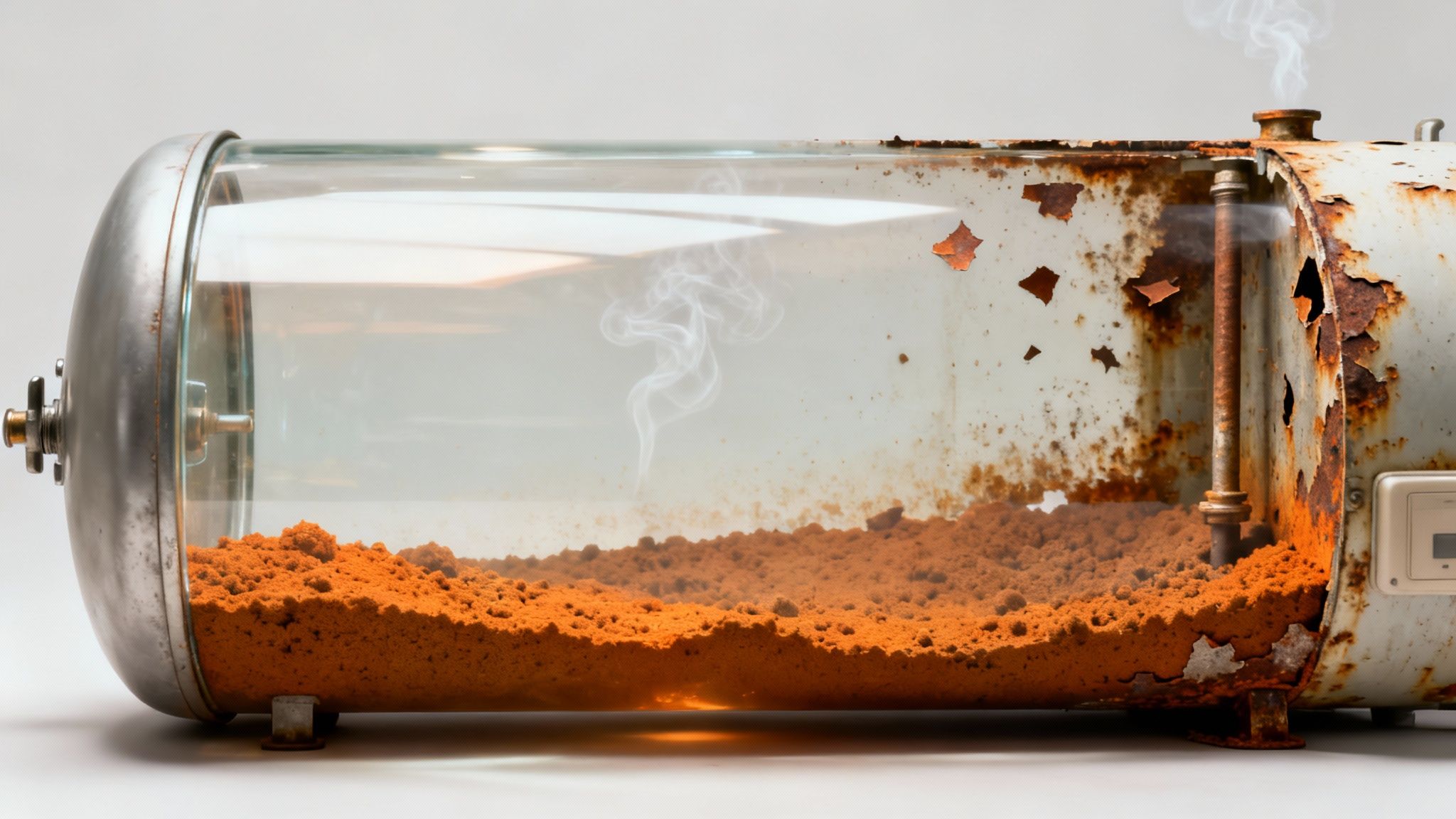
From the late 1970s to the mid-1990s, polybutylene (PB) piping was hailed as a cheap and easy-to-install alternative to copper. If your home in communities like Marina or Prunedale was built or repiped during this era, you may be living with this problematic material. Unfortunately, PB pipes are known to become brittle and crack due to reactions with common disinfectants like chlorine found in municipal water supplies. This material is a ticking time bomb, making it a critical example of plumbing issues common in 40+ year-old homes.
Unlike the slow corrosion of galvanized pipes, PB pipes can fail suddenly and without warning. The chemical reaction causes tiny fractures from the inside out, leading to catastrophic bursts that can flood entire sections of a home. Because the damage starts internally, the pipes may look perfectly fine from the outside right up until the moment they fail, causing immense water damage and costly emergency repairs.
Why Polybutylene Pipes Fail
The failure of PB piping was so widespread that it resulted in major class-action lawsuits. The core issue is its incompatibility with chlorinated water, which breaks down the polymer's chemical bonds, leading to brittleness and cracking. The plastic fittings used with these systems are also notorious failure points. Homes in areas with a higher concentration of water treatment chemicals can experience these failures even sooner, a relevant concern for homeowners across Monterey County.
What You Can Do
Discovering you have PB pipes requires immediate attention. The risk of sudden failure is too high to ignore, especially as homeowners are choosing to renovate their current properties rather than move.
- Identify the Pipes: PB pipes are typically grey but can sometimes be blue or black. They are usually stamped with the code "PB2110."
- Check for Leaks: Look for signs of moisture or water damage around fittings, especially where pipes connect to fixtures or your water heater.
- Call a Professional: Because of the high risk of a sudden burst, it's best to have a licensed plumber assess the situation and plan for a replacement.
The only reliable solution for polybutylene piping is complete replacement. A whole-home repipe with modern, durable materials like PEX or copper is essential to protect your property. Alvarez Plumbing has specialized in this kind of critical upgrade since 1988, ensuring older Salinas-area homes are safe and secure. You can find out more about our professional re-piping services and protect your home from a potential disaster.
4. Deteriorated Water Heater Tanks and Sediment Buildup
Your water heater is an unsung hero, but in homes over 40 years old, it's often living on borrowed time. Traditional tank-style water heaters have a lifespan of about 8 to 12 years. If your Monterey or Marina home still has its original unit from the 1980s, it's well past its expected service life and is a prime example of plumbing issues common in 40+ year-old homes.
Over decades, mineral sediment like calcium and magnesium, common in California's hard water, settles at the bottom of the tank. This layer of scale insulates the water from the heating element, forcing the unit to work harder and longer. This leads to higher energy bills, inconsistent water temperatures, and strange popping or rumbling noises as trapped water boils beneath the sediment.
Why Older Water Heaters Fail
Beyond inefficiency, sediment buildup speeds up internal corrosion. The protective anode rod, designed to attract corrosive elements, gets used up over time, leaving the tank's steel lining vulnerable to rust. Eventually, this corrosion can cause the tank to spring a leak or even burst, potentially flooding your garage, closet, or basement and causing thousands in water damage. In communities like Prunedale and Castroville, where homes may have deferred maintenance, a sudden water heater failure can be a major and costly disruption.
What You Can Do
Proactive maintenance is key to extending your water heater's life and preventing a catastrophic failure. Here are the signs that you need a professional:
- Listen for Noises: Pay attention to any popping, banging, or rumbling sounds coming from the tank, as this is a classic sign of severe sediment buildup.
- Check for Leaks: Regularly inspect the base of the water heater and its connections for any signs of moisture or rust stains.
- Note Water Quality: If your hot water appears rusty or has a metallic odor, the tank's interior is likely corroding.
The best long-term solution is often a replacement with a modern, energy-efficient model. To effectively combat mineral buildup and scale that accelerates deterioration, many homeowners also consider installing a robust whole house water softener. Alvarez Plumbing can assess your current unit's condition and recommend the best course of action, whether it's a repair or a full replacement. You can learn more about creating a water heater maintenance schedule to help prevent these issues before they start.
5. Corroded and Leaking Supply Line Shut-Off Valves
One of the most overlooked yet critical plumbing issues common in 40+ year-old homes is the failure of supply line shut-off valves. These are the small knobs or levers under your sinks and behind your toilets, designed to stop water flow to a specific fixture. In older homes, these valves are often multi-turn gate valves made of brass or other metals that are prone to corrosion, especially in areas with hard water like parts of Salinas and Prunedale.
Over decades, mineral deposits and oxidation build up inside the valve mechanism. This corrosion can cause the valve to seize up, making it impossible to turn, or prevent it from creating a complete seal. When you need to stop a leak or replace a faucet, you might discover the valve either won't budge or, worse, breaks when you try to force it, turning a small repair into a major flood.
Why Old Shut-Off Valves Fail
The main problem with older gate-style valves is their design. The internal gate that lowers to block water flow can corrode and get stuck in place. When you finally try to operate it after years of inactivity, the stem can snap off, or the gate itself can fall apart, failing to stop the water. They can also develop slow, persistent drips from the packing nut, leading to hidden water damage inside cabinets and walls. In coastal communities like Monterey and Seaside, the salty air can even speed up external corrosion, making the problem worse.
What You Can Do
Being proactive about your shut-off valves can prevent a plumbing emergency. Here are a few essential steps every homeowner with an older property should take:
- Locate Them: Know where every shut-off valve is, including your home's main water shut-off.
- Look for Corrosion: Check for any visible signs of rust, mineral buildup (a white or greenish crust), or active drips around the valve handle and connections.
- Plan for an Upgrade: The most reliable solution is to have a professional replace old, multi-turn gate valves with modern quarter-turn ball valves. These are far more durable and provide a quick, dependable water shut-off.
Upgrading these small components is a smart investment, especially as more homeowners in the region choose to renovate their existing properties rather than move. If you find a valve that is stuck or leaking, it’s best not to force it. Alvarez Plumbing can safely replace outdated and corroded valves, ensuring you have reliable control over your home's water supply when you need it most. You can explore a professional guide on how to install a shut-off valve to understand why calling an expert is the safest choice for this critical task.
6. Frozen and Burst Pipes in Inadequately Insulated Sections
While Monterey County is known for its mild climate, homes in areas like Carmel Valley and Salinas can still experience near-freezing temperatures during winter nights. Homes built 40+ years ago often have outdated or insufficient insulation in attics, crawl spaces, and exterior walls. This leaves water lines vulnerable, creating a classic example of plumbing issues common in 40+ year-old homes. When water inside an unprotected pipe freezes, it expands, creating immense pressure that can easily cause a pipe to crack or burst.
This issue is often a result of original construction practices that didn't prioritize insulation in unheated areas. A sudden cold snap can lead to a catastrophic failure, causing extensive water damage to ceilings, walls, and floors. This is particularly concerning for vacation homes in communities like Pacific Grove or Carmel-by-the-Sea, which may be left unheated during colder months, making them highly susceptible to burst pipes.
Why Uninsulated Pipes Are a Ticking Time Bomb
The risk isn't just about a single cold night; it's about the home's overall vulnerability. Older construction often has more drafts and air leaks, which allow cold air to reach pipes that would otherwise be protected. A pipe that freezes and bursts behind a wall can leak for hours or even days before the damage becomes visible, leading to devastating structural issues and the potential for mold growth. Preventative plumbing upgrades can help homeowners avoid disruptive emergencies and improve water efficiency.
What You Can Do
Protecting your home from a winter plumbing disaster is crucial, even in our temperate climate. Here are some preventative steps you can take before calling a professional:
- Inspect Vulnerable Areas: Before winter, check pipes in your attic, crawl space, and along exterior walls. Look for any pipes that are exposed to cold air.
- Insulate Your Pipes: Wrapping at-risk pipes with foam insulation sleeves is an inexpensive but highly effective measure.
- Seal Air Leaks: Use caulk or spray foam to seal any cracks or holes in your foundation or walls near plumbing lines to keep cold air out.
- During a Cold Snap: Allow a faucet to drip slowly to keep water moving. Open cabinet doors under sinks to allow warmer air to circulate around the pipes.
If you are concerned about your home's vulnerability, especially if you have an older property in Prunedale or Watsonville, it's best to get a professional assessment. Alvarez Plumbing can inspect your system and recommend targeted solutions to protect your pipes. If your home is showing signs of aging plumbing—like leaks or low pressure—Alvarez Plumbing can help. Schedule a plumbing inspection today and get expert recommendations tailored to your home's needs.
7. Worn Fixture Washers and Valve Seats Causing Persistent Drips
That incessant drip… drip… drip from a faucet isn't just an annoyance; it's a classic sign of aging plumbing and one of the most underestimated plumbing issues common in 40+ year-old homes. In older houses, especially those in communities like Marina and Seaside, the original fixtures often rely on simple rubber washers and valve seats to control water flow. After decades of use, these parts lose their flexibility, harden, and crack, failing to create a watertight seal.
This gradual breakdown is often sped up by the hard water found in many parts of Monterey County. Mineral deposits can build up on the valve seat, creating a pitted, uneven surface that even a new washer can't seal against completely. The result is a persistent leak that wastes a surprising amount of water and money. A single faucet dripping just 15 times a minute wastes over 260 gallons per month, which adds up to more than 3,000 gallons annually.
Why Fixture Seals Fail
The constant pressure and movement from opening and closing a faucet handle grinds down the soft rubber washers over time. As these seals degrade, you have to turn the handle tighter and tighter to stop the flow, which further damages the valve seat. Eventually, the parts wear out to the point where no amount of tightening will stop the drip.
While a dripping sink in your Prunedale home might seem like a minor issue, it indicates that the internal mechanics of your plumbing fixtures are failing. If ignored, the leak can worsen, potentially leading to water stains in your sink basin and a steady increase in your water bill. For homeowners choosing to renovate their older properties rather than move, upgrading these failing fixtures is a simple yet impactful investment.
What You Can Do
If you're dealing with a dripping faucet, here's what to consider before calling a plumber:
- Pinpoint the Source: Check all faucets, showerheads, and tub spouts, especially in less-used bathrooms where a drip might go unnoticed.
- Calculate the Waste: Count the drips per minute to understand the scale of water loss. This can motivate a quicker repair.
- Consider a Full Upgrade: If a new washer doesn't solve the problem, the valve seat is likely damaged. Instead of a temporary fix, upgrading to a modern ceramic-disk faucet offers superior durability and a leak-free lifespan.
Replacing a washer is a simple task, but if the leak persists, it’s a job for a professional. The team at Alvarez Plumbing can inspect the valve seat and determine if a simple repair or a full fixture replacement is the best long-term solution. Tackling these small leaks not only saves water, a critical concern in California, but also prevents bigger headaches down the road.
8. Deteriorated Caulk and Grout Around Plumbing Fixtures Causing Water Damage
While not a pipe or drain issue, failing caulk and grout around fixtures like tubs, showers, and sinks is one of the most deceptive plumbing issues common in 40+ year-old homes. The original sealants installed decades ago were not designed to last forever. Over time, they dry out, crack, shrink, and crumble. This breaks the waterproof seal, allowing water to seep into wall cavities and subfloors with every use.
This slow, hidden water infiltration can cause immense damage before you ever notice it. Water penetrating behind tile in a shower can rot wooden wall studs and subflooring, leading to soft spots on the floor and structural instability. In older homes from Watsonville to Seaside, this is a frequent cause of costly bathroom remodels, as the damage is often only discovered once it's severe. The constant moisture also creates a perfect breeding ground for toxic mold.
Why Caulk and Grout Fail
The lifespan of caulk and grout is limited. Constant exposure to water, cleaning chemicals, and temperature fluctuations in bathrooms and kitchens speeds up their decay. Homes without proper ventilation, a common feature in older properties, trap humid air, which keeps these surfaces damp and encourages mold growth that further breaks down the sealant. What begins as a tiny crack can quickly become a major entryway for water.
What You Can Do
Preventing this type of water damage is all about regular inspection and maintenance. Here’s what to look for:
- Annual Inspection: At least once a year, carefully check the sealant lines around all your fixtures. Look for any visible cracks, gaps, peeling, or signs of black mold.
- Feel for Soft Spots: Gently press on the floor and walls around your tub, shower, and toilet. Any sponginess or give is a serious warning sign of subfloor water damage.
- Check Ventilation: Ensure your bathroom exhaust fan is working correctly to remove moisture from the air during and after showers.
If you find compromised sealant, the only effective solution is to completely remove the old material and re-apply a fresh seal. This is a crucial preventative step. It's helpful to learn some pro techniques for caulking large gaps to ensure a durable, watertight seal. But if you suspect the damage has already gone beyond the surface, it's time to call a professional. The experts at Alvarez Plumbing can assess for hidden leaks and water damage, ensuring your home is protected.
Comparison of 8 Common Plumbing Issues in 40+‑Year Homes
| Issue | 🔄 Complexity (process) | ⚡ Resources & cost | ⭐ Expected outcomes (quality) | 📊 Ideal use cases (results/impact) | 💡 Key advantages / tips |
|---|---|---|---|---|---|
| Galvanized Steel Pipe Corrosion and Deterioration | High — full re-piping often required; hidden corrosion complicates diagnosis | $$$ — typical re-pipe $3,000–$8,000+; time‑consuming access | ⭐⭐⭐ — restores pressure & water quality long‑term when replaced | Homes 40+ years old with brown water, low pressure or pinhole leaks | Test water for iron; whole‑house filter as interim; get multiple quotes; consider PEX |
| Cast Iron Drain Pipe Deterioration and Bellied Sections | Moderate–High — trenchless options exist but may need excavation for severe bellies | $$–$$$$ — repairs $3,000–$25,000; trenchless ~$150–$250/ft | ⭐⭐⭐ — lining or replacement effectively restores drainage if executed correctly | Pre‑1980 homes with backups, sagging (bellied) sections, or root intrusion | Video‑scope annually after age 40; remove problem trees; consider CIPP or bursting |
| Polybutylene (PB) Pipe Brittle Cracking and Failure | High — systemwide replacement usually required; failures can be sudden | $$$ — complete replumb $4,000–$10,000; insurance subject to limits | ⭐⭐⭐ — full replacement eliminates unpredictable burst risk | 1985–1995 homes or any confirmed PB installation | Replace immediately if confirmed PB; document for insurance; install pressure regulator |
| Deteriorated Water Heater Tanks and Sediment Buildup | Low–Moderate — replacement straightforward; maintenance (flushing) simple | $–$$$ — replacement $1,500–$3,000+; tankless may need service upgrades | ⭐⭐⭐ — modern replacement improves efficiency, reliability and safety | Units older than 8–12 years or homes in hard‑water regions | Flush annually; replace anode rod every 3–5 yrs; consider softener or tankless upgrade |
| Corroded and Leaking Supply Line Shut‑Off Valves | Low — individual valve swaps are simple but corroded valves may break when turned | $ — $150–$400 per valve for replacement | ⭐⭐ — restores isolation and emergency control reliably when replaced | Homes with original gate valves, high‑mineral water areas, coastal properties | Test main annually; replace gate valves with quarter‑turn ball valves; add accessible shut‑offs |
| Frozen and Burst Pipes in Inadequately Insulated Sections | Low–Moderate for prevention; high if multiple bursts occur and water damage ensues | $–$$$ — insulation inexpensive; burst repairs & water damage $1,000–$4,000+ | ⭐⭐ — prevention (insulation/heat trace) is highly effective; post‑burst repairs costly | Cold‑climate homes with uninsulated attic/crawl/foundation pipes | Insulate pipes, use heat trace on risk sections, seal drafts, allow slow drip in extreme cold |
| Worn Fixture Washers and Valve Seats Causing Persistent Drips | Low — DIY or quick professional repair for washers; valve seats may need pro work | $–$$ — $50–$200 per fixture; replacement $200–$800+ if required | ⭐⭐⭐ — fixes eliminate waste and reduce bills when properly repaired | Older faucets (15–20+ yrs), rental properties, high‑use fixtures | Monitor faucets for drips; replace washers/seals; upgrade to ceramic disk faucets; install low‑flow aerators |
| Deteriorated Caulk and Grout Around Plumbing Fixtures | Low–Moderate — re‑caulking/grouting is accessible; underlying substrate repairs add complexity | $–$$ — preventive $200–$500; water‑damage remediation $1,000–$5,000+ | ⭐⭐⭐ — timely remediation prevents hidden structural and mold damage | Bathrooms/showers in 40+ year homes or poorly ventilated areas | Recaulk every 5–10 yrs with silicone; ensure ventilation; repair substrate before refinishing |
Your Trusted Partner for Modernizing Older Monterey County Plumbing
Living in a beautiful older home in Prunedale, Marina, or Seaside offers undeniable charm, but it also means staying vigilant about the hidden systems that keep it running smoothly. As we've explored, the plumbing issues common in 40+ year-old homes are not just minor inconveniences; they are signals from a system reaching the end of its intended lifespan. From the silent corrosion of galvanized steel pipes diminishing your water pressure to the slow degradation of cast iron sewer lines beneath your foundation, these problems often develop out of sight, only revealing themselves through costly water damage or disruptive emergencies.
The average home in the United States, and certainly here in Salinas, is now over 40 years old. This trend, combined with rising interest rates keeping homeowners in place longer, means investing in your current property is more important than ever. Proactively addressing aging plumbing isn't just about repairs; it's a crucial investment in your home's value, safety, and long-term stability.
Key Takeaways for Monterey County Homeowners
Understanding the specific vulnerabilities of your home's plumbing is the first step toward protecting it. Let's recap the most critical insights from this guide:
- Material Lifespans are Finite: Materials like galvanized steel, cast iron, and polybutylene were not designed to last forever. Corrosion, cracking, and deterioration are inevitable. Recognizing the type of plumbing in your home is essential for anticipating potential failures.
- Small Symptoms Signal Big Problems: That persistent drip, the discolored water, or the slowly draining sink are often early warnings of a more significant underlying issue. Ignoring them can lead to burst pipes, severe clogs, or hidden water damage that compromises your home’s structure.
- Proactive Inspection is Your Best Defense: You cannot fix what you cannot see. The most dangerous plumbing issues are those hidden within walls, under floors, or buried in your yard. A professional video camera inspection is the only definitive way to assess the true condition of your drain and sewer lines without destructive guesswork.
- Modernization is an Opportunity: Upgrading your plumbing is a chance to improve more than just reliability. Replacing an old water heater or outdated fixtures can enhance water efficiency, which is vital in water-conscious communities like Carmel Valley and Pacific Grove, and can significantly lower your utility bills.
As a family-owned business serving our neighbors since 1988, Alvarez Plumbing has over 35 years of specialized experience diagnosing and resolving the unique plumbing challenges found in Monterey County's older homes. We've seen firsthand how the coastal air in Seaside can accelerate corrosion and how the specific soil conditions in Castroville can impact underground pipes. We don’t just fix leaks; we provide comprehensive, long-term solutions.
A Note on Prevention: An emergency call for a burst pipe is always more stressful and expensive than a planned upgrade. By investing in preventative services like whole-home repiping or hydro-jetting, you take control of your plumbing's health, avoiding unexpected disasters and ensuring peace of mind for decades to come.
Your 40-year-old home is a valuable asset. Protecting it means giving its most critical systems the professional attention they deserve. Don't wait for a small leak to become a major flood. Take the next step today.
Don't let the plumbing issues common in 40+ year-old homes catch you by surprise. If your home is showing signs of aging plumbing—like leaks or low pressure—Alvarez Plumbing can help. Schedule a comprehensive plumbing inspection with the trusted local experts at Alvarez Plumbing. We provide honest assessments and tailored solutions to protect your Monterey County home for the long haul.