We’ve all been there. The bathroom sink starts to drain just a little bit slower, making that tell-tale gurgling sound that signals a problem is brewing under the surface. For most of us, this is just a simple mix of hair, soap scum, and toothpaste. But before you reach for a quick-fix chemical, understanding why it's happening is the first real step to finding a lasting solution.
That Gurgling Sink Is More Than Just an Annoyance
When the sink in your Salinas home starts backing up, it's more than just a daily inconvenience. It's a clear warning sign from your plumbing system. A slow drain is your plumbing's way of telling you that a buildup has begun. In areas like Monterey and Prunedale, our region's hard water can speed up this process, causing soap scum and minerals to harden inside your pipes. Ignoring it just gives the blockage more time to become denser and much harder to remove.
From Minor Buildup to a Major Problem
The journey from a free-flowing drain to a complete standstill doesn't happen overnight. This simple infographic breaks down how a small, nagging issue can escalate if you let it go.
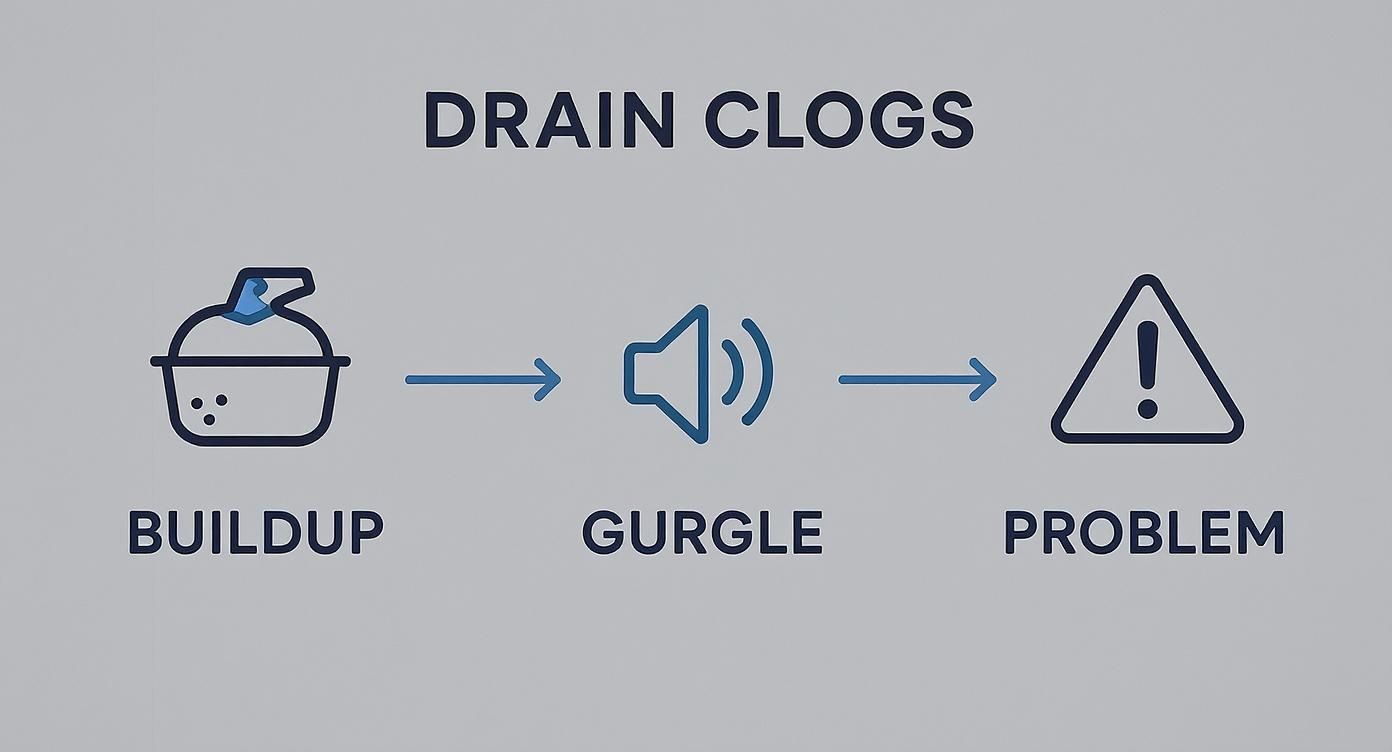
This visual really highlights that critical stage—the gurgle—which is your best opportunity to act before a simple slowdown becomes a complete blockage that requires professional help.
At Alvarez Plumbing, a family-owned business serving this community since 1988, we've seen time and time again how these "minor" clogs can hint at deeper issues. A clog that keeps coming back might not be just a clump of hair; it could be a symptom of a problem much further down the line.
A persistent gurgle or a clog that keeps returning could be a sign of a blocked plumbing vent or even an early warning of a main sewer line issue. It's crucial to know the difference.
While we'll share some pro-level techniques you can try at home, knowing when to call for help is key. Sometimes, what seems like a simple sink clog in a Carmel-by-the-Sea home is actually a symptom that needs a more thorough diagnosis. For those tricky, complex cases, understanding the benefits of a sewer camera inspection can give you a crystal-clear picture of what’s really happening inside your pipes, making sure you get the right fix the first time.
Pro-Level Techniques You Can Safely Try at Home
Ready to tackle that clog yourself? Before you grab the first thing you see under the sink, it's crucial to know which methods are actually safe for your pipes.
For starters, we never recommend harsh liquid drain cleaners. Instead, there are a few simple tools that our own plumbers use for straightforward blockages. These are the tried-and-true methods that can solve minor issues safely.
Start With The Right Tools
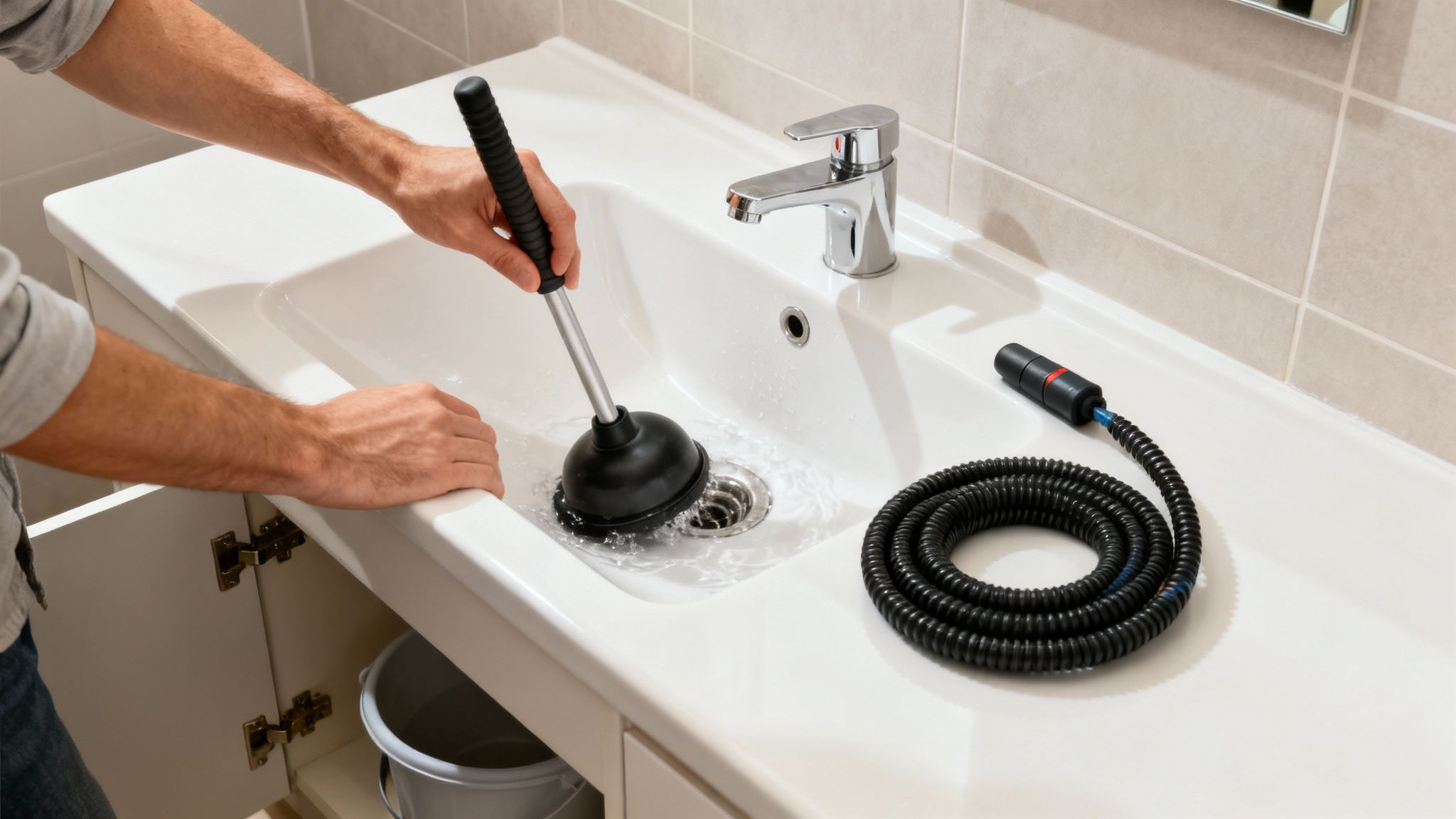
For most minor bathroom sink clogs, a simple plunger or a small hand auger (drain snake) is often all it takes to get things flowing again. Here's a brief overview of how to use them:
- Plunger: For a sink, you'll need to create a solid seal. Block the overflow hole with a damp rag first. This forces all the pressure down the drain where the clog is. Then, give the plunger several firm pumps.
- Drain Snake: If the plunger doesn't work, gently feed the snake into the drain. When you feel resistance, you've likely found the clog. Turn the handle to let the auger grab onto the gunk, and then slowly pull it back out.
- P-Trap: If the plunger and snake haven't worked, the clog might be sitting in the P-trap—that U-shaped pipe right under your sink. You can place a bucket underneath and carefully loosen the two slip nuts to remove the trap and clear it out.
A basic drain snake is perfect for pulling out those stubborn hair clogs we see all the time in Marina and Seaside homes. If you want a more detailed walkthrough, check out our guide on using a handheld snake for a drain.
Be very careful when you put the P-trap back together. The threads on older plastic pipes can strip easily. If you don't get a perfect seal, you'll have just traded a clog for a leak. Always hand-tighten the nuts first, then give them a final quarter-turn with a wrench—no more.
This is a perfect example of a simple task that can go wrong if you're not careful. A stripped thread or a crooked gasket can cause a slow leak that silently ruins your cabinet over time. It’s a lesson many Watsonville homeowners learn the hard way. If you’re not 100% confident, it’s always safer to call a licensed plumber.
Comparing Common DIY Clog-Clearing Methods
Before you dive in, it helps to know the pros and cons of each approach. Here’s a quick breakdown of the DIY methods we just covered to help you choose the right one for your situation.
| Method | Best For | Success Rate (When Done Right) | Pro Tip |
|---|---|---|---|
| Plunger | Slow drains, minor clogs | High for simple blockages | Always cover the overflow hole with a damp rag to create a proper seal and direct pressure downward. |
| Drain Snake | Hair, soap scum, deeper clogs | Very high for hair clogs | The goal is to retrieve the clog, not push it deeper. If you feel resistance, rotate and pull back. |
| P-Trap Removal | Solid objects, stubborn gunk | Excellent for localized clogs | Have a bucket ready and be gentle when re-tightening the nuts to avoid stripping threads and causing a leak. |
Each of these methods is effective in the right scenario. The key is to match the tool to the type of clog you suspect you have. But if these simple methods don't work quickly, it's time to stop and call for professional help.
When a DIY Fix Becomes a Plumbing Emergency
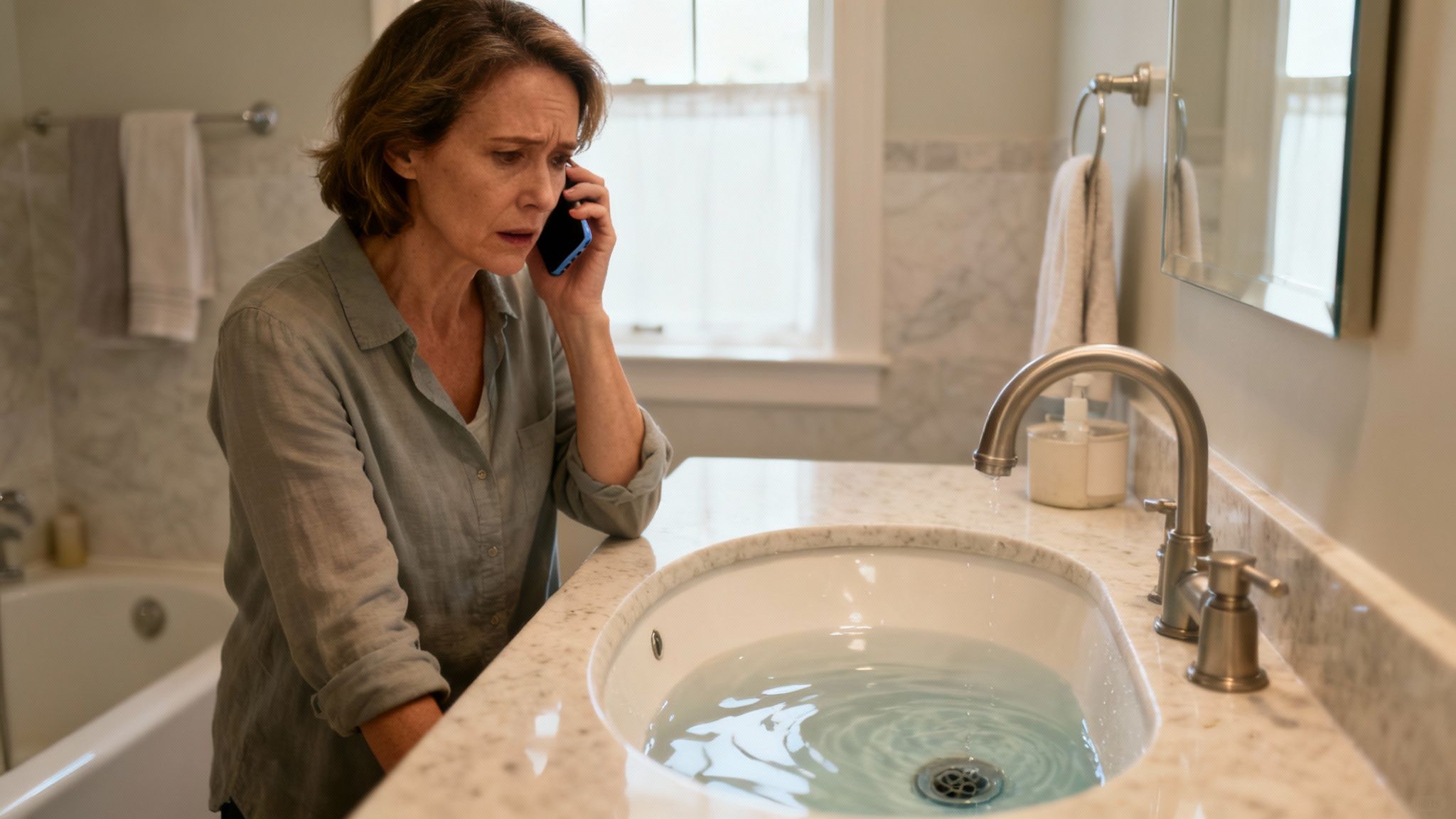
Knowing when to put the tools down is often the most important part of any home project. While some clogs are a simple fix, others are red flags signaling a much deeper problem that basic tools just can't handle. The real pro move is recognizing the difference before you turn a small issue into a costly plumbing emergency.
If you’ve tried the basic techniques and the water still isn't moving, it’s a clear sign you need to stop. A stubborn clog that won’t budge with a plunger or a small snake is likely located deeper in the pipes, or it's so dense that it requires professional equipment to break it up.
Key Warning Signs to Watch For
It’s crucial to pay attention to how your entire plumbing system is behaving. Certain symptoms point to a problem that’s way beyond your bathroom sink. Be on the lookout for these serious warning signs:
- Multiple Slow Drains: If the toilet, shower, and sink in one bathroom are all draining slowly, the problem isn't a simple hair clog. This points to a blockage in a larger branch of your drain system.
- Foul Odors That Linger: A sewer-like smell coming from your drains—especially after you’ve already cleared the P-trap—is a major red flag. This can signal a main line issue or a problem with your plumbing vents.
- The Clog Comes Right Back: You clear the sink, and it works great for a day, but then it’s slow again. A recurring clog means you're only removing part of the blockage, and the rest is still waiting to cause trouble.
For instance, a recurring clog in an older Carmel Valley home with original, fragile pipes is a delicate situation. A forceful DIY attempt could easily turn a blockage into a burst pipe and a flooded bathroom. Similarly, we often see issues in the historic properties across the Monterey Peninsula where old pipes are particularly vulnerable.
Industry research shows that while many homeowners try to fix clogs themselves, some problems need more power. Regular clogs are common, but using chemical cleaners too often can cause serious pipe damage, especially if used more than once every three months. You can discover more insights about household plumbing habits and see how common these issues are.
When to Call the Pros at Alvarez Plumbing
These symptoms often point toward a main sewer line clog, which is a serious plumbing problem that needs immediate attention. If you suspect this is the case, it's vital to call a licensed plumber. Our team at Alvarez Plumbing has the specialized tools to diagnose and fix these deep-seated issues correctly.
"If you've spent more than 30 minutes on it and the clog isn't moving, it's time to call a pro. Your time is valuable, and your plumbing is critical to your home's health." – A Senior Plumber at Alvarez Plumbing
Advanced techniques can locate and clear the blockage without guesswork. Depending on the clog's location and severity, our team will know whether a powerful auger or a high-pressure water jet is needed. To better understand these professional methods, it helps to read about the differences between hydro jetting vs. snaking and see which is right for your situation.
Insider Tips from Your Local Plumbing Experts
With over 35 years of experience serving the Salinas Valley, our family-owned team at Alvarez Plumbing has seen just about every kind of clog you can imagine. Since 1988, we've learned that a little bit of prevention is worth a pound of cure. Here are some of the practical, pro-level tips we share with our customers to help keep their drains flowing smoothly.
One of the simplest and most effective tools we recommend is a zip-it tool. It's a thin, flexible piece of plastic with little barbs on it. Snake one of these down your bathroom sink once a month, and you'll pull out a surprising amount of gunk. It's a quick, two-minute job that proactively removes hair and soap scum before it turns into a real blockage.
Smart Habits for Healthy Pipes
Small, consistent habits are what really separate a clear drain from a recurring headache. It’s not about taking on huge, difficult projects; it’s about forming easy routines that protect your plumbing for the long haul.
We get asked about using boiling water a lot. It can be great for dissolving soap and grease, but you have to be careful. If you have newer PVC pipes, which are common in many Marina homes, boiling water can actually soften the plastic and damage the joints. Warm or hot tap water is a much safer bet for regular maintenance.
"One of the best pieces of advice I give homeowners in the Castroville area is to simply run hot water for a minute after brushing your teeth. This simple habit helps flush away toothpaste and soap residue before it has a chance to harden in your pipes."
— An Alvarez Plumbing Expert
Instead of reaching for those harsh liquid drain cleaners that can corrode your pipes over time, think about using an enzymatic drain cleaner. These products use natural bacteria and enzymes to actually eat away at organic waste like hair and soap scum without harming your plumbing. They work a bit slower, but they're a much gentler and safer solution for the long run.
Local Knowledge Makes a Difference
Understanding our local environment is also key. The hard water we have across the Monterey Peninsula causes mineral buildup to happen much faster inside your pipes. This mineral-rich water makes soap scum stickier and harder, which means clogs form more quickly.
That’s why these small, proactive steps are so important for our community:
- Wipe Down Greasy Products: After using heavy lotions, face masks, or oily skincare products, wipe the excess from the sink bowl with a paper towel before you rinse.
- Use a Drain Strainer: A simple mesh or "mushroom" style strainer is your best defense against hair clogs. It catches strands before they ever get a chance to go down the drain.
- Monthly Hot Water Flush: Once a month, just fill the sink with hot (not boiling) water and let it drain. This simple flush helps dissolve any grease or soap that's starting to build up.
These aren't complicated fixes, but they are the insider tricks that keep our customers in Salinas, Carmel-by-the-Sea, and beyond from needing to call us for an emergency clog. It’s all about working smarter, not harder, to keep your plumbing happy.
A Simple Checklist to Prevent Future Clogs
The absolute best way to fix a clogged sink? Stop it from happening in the first place. After 35+ years of serving homeowners from Salinas to Seaside, we’ve learned that a little bit of proactive care goes a long way in keeping your plumbing healthy.
Think of these simple habits as a small investment of your time to prevent a major headache down the road. Catching tiny issues before they snowball into serious blockages is the secret to saving yourself both time and money. It’s how we help our customers keep their home’s plumbing in top shape, year after year.
Your Proactive Sink Maintenance Schedule
Consistency is your best friend when it comes to fighting clogs. We've put together a simple schedule that breaks down key maintenance into easy-to-manage daily, weekly, and monthly tasks. Sticking to this can make a world of difference.
| Frequency | Task | Why It's Important |
|---|---|---|
| Daily | Run hot water for 30 seconds after use. | This quick flush helps dissolve and push along soap scum, toothpaste, and gels before they have a chance to harden on the pipe walls. |
| Weekly | Wipe out the sink and pop-up stopper. | Physically removing the visible hair and grime from the stopper and basin means it never gets a chance to wash down the drain and start a clog. |
| Monthly | Perform a hot water flush. | Fill the sink basin to the brim with hot (not boiling) water, then pull the plug. The volume and pressure help scour away any gunk that's starting to build up further down the line. |
| Quarterly | Use an enzymatic drain cleaner. | Unlike harsh chemical drainers, enzyme cleaners use beneficial bacteria to safely eat away at organic material like hair and soap scum, keeping pipes clear without causing damage. |
Following a simple plan like this is the single best way to avoid most common clogs.
Small Habits Make a Big Difference
Preventative maintenance isn't just about a schedule; it’s about building smarter habits. For example, grabbing a cheap drain strainer or "drain mushroom" to catch hair is the most effective thing you can do to stop the #1 cause of bathroom sink clogs. It’s a simple, five-dollar fix that works.
And while your bathroom sink has its usual suspects (hair, soap), remember that good habits in one room help the whole system. For instance, knowing how to dispose of cooking oil without clogging pipes in the kitchen prevents greasy buildup that can affect drains throughout your home. It’s all connected.
Pro Tip: Once a month, grab a cheap zip-it tool—it’s just a thin, barbed plastic strip. Feed it down the drain opening and pull it back out. You’ll be shocked (and a little grossed out) by what it catches. It's an incredibly effective and affordable way to keep things flowing freely.
By adopting these simple practices, you're taking a pro-level approach to caring for your plumbing. For more detailed strategies, our team put together a full guide on how to keep your drains clear with tips specifically for local homeowners like you.
Why Salinas Valley Trusts Alvarez Plumbing
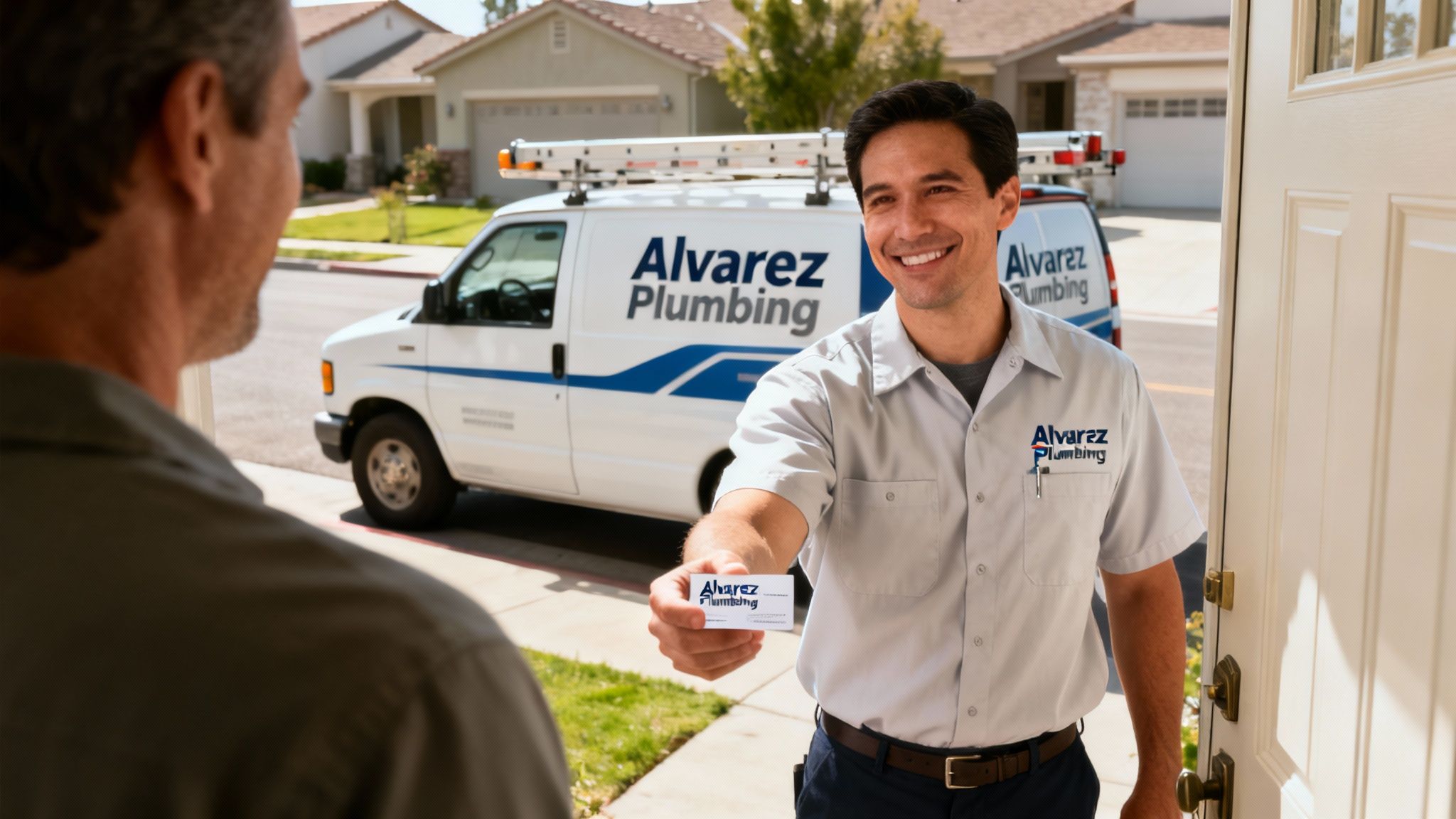
Knowing how to clear a minor clog is a great skill for any homeowner. But the real pro move? Recognizing when a problem is bigger than it looks. A simple DIY attempt on what seems like a normal clog can sometimes make things much worse, especially in older homes with delicate pipes—a common sight from Carmel-by-the-Sea to Pacific Grove.
When you’re facing a clog that just won’t budge, a recurring issue, or any plumbing problem that feels a bit out of your league, it's time to call in the experts. For those tough jobs, the licensed and insured professionals at Alvarez Plumbing are always here to help.
Your Neighborly Plumbing Experts Since 1988
As a family-owned business rooted in this community since 1988, we're not just serving customers; we're helping our neighbors across Salinas, Monterey, and Prunedale. We’ve built our reputation over 35+ years on providing honest, reliable service with a neighborly touch. We know the specific plumbing challenges our local weather and hard water can create.
Don't let a clogged bathroom sink disrupt your life. For a fast, professional solution that truly protects your home, you can count on your local experts.
We have the right tools and the hands-on experience to solve the problem quickly and correctly, ensuring a small clog doesn’t turn into a costly repair. When you need a hand, give us a call—we’re just around the corner.
Common Questions About Bathroom Sink Clogs
Having served the Salinas Valley since 1988, we've heard just about every question you can imagine when it comes to a clogged bathroom sink. Here are a few of the most common ones we get from homeowners in communities from Monterey all the way to Watsonville.
Are Chemical Drain Cleaners Safe for My Older Pacific Grove Home?
We strongly advise against using harsh chemical drain cleaners, especially in the beautiful, older homes common in Pacific Grove and Carmel. Those chemicals can seriously accelerate corrosion in cast iron or galvanized steel pipes, leading to permanent damage.
A much safer bet is to look into a natural drain cleaner made from enzymes. They do the job without harming your older plumbing.
What's That Gurgling Sound in My Sink?
That gurgling noise you’re hearing is often the very first warning sign that a clog is starting to form. It's caused by trapped air being pushed out of the way as water struggles to get past a growing blockage.
A gurgle might just be a local clog in the sink's P-trap, but if you hear it in multiple drains, it could signal a more serious main line or venting problem. Don't ignore it.
How Can I Stop Hair from Clogging My Sink?
When it comes to clogs, prevention is always the best strategy. The single most effective way to stop hair clogs is to install a simple mesh drain screen or a "drain mushroom."
These inexpensive little tools are fantastic at catching hair before it ever goes down the drain. Just make it a habit to clean it out every few days—it’s a small task that prevents some pretty big headaches down the road.
When prevention isn't enough, don't let a stubborn clog disrupt your day. For fast, professional plumbing help you can trust, call Alvarez Plumbing. Visit us online to schedule your service at https://alvarezplumbingsalinas.com.