That moment of silence when you turn on a faucet on a cold Monterey Bay morning is a feeling no homeowner wants. Beyond just the lack of water, there are subtle clues your plumbing might be at risk. A professional frozen pipe thaw is often necessary to safely restore flow and prevent a burst pipe, which can cause thousands in damages.
Recognizing the First Signs of Frozen Pipes
It’s a uniquely unsettling quiet when you expect rushing water and get nothing. For homeowners from Salinas to Pacific Grove, those few moments of silence during a coastal cold snap are often the first sign of trouble. But a completely dry faucet isn't the only indicator; sometimes, the clues are more subtle and require a careful eye and ear.
Recognizing these early warnings can be the difference between a simple, controlled thaw and a catastrophic flood. As a family-owned plumbing company serving this area since 1988, we've seen it all, from minor freezes in Carmel Valley garages to serious situations in the crawlspaces of older Marina homes.
Beyond a Dry Faucet
While a lack of water is the most obvious symptom, your home might be giving you other warnings that a pipe is in the process of freezing or has already frozen solid. Keep an eye out for these red flags:
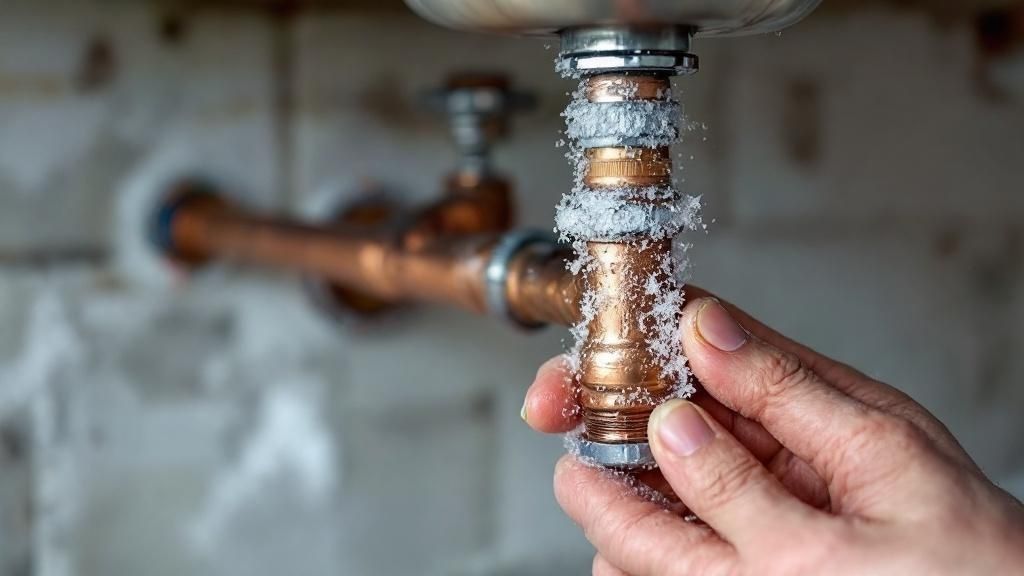
- Visible Frost: Check any exposed pipes in your garage, basement, or crawlspace. A layer of frost or condensation on the pipe itself is a clear signal that the water inside is dangerously cold. This is especially common in homes in Prunedale and Castroville with unheated utility spaces.
- Strange Noises: Listen for faint gurgling, banging, or clanking sounds coming from your walls or fixtures. These noises can indicate that water is struggling to move past an ice blockage.
- A Trickle of Water: If you turn on a tap and only a weak trickle comes out, it’s a major sign that an ice dam has formed somewhere in the line, restricting flow.
This infographic shows the simple but powerful process happening inside your pipes when temperatures drop.
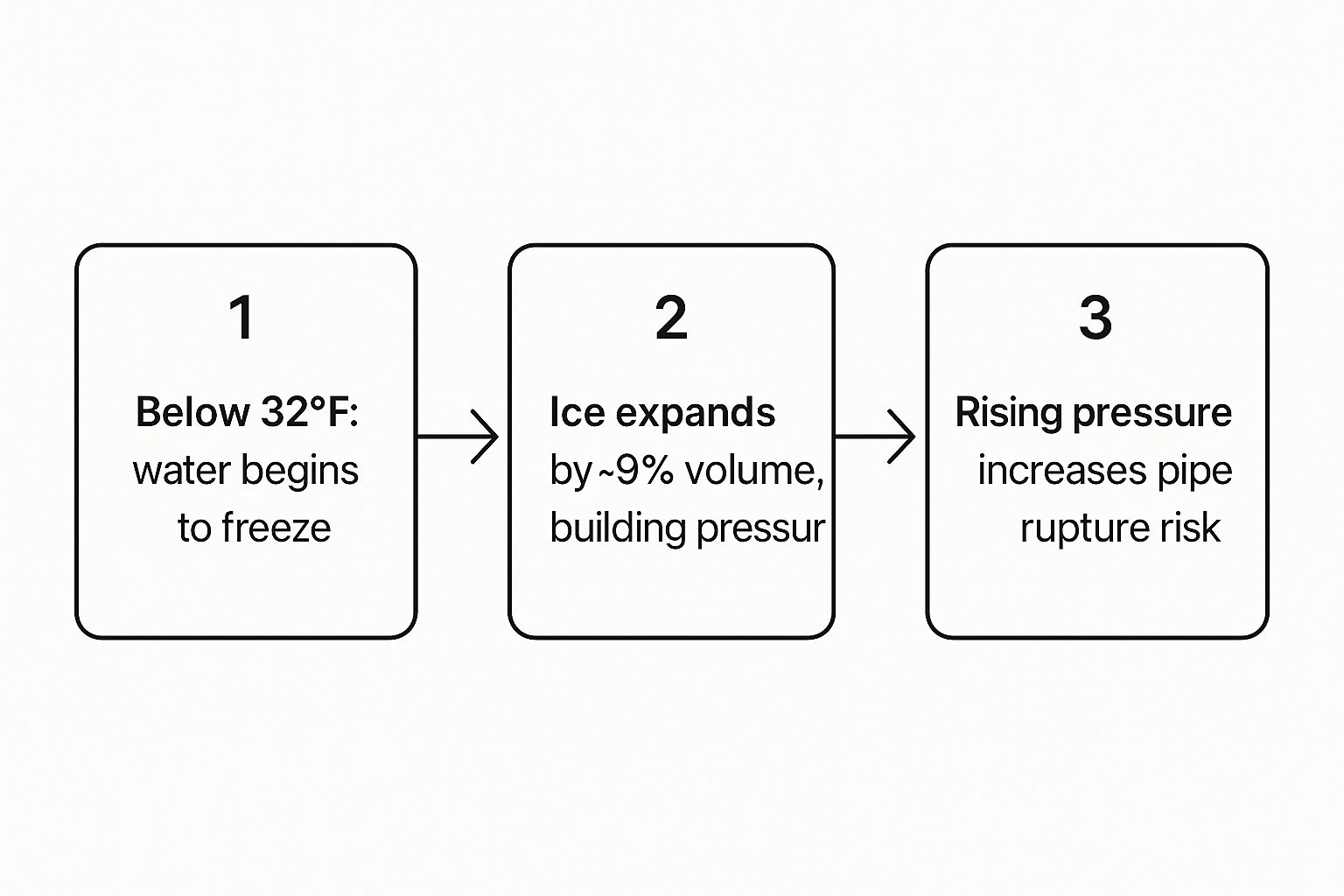
The key takeaway here is that the problem isn't the ice itself, but the immense pressure it creates as it expands. This is what ultimately causes a pipe to burst. The financial fallout is staggering. According to FEMA, a flood from just one inch of water can lead to around $25,000 in damages.
If you suspect you have a frozen pipe, knowing what to do in the first few minutes is critical. Use this quick guide to take the right steps and avoid making a bad situation worse.
Immediate Action Plan for Suspected Frozen Pipes
| Symptom Observed | Immediate Action (Do This Now) | What Not To Do (Avoid This Mistake) |
|---|---|---|
| No water from any faucet | Find your home's main water shut-off valve and turn it off completely. | Do not leave the house without shutting off the water first. A thaw could happen while you're gone. |
| A trickle of water from one faucet | Leave that specific faucet open to a trickle to relieve pressure as the pipe thaws. | Do not try to force it open or closed. The valve itself might be frozen. |
| Visible frost or bulge on an accessible pipe | You can briefly try to warm the area with a hairdryer on low. But a hidden crack is a risk. Your safest bet is to call a professional. | Never use an open flame like a propane torch or a lighter. This is an extreme fire hazard. |
| Strange gurgling or banging sounds in walls | Turn off the main water supply and call a professional plumber immediately. | Do not ignore it. The pipe is under extreme stress and could be close to bursting. |
Taking these immediate, measured actions can help mitigate damage while you assess the situation. Panicking and using the wrong tools is the fastest way to turn a freeze into a flood.
Our Expert Takeaway: A frozen pipe is more than an inconvenience; it's a high-pressure situation building within your walls. Ignoring the early signs or attempting a risky DIY thaw can turn a simple fix into a major home repair project. For more tips, you might be interested in our guide on how to avoid frozen pipes in your home during winter.
Understanding Why Your Pipes Froze
When a cold snap hits Monterey County, it’s easy to just blame the weather when you discover a frozen pipe. But have you ever wondered why your pipes froze and your neighbor’s didn't? The truth is, the outdoor temperature is only part of the story.
The real culprits are almost always a mix of factors specific to your home’s layout and construction. A pipe's weak point has less to do with the thermostat setting and more to do with its immediate surroundings. This is why a simple frozen pipe thaw is often just treating a symptom, not the root cause.
The Science Behind the Freeze
At its core, it’s all about simple physics. As water cools down to 32°F, it starts turning to ice. But as it freezes, it also expands by about 9%. That might not sound like much, but it creates a massive amount of force—we're talking thousands of pounds per square inch—on whatever is holding it.
Your copper or PVC pipes simply weren't built to handle that kind of intense internal pressure. That's what leads to those dreaded cracks and bursts. Understanding this pressure is crucial; it’s not just about an ice blockage, but an active expansion that can tear your plumbing apart from the inside.
Common Local Vulnerabilities
Here in our service area, we see the same scenarios pop up time and again. A frozen pipe is rarely a random event.
- Older Homes in Pacific Grove: Many of the charming, older houses around here have uninsulated crawl spaces or basements. That leaves pipes completely exposed to the raw, damp cold.
- Pipes in Exterior Walls: In communities all over, from Watsonville to Seaside, it's common for plumbing to be run through exterior walls. These walls offer very little protection when the temperature really drops.
- Unheated Garages and Attics: We see this a lot in newer construction, even in places like Prunedale. Plumbing lines running through an unheated garage create the perfect storm for a freeze.
- Small Drafts: Don't underestimate tiny cracks. Even a small, unsealed gap in your foundation or siding can funnel a steady stream of frigid air directly onto a pipe, creating a localized deep freeze.
Our Expert Takeaway: A frozen pipe is a clear sign of a vulnerability in your home's defenses against the cold. The most important step you can take is to identify that specific weak point—whether it's poor insulation or an unsealed draft—to prevent it from ever happening again.
While we're focused on water pipes, these freezing mechanics apply to other home systems, too. For instance, you might be curious to learn why an AC unit might freeze, which involves similar principles of temperature and airflow. For more specific local advice, check out our plumbing tips for freezing weather to better prepare your home.
Safe Thawing Methods Versus Dangerous DIY Mistakes
When you've got no water and the kids need to get ready for school, the temptation to grab the most powerful heat source you can find is strong. We get it. But this is the exact moment when a simple frozen pipe can turn into a house fire or a catastrophic flood.
A successful frozen pipe thaw is about gentle, gradual heat—not brute force.
Over our 35+ years serving Monterey County, from Salinas to Carmel-by-the-Sea, we’ve seen the devastating aftermath of well-intentioned but dangerous DIY attempts. The difference between a safe thaw and a disaster comes down to understanding what’s happening inside that pipe. You’re not just melting ice; you’re managing immense pressure that needs a safe escape route.
Professional-Approved Gentle Thawing
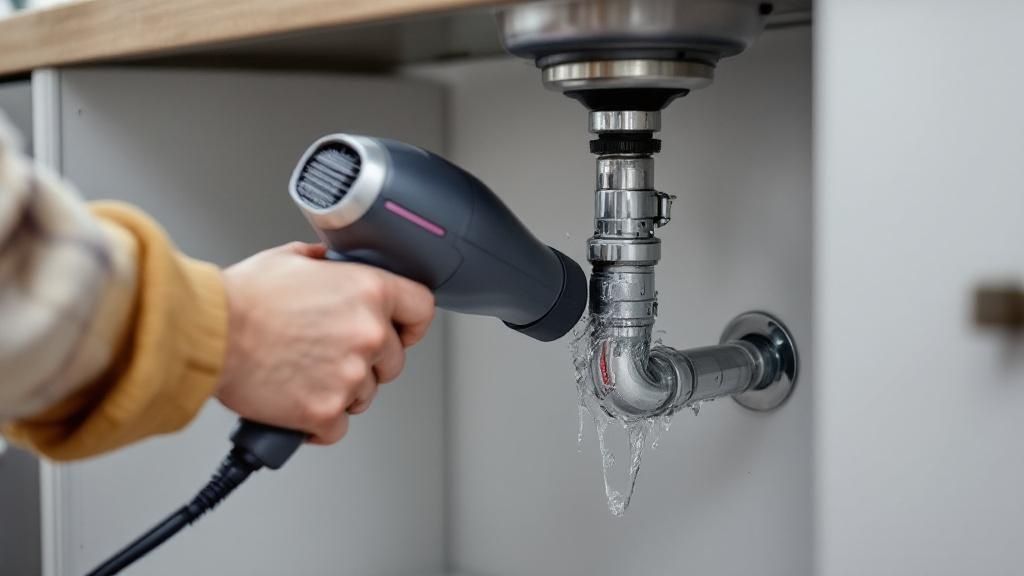
If the frozen pipe is exposed and you can easily get to it (like under a kitchen sink), there are a few gentle methods you can briefly try before calling us in. The keyword here is gentle.
First things first: open the faucet connected to the frozen pipe. This is non-negotiable. It gives the melting ice and built-up pressure a path to escape. Without an open faucet, you risk turning the pipe into a sealed pressure cooker, which is exactly how bursts happen.
Here’s a summary of safe approaches, but remember, if you're not seeing results quickly, the risk isn't worth it:
- A Simple Hairdryer: On its lowest heat setting, aim the hairdryer at the pipe.
- Warm Towels: Wrap towels soaked in warm—not boiling—water around the frozen section.
- Electric Heating Pad: A low-wattage electric heating pad can also provide gentle, consistent heat.
We’ve repaired countless pipes in Marina and Castroville that were damaged by homeowners who thought more heat meant a faster solution. The goal isn’t to boil the water; it's to gently coax the ice plug to release its grip without causing thermal shock to the pipe material.
If these gentle methods don't get the water flowing again in a reasonable amount of time, it's a sign to stop. The freeze is likely more extensive than you can safely handle on your own. Your best move is to call a licensed plumber.
The Most Dangerous DIY Mistakes We See
While a hairdryer is a safe bet, other common tools you might find in a Prunedale or Watsonville garage are absolutely off-limits. Using any of these can lead to fires, toxic fumes, or irreparable damage to your entire plumbing system.
NEVER Use These to Thaw Pipes:
- Propane Torches or Blowtorches: This is the number one cause of house fires related to frozen pipes. An open flame can superheat a copper pipe in seconds, causing it to burst. It can also easily ignite surrounding wood, insulation, or even old cobwebs.
- Kerosene or Propane Heaters: These portable heaters are designed for well-ventilated spaces, not cramped crawlspaces or under cabinets. They pose a massive fire risk and can release deadly carbon monoxide gas into your home.
- Heat Guns: We use professional-grade tools, but a high-powered heat gun from a hardware store is a different beast. It can easily melt PVC pipes or damage copper ones if you don't know exactly what you're doing.
- Anything with an Open Flame: It sounds obvious, but it has to be said. This includes lighters, candles, and any other tool that isn't designed for controlled, low-level heating.
If the pipe is inside a wall or the gentle methods aren't working, don't keep guessing. Continuing to apply heat without knowing the exact location and size of the ice plug is a huge gamble. Your best and safest move is to call for a professional frozen pipe thaw to protect your home and your family.
The Hidden Dangers After a Successful Thaw
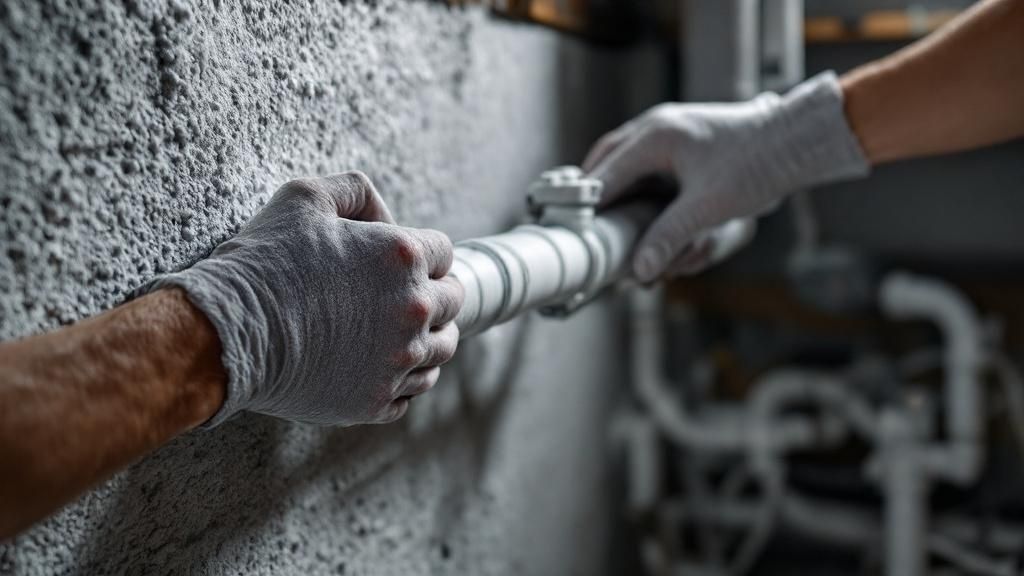
Getting the water flowing again after a freeze feels like a huge victory. It's easy to breathe a sigh of relief and assume the crisis is over. But from our experience, the moments right after a frozen pipe thaw are when the real trouble often begins. The incredible pressure from expanding ice can create tiny, nearly invisible fractures in the pipe that only start to leak once water is moving again.
A pipe that has frozen once has been structurally compromised. Even if it didn't burst open during the freeze, the stress it went through makes it far more likely to fail in the future. We've seen this happen countless times in homes from Marina to Castroville, where a relieved homeowner finds a growing water stain a day or two after thinking they'd solved the problem.
Telltale Signs of a Post-Thaw Leak
Your job isn’t finished just because the faucets are running. Now, it’s time to play detective and hunt for subtle signs of a hidden leak. You need to stay vigilant for potential water leaks, as these are the classic calling card of a burst pipe.
Keep a sharp eye out for these red flags:
- Small Drips or Puddles: Check the floor and cabinets around the pipe that was frozen. Any moisture, no matter how small, is a serious warning.
- Wet Spots on Drywall or Ceilings: Discoloration, sagging, or soft spots on your walls and ceilings are clear signs of a slow leak hiding behind the surface.
- A Musty or Damp Smell: If you notice a persistent, earthy smell, it's often because of hidden moisture you can't see.
- A Spinning Water Meter: This is the ultimate test. Make sure all your faucets and water-using appliances are off. If the dial on your water meter is still moving, water is escaping somewhere in your system.
The damage from these slow leaks adds up quickly. During one major cold spell, a single water company reported a 100 million liter per day spike in demand, mostly from post-thaw leaks and people leaving taps running. That’s a staggering amount of wasted water and potential property damage.
Our Expert Takeaway: A professional inspection after a frozen pipe thaw isn't an upsell; it’s essential diligence. Think of it like getting a check-up after a major illness. We can use specialized equipment to ensure the pipe's integrity and protect your home from a surprise flood down the road.
Ignoring these warning signs can lead to far more extensive and expensive problems. To learn about other seasonal risks, take a look at our guide to common winter plumbing issues that we see in homes across the Monterey area.
You’ve just dealt with the stress of thawing a frozen pipe, and I can tell you from experience, it’s a headache no homeowner wants to go through twice. The absolute best way to handle a frozen pipe is to make sure it never happens in the first place. This is all about taking proactive steps that make sense for our unique Monterey County climate and the way our homes are built.
A little bit of prevention really does go a long way. Our winters might seem mild compared to other parts of the country, but those sudden cold snaps—especially when you factor in the damp coastal air—can be surprisingly brutal on your plumbing. Getting ahead of the first frost is the secret to keeping your home safe.
Sealing Up Your Home's Defenses
Your first line of defense is simply keeping the cold air out. It sounds obvious, but even a tiny, pencil-sized gap can funnel a stream of frigid air directly onto a vulnerable pipe, creating a personal deep freeze right inside your wall or crawlspace.
- Seal Cracks and Openings: Take a walk around your home's exterior and look closely, especially where pipes enter or leave the house. Check for gaps around foundation vents, dryer vents, and outdoor spigots. A can of expanding foam spray or a tube of good exterior caulk can seal these trouble spots for good.
- Insulate Key Areas: The real danger zones are unheated spaces. If you live in Marina or Seaside, you probably have exposed pipes in a crawl space that are begging for insulation. For homes out in Carmel Valley or Prunedale, plumbing that runs through a garage or attic is a huge vulnerability.
- Open Cabinet Doors: On those extra-chilly nights, one of the easiest tricks in the book is to just open the cabinet doors under your kitchen and bathroom sinks. This lets the warm air from your house circulate around the pipes, which is often just enough to stop a freeze before it starts.
A classic mistake we see all the time in Salinas is homeowners forgetting to disconnect their garden hoses from the outdoor spigots before winter. When you leave a hose attached, water gets trapped in the faucet and the pipe stub-out. It freezes, expands, and can easily crack the pipe right inside your wall.
Strategic Insulation and Pipe Protection
Beyond sealing up drafts, putting a protective layer directly on your pipes is the single most effective thing you can do. You don’t have to insulate every pipe in the house; focus your energy on the most vulnerable sections first.
This isn't just a local problem. The U.S. Department of Energy says that nearly 250,000 homes deal with frozen pipe nightmares every year. It’s such a common issue that the market for pipe thawing equipment was valued at a staggering $500 million back in 2022, according to Verified Market Reports.
Any exposed pipes you can see in a garage, basement, or crawl space are prime candidates for insulation. You can pick up affordable foam pipe sleeves or fiberglass wrap from any hardware store. They're easy to install and create a crucial thermal barrier. This small investment can save you from a major disaster down the road. For more local tips, definitely check out our guide on plumbing tips for winter to get your home fully prepped.
If you have a home that might sit vacant during the winter, like some of the properties in Carmel-by-the-Sea, it's critical to leave the thermostat set to at least 55 degrees Fahrenheit. This keeps the ambient air temperature inside the walls just high enough to protect your plumbing. Taking these steps is hands-down the most reliable way to avoid an emergency frozen pipe thaw and keep your home safe all winter.
When to Call a Professional Plumber
Look, a DIY approach can sometimes work if you've got a single, easily accessible pipe that's just a little frosty. But knowing when to throw in the towel is absolutely critical. A stubborn freeze or a pipe hidden in a wall isn't just an annoyance—it's a sign the problem is bigger than a simple fix.
The whole point here is to get your water back on safely, not to roll the dice with your home's integrity.
If you’ve been aiming a hairdryer at a pipe for 30 minutes and see zero change, it’s time to put the tools down. Pushing it further is a serious risk, and it tells you the ice blockage is either too big or too far down the line for surface heat to ever reach. That’s your cue to call in the pros.
Signs You Need an Expert Immediately
Some situations are just non-negotiable. The risk of causing a flood or, even worse, a fire is simply too high. For homeowners in Salinas and Monterey, these are the red flags that mean it's time to pick up the phone.
Call us right away if you run into any of these:
- The Pipe is in a Wall or Ceiling: You can't thaw what you can't see. Trying to guess by blasting heat at your drywall is a recipe for disaster. We use specialized thermal cameras to find the exact freeze point without tearing your house apart.
- You Suspect Multiple Frozen Pipes: If you have no water in the kitchen and the upstairs bathroom, you're dealing with a widespread system freeze. This requires a methodical approach to thaw everything in the right order and prevent pressure buildups.
- You See a Bulge or Crack: A visible bulge, crack, or frost line on the pipe itself means it's under immense pressure and is about to burst. Stop everything. Don't apply any more heat. Shut off your main water supply and call for help.
- The Pipe Has Already Burst: This is a full-blown plumbing emergency. Your first move is to shut off the water main immediately. Your second should be to learn more about our emergency plumbing services in Salinas and Monterey so we can get there fast to minimize the damage.
Our family-owned business has been handling these exact situations since 1988. We have professional-grade pipe thawing machines that use a low-voltage electrical current to safely warm the pipe from the inside out. It's a method that's incredibly effective and completely eliminates the fire risk associated with torches or high-powered heat guns.
When a pipe freezes in your home, a million questions can race through your mind. It’s a stressful situation we see all the time, from Salinas to Monterey. As a family-owned plumbing company serving this area since 1988, we've heard just about every question there is. Here are some of the most common ones we get from our neighbors dealing with the anxiety of a frozen pipe.
The most important thing to remember is that a frozen pipe thaw is a delicate process. Acting on bad information can make the problem much worse.
Will Frozen Pipes Thaw on Their Own?
Technically, yes, a frozen pipe will eventually thaw out once the air around it warms up. But waiting for that to happen is one of the riskiest things a homeowner can do.
The real danger isn't the ice itself, but what happens during the thaw. The immense pressure from the expanding ice may have already cracked the pipe. If you’re not there to shut off the water main the second it happens, that unseen crack can unleash a torrent of water, leading to a catastrophic flood. A passive, wait-and-see approach is a huge gamble.
How Long Does It Take for Pipes to Unfreeze?
This is a tough one to answer because it really depends on the situation. If you're gently using a hairdryer on an exposed pipe under a sink in your Pacific Grove home, you might have it flowing again in 30 to 45 minutes.
But if the freeze is deep inside a poorly insulated wall in an older Carmel-by-the-Sea house, or it’s a long section of pipe in a chilly Prunedale garage, it could take much, much longer. If you’ve been trying to thaw a pipe for more than an hour with no luck, that’s a clear signal the blockage is too severe or widespread for a DIY fix.
Our Expert Takeaway: Don't get fixated on the clock. If you’re not making obvious progress in a reasonable amount of time, it's far safer to stop and call for a professional evaluation. Pushing your luck can lead to expensive damage.
At What Temperature Do Pipes Actually Freeze?
Water begins to freeze at 32°F, but it takes more than a quick dip to that temperature for a pipe to freeze solid. The generally accepted danger zone for unprotected pipes is 20°F or lower for a sustained period.
However, the number on the thermometer is only part of the story. Other factors are just as important:
- Pipe Location: Pipes running through exterior walls, attics, crawl spaces, or unheated garages are the most vulnerable.
- Insulation: This is the big one. A lack of proper pipe insulation is the most common culprit we see in otherwise temperate areas like ours.
- Drafts: Even a tiny, unsealed crack in your foundation can funnel frigid air directly onto a pipe, creating a super-chilled spot that freezes fast.
If a Pipe Bursts, What Should I Do First?
A burst pipe is an absolute emergency, and you need to act fast. Forget about the mess for a moment—the priority is stopping the flow of water.
- Shut Off the Main Water Valve: This is your first, most critical step. Find your home's main water shutoff and turn it off immediately to stop more water from flooding your home.
- Turn Off Electricity (If Necessary): If water is spraying anywhere near electrical outlets, appliances, or your breaker box, go to the panel and shut off the power to that entire area. Water and electricity are a lethal combination.
- Call for Emergency Service: This isn't a DIY repair. You need a professional plumber to locate the break, make the repair, and safely get your water back on.
Once the water and power are under control, you can start the process of removing water. But controlling the source is always priority number one.
When you're facing a frozen pipe emergency, you need a team you can trust. For a fast, safe, and professional frozen pipe thaw, contact the experts at Alvarez Plumbing. We've been serving the Monterey County community for over 35 years. Visit us at https://alvarezplumbingsalinas.com to schedule service.