
Direct Answer: A whole-house water line repipe for a typical Salinas single-family home generally takes one to three days of pipe work, plus time for permits and a final inspection before walls are patched.
A whole-house repipe is one of those projects that homeowners put off longer than they should, not because they don’t recognize the warning signs, but because the job feels enormous and unpredictable. Low pressure, rust-colored water, or a string of leaks in different spots are frustrating on their own. Add the mental picture of your walls torn apart for weeks, and it’s easy to keep patching and hoping.
The reality is usually much less dramatic than that mental picture. For a typical Salinas single-family home, a water line repipe can be done in one to three days of actual pipe work. The walls don’t get gutted, experienced crews open small, targeted access points and patch them cleanly when the job is done.
This article walks through each phase of a repipe in plain terms: what happens, in what order, how long each phase takes, and what decisions you actually need to make along the way. If you’re weighing whether a repipe is even the right call, we’ll cover that too.
When Patching Stops Making Sense
Most homeowners don’t arrive at the repipe conversation out of nowhere. They get there after a pattern: a leak gets fixed, then another shows up somewhere else, then water pressure starts dropping, then someone notices the water looks off. When a small plumbing issue turns into a big repair bill is a real progression, and it’s worth knowing the signs that indicate the pipe system itself is the problem, not just one fixture or one joint.
Signs that point toward a repipe rather than another patch:
- Recurring leaks in multiple locations over a short period, especially in a home with galvanized steel or iron pipes
- Consistently low water pressure throughout the house that can’t be explained by the pressure regulator or individual fixtures
- Rust-colored or discolored water coming from multiple taps, not just one
- A plumber’s camera inspection showing widespread pipe wall thinning or corrosion throughout the system
- A home built before 1985 that has never had its water lines replaced
Salinas has a significant amount of older housing stock, homes built in the 1950s through 1970s that originally came with galvanized steel water lines. Those pipes corrode from the inside out. Hard water is quietly shortening the life of your water heater in the same way it accelerates corrosion and scale buildup inside aging water pipes throughout the Salinas Valley.
If the camera inspection shows isolated damage in one section, a targeted repair may be all you need. But if the corrosion is widespread, continued patching just means continued repairs, and the cost adds up faster than a one-time repipe.
Phase One: Assessment, Material Choice, and Permits
Before any pipe gets touched, a licensed plumber needs to assess the full scope of the job. That typically means a walkthrough of the home, a review of the existing pipe material and layout, and in many cases a sewer camera inspection to get a clearer picture of pipe condition in areas that aren’t visible to the eye.
Once the scope is confirmed, two things happen in parallel: material selection and permit application.
Material choice for water lines comes down to a few options:
- PEX (cross-linked polyethylene): This is the most common choice for residential water line repiping in California today. It’s flexible, which means it can be threaded through walls with fewer access cuts. It’s code-approved under the 2025 California Plumbing Code, and it handles the scale buildup from Salinas’s hard water better than copper over the long run. Most residential repipes in this area use PEX.
- Copper: Still appropriate in some applications, particularly for exposed supply lines or where local conditions favor it. More expensive as a material and more labor-intensive to install, but has a long track record.
- Waste lines (ABS or PVC): If the repipe includes drain, waste, or vent lines, ABS and PVC are standard. This is a separate scope from water line repiping and has its own timeline.
- Gas lines (black iron or CSST): Gas repiping is also a separate scope with its own permits and inspection requirements.
On the permit side: in Salinas, a whole-house repipe requires permits through the City of Salinas Community Development department. This is not optional, it’s required by municipal code, and the inspection that follows is what protects you legally if you ever sell the home or file an insurance claim. A licensed contractor handles the permit application and schedules the inspection. This removes a real administrative burden from the homeowner, and it’s worth confirming upfront that whoever you hire does this in-house rather than leaving it to you.
The Four Phases of a Whole-House Repipe
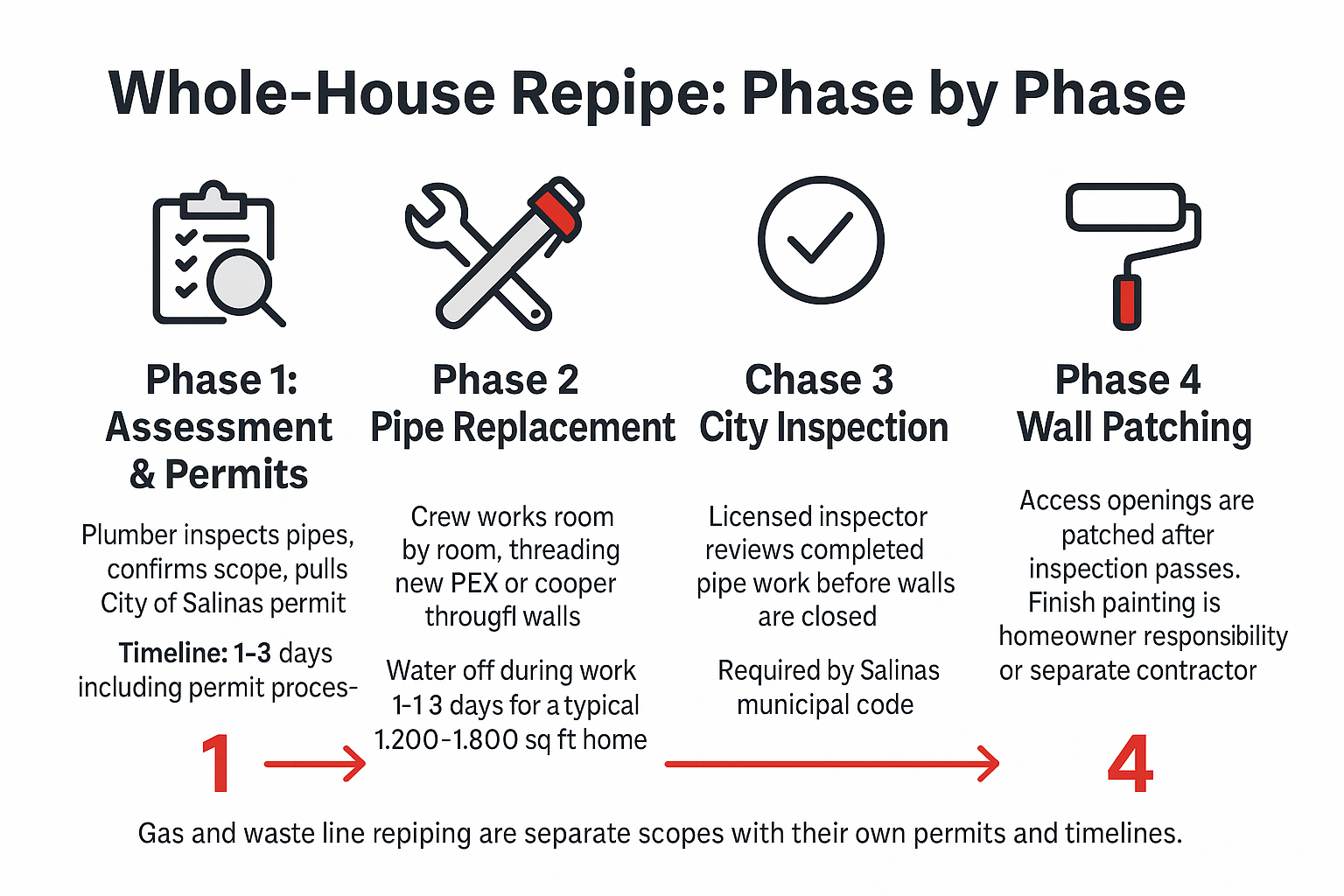
Here’s a simple visual breakdown of how a repipe project moves from start to finish, what happens in each phase and roughly how long each one takes.
Phase Two: The Actual Pipe Work, What Happens Inside Your Home
This is the part homeowners are most anxious about, and it’s usually the part that surprises them the most, in a good way.
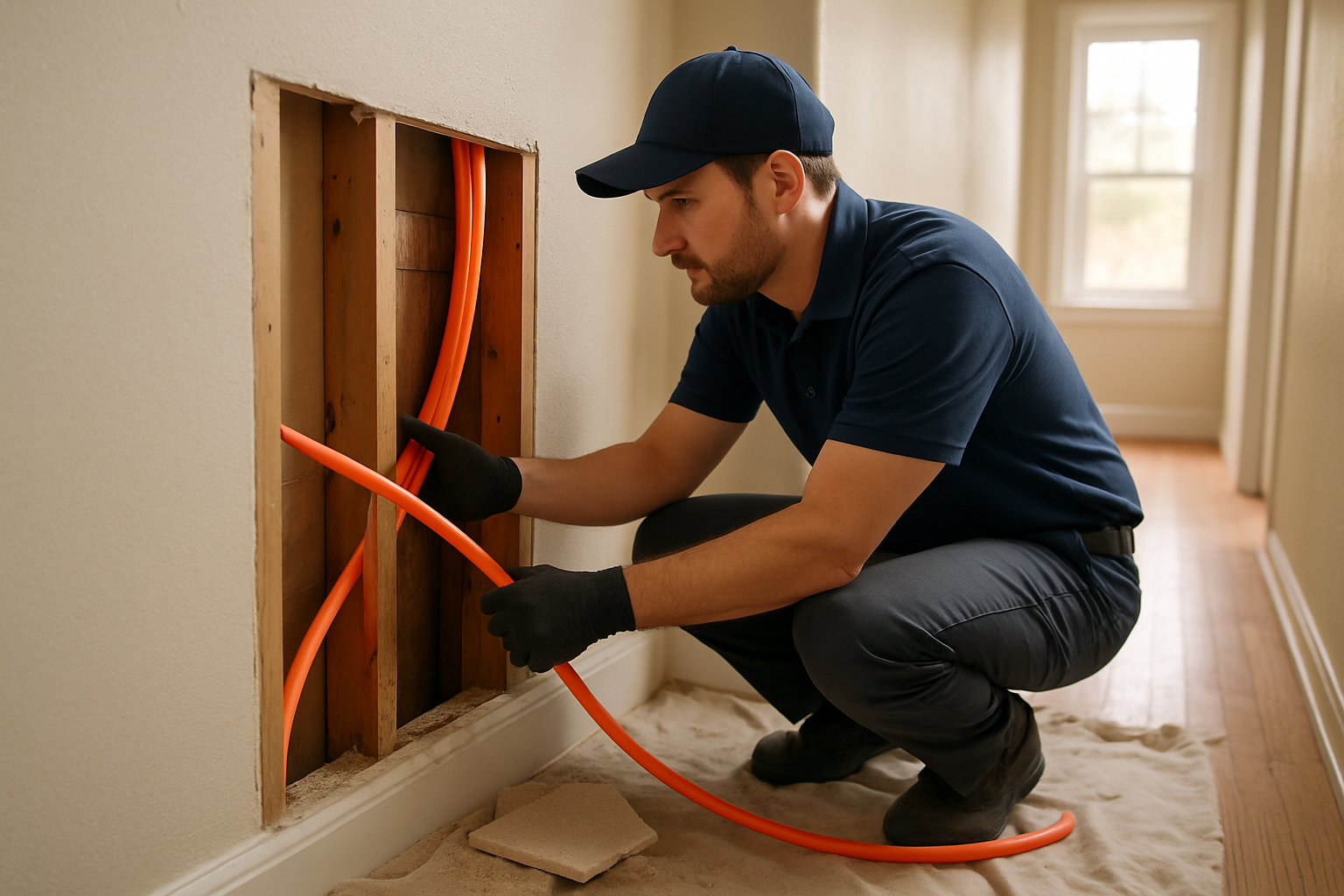
An experienced crew works through the home systematically, room by room and zone by zone. They’re not tearing out large sections of wall. They’re making small, targeted access cuts, typically 4 to 12 inches wide, at specific points where they need to thread new pipe or connect fittings. Because PEX is flexible, it can snake through wall cavities with fewer openings than rigid copper would require.
During the pipe work phase, water to the home will be shut off. This is the piece that matters most for scheduling, especially if you’re managing a rental unit or a short-term rental on the Salinas-Monterey corridor. A typical 1,200 to 1,800 square foot Salinas single-family home generally sees the pipe replacement completed in one to three days, depending on:
- The number of bathrooms and fixtures
- Accessibility, slab homes with pipes in the slab require more planning than homes with crawl spaces
- Whether the job is water lines only, or includes gas or waste line work as well
At the end of each work day, the crew typically restores temporary water access so the home isn’t completely without water overnight. Full water restoration happens after the pipe work passes inspection.
For property managers or Airbnb hosts with properties in Salinas or Monterey, the honest answer is to plan for two to three days without reliable water service for a mid-size home, then build a buffer into your tenant or booking calendar. This is a more conservative estimate than the best-case scenario, but it accounts for real-world variables like permit scheduling and inspector availability.
Phase Three: Inspection and Patching
Once the pipe work is complete, the project doesn’t end, it moves into the inspection phase. A City of Salinas inspector needs to review the new pipe installation before the walls are permanently closed. This is the step that makes the permit worthwhile. If everything is installed correctly, the inspection passes and you have a documented, city-approved record of the work.
After the inspection passes, the wall openings get patched. An experienced crew leaves clean, small openings that are straightforward to repair. Drywall patching and finish painting are sometimes handled by the plumbing contractor, sometimes handed off to a drywall or paint sub, clarify this scope before the job starts so there are no surprises at the end.
The full project timeline from first call to patched walls, including permit processing, pipe work, inspection scheduling, and patching, typically runs one to two weeks for most Salinas single-family homes. The actual disruption to daily life is concentrated in the pipe work phase, which is where the one-to-three-day water outage window applies.
If you’re also dealing with questions about what the city requires for related work, the article on water heater permits in Salinas covers how the City of Salinas handles residential plumbing permits in general, which is useful context if your repipe is part of a broader project.
Repipe Scope Comparison: Water, Gas, and Waste Lines
Not every repipe covers every system. Here’s a straightforward comparison of what each scope involves so you know what questions to ask.
| Scope | Typical Materials | Requires Separate Permit? | General Timeline |
|---|---|---|---|
| Water line repipe | PEX or copper | Yes | 1-3 days pipe work |
| Gas line repipe | Black iron or CSST | Yes, separate from water permit | Varies by linear footage and access |
| Waste/drain line repipe | ABS or PVC | Yes, separate scope | Varies by damage extent |
| Full whole-house repipe (all three) | All of the above | Multiple permits required | Typically 5-10+ days total |
What a Repipe Actually Costs in Salinas
Pricing on a repipe varies enough that any single number would be misleading without knowing the specifics of your home. That said, it’s reasonable to go into conversations with some general market context.
For a water line repipe on a typical Salinas single-family home, many homeowners in this area see costs somewhere in the range of $3,000 to $6,500, depending on square footage, pipe material chosen, the number of fixtures, and how accessible the pipes are. Slab foundations typically cost more than homes with crawl spaces because access is more involved.
Gas line repiping is a different scope with a different cost driver, linear footage and the complexity of the existing system. Many homeowners in this area see gas repipe quotes somewhere in the range of $800 to $3,000.
Waste line costs depend heavily on the extent of the damage and whether any sections require digging. These are better estimated after a camera inspection gives a clear picture of what’s actually happening inside the pipes. If you haven’t had a camera run on your sewer lines recently, it’s worth doing before committing to a scope, buying a home in Salinas or Monterey covers how that inspection works and what it tells you.
Permit fees are an additional cost on top of labor and materials. The City of Salinas sets those fees and they can change, ask for an itemized quote that breaks out materials, labor, and permit costs separately so you’re comparing apples to apples between contractors. For the most accurate number on your specific home, the only reliable path is an in-person estimate.
Frequently Asked Questions About Whole-House Repiping
Will I be without water the entire time the crew is working?
During active pipe work, yes, water to the house is shut off. But a crew working efficiently on a typical Salinas home usually restores temporary water access at the end of each work day so you’re not completely without water overnight. Full, permanent restoration happens after the city inspection passes. Plan your schedule around one to three days of reduced water access for a standard single-family home.
How much of my walls will get opened up?
Less than most homeowners expect. An experienced crew makes small, targeted access cuts, often 4 to 12 inches wide at key points, rather than opening large wall sections. PEX tubing’s flexibility is a big reason for this: it threads through wall cavities with fewer cuts than rigid pipe requires.
Is PEX actually code-approved in California?
Yes. PEX is approved under the 2025 California Plumbing Code and is the most common choice for residential water line repiping in the state. It handles hard water conditions well, which matters in Salinas where scale buildup is a real factor in pipe longevity.
Do I need a permit for a repipe in Salinas, and who pulls it?
A permit is required by the City of Salinas for any whole-house repipe. A licensed plumbing contractor handles the permit application with City of Salinas Community Development and schedules the inspection. You should not have to manage that paperwork yourself, if a contractor tells you to pull your own permit, that’s a red flag.
Can I stay in the house while the repipe is happening?
Generally yes, though the noise and limited water access during work hours can be disruptive. If you have young children or anyone who needs reliable water access throughout the day, it may be more comfortable to make alternate arrangements for the one to three days of active pipe work.
Should I repipe gas and waste lines at the same time as the water lines?
It depends on the condition of those systems. If your gas or waste lines are also aging and showing problems, combining the scopes can reduce total disruption time and sometimes reduces labor cost compared to doing each job separately. But if only the water lines are failing, there’s no reason to widen the scope unnecessarily. A camera inspection on your drain lines will tell you whether the waste system needs attention now or later.
Ready to Get a Straight Answer on Your Pipes?
If you’re seeing the signs that point toward a repipe, recurring leaks, low pressure, discolored water, an in-person assessment is the only way to know for certain what your home actually needs. Alvarez Plumbing has been handling water, gas, and waste line repiping across Salinas and the Monterey Bay Area since 1988, and the team manages City of Salinas permitting in-house from start to finish. Call (831) 757-5465 any time, or schedule online at alvarezplumbingsalinas.com.