
If your house is older and you’re seeing repeated pipe leaks, you might be wondering: Is this just bad luck, or is it a sign of something bigger? No one wants to rip out walls if it’s not absolutely necessary. Multiple leaks, however, are almost never a coincidence. They're usually the most obvious symptom that your home's entire plumbing network is getting old and tired.
Is Your Plumbing Problem Bad Luck or a Warning Sign?
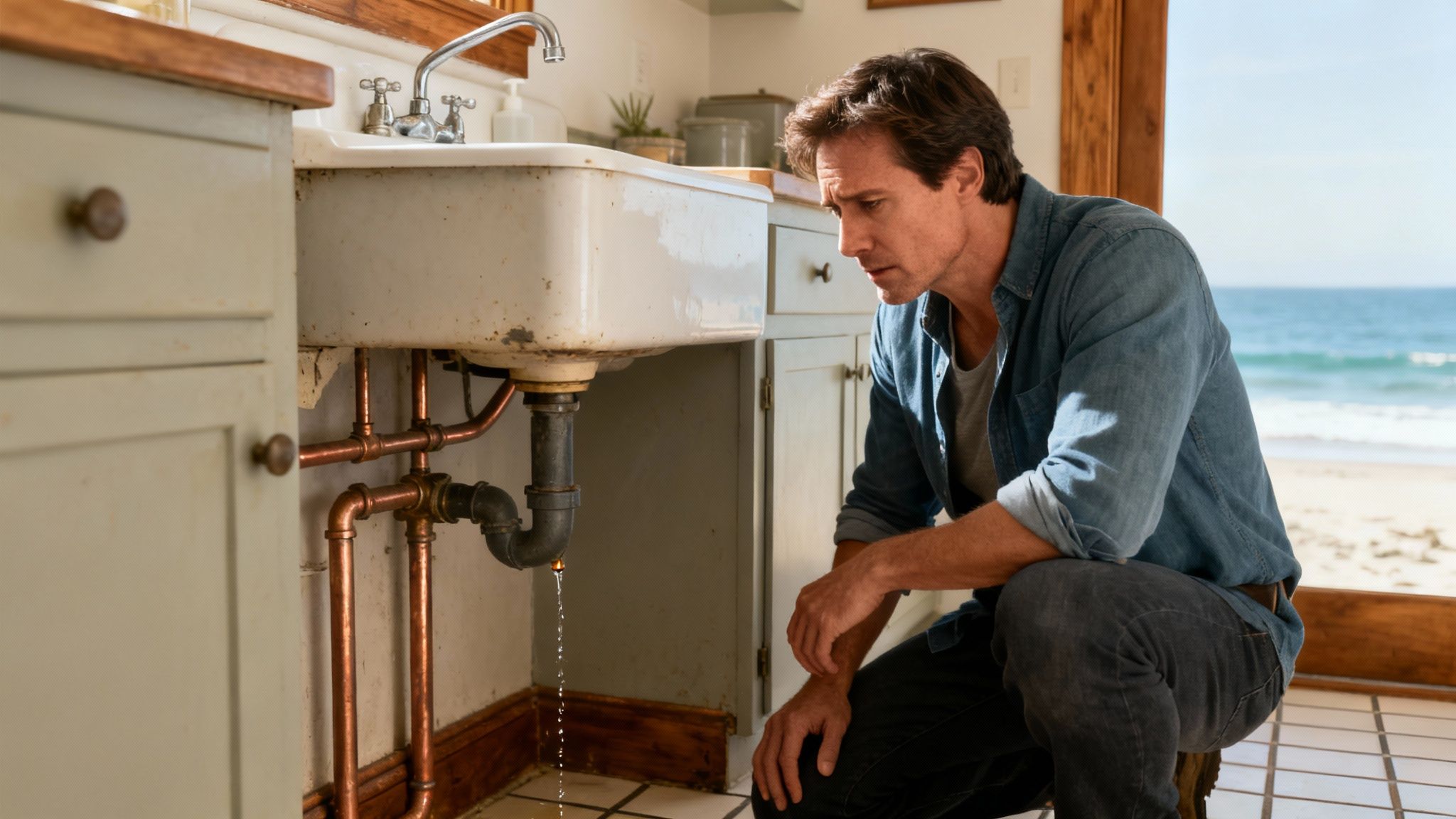
Let’s be honest, no one gets excited about the idea of tearing open walls to replace pipes. For most homeowners in Salinas and Monterey, the thought of a full repipe sounds massive and disruptive. It’s tempting to just call a plumber for a spot repair every time a new drip shows up, crossing your fingers that this one is the last.
But what if those recurring leaks are part of a much bigger story? Your plumbing system is a lot like the root system of a tree—what's happening in one small branch is often directly connected to the health of the whole thing. A single, isolated leak can be fixed. But when you start seeing three or more leaks within a year, it’s a huge red flag that the pipes themselves are starting to fail from the inside out.
The Age Factor in Monterey County Homes
Many of the beautiful, charming homes in Salinas, Pacific Grove, and Carmel-by-the-Sea were built decades ago, and that age is a major piece of the puzzle. According to national housing data, 50% of U.S. homes were built before 1980. A lot of them, especially here in our local communities from Watsonville to Prunedale, still have their original plumbing that’s now at or past its expected lifespan.
In Salinas and the Monterey Bay area, homes from the ‘60s–’80s often have galvanized steel or aging copper pipes. Over time, these materials corrode from the inside out, a problem made worse by our region's hard water or even local seismic activity.
This hidden, internal corrosion is the real enemy. It silently weakens your entire plumbing system, just waiting to spring the next surprise leak on you. Patching one spot doesn't fix the underlying problem, and the cost of those repeat service calls can add up faster than you'd think.
The most common misstep we see is homeowners patching leak after leak, thinking they're saving money. In reality, multiple spot repairs can often cost more over time than a proactive repipe—without providing any long-term peace of mind.
To help you connect the dots, we put together a quick checklist of the most common signs we see in homes across Salinas and Monterey County that indicate a failing plumbing system.
Quick Repipe Checklist for Salinas and Monterey Homeowners
| Warning Sign | What It Looks Like | What It Means |
|---|---|---|
| Recurring Leaks | You've had two, three, or more leaks in the past year. | The pipe material itself is failing system-wide, not just in one spot. |
| Discolored Water | Water from your taps has a brown or reddish tint. | Your pipes are rusting from the inside out, and particles are breaking off. |
| Low Water Pressure | Showers are weak; faucets barely trickle. | Corrosion and mineral buildup are clogging the pipes, restricting flow. |
| History of Leaks | You've dealt with previous leaks, especially under the foundation (slab leaks). | The system is showing signs of widespread, age-related failure. |
If you're nodding along to more than one of these points, it's a strong sign that it's time to have a serious conversation about the health of your plumbing.
When a Leak Becomes a System-Wide Red Flag
If you’re seeing telltale signs that your whole system is failing, it's time to shift from reacting to leaks to proactively solving the problem. Check for these issues:
- Discolored or Rusty Water: This means your pipes are literally rusting away from the inside.
- Low Water Pressure: Corrosion and scale buildup are choking the water flow like a clogged artery.
- A History of Leaks: This is especially true for slab leaks that occur under your home's foundation.
If any of this sounds painfully familiar, it's not just you—and you’re not alone. Many homes in Salinas and nearby neighborhoods are hitting the 40+ year plumbing mark. Alvarez Plumbing has been helping Monterey County families navigate these exact issues since 1988. We offer no-pressure second opinions and can walk you through the pros and cons of sectional repair vs. full repiping.
Telltale Clues Your Pipes Are Crying for Help
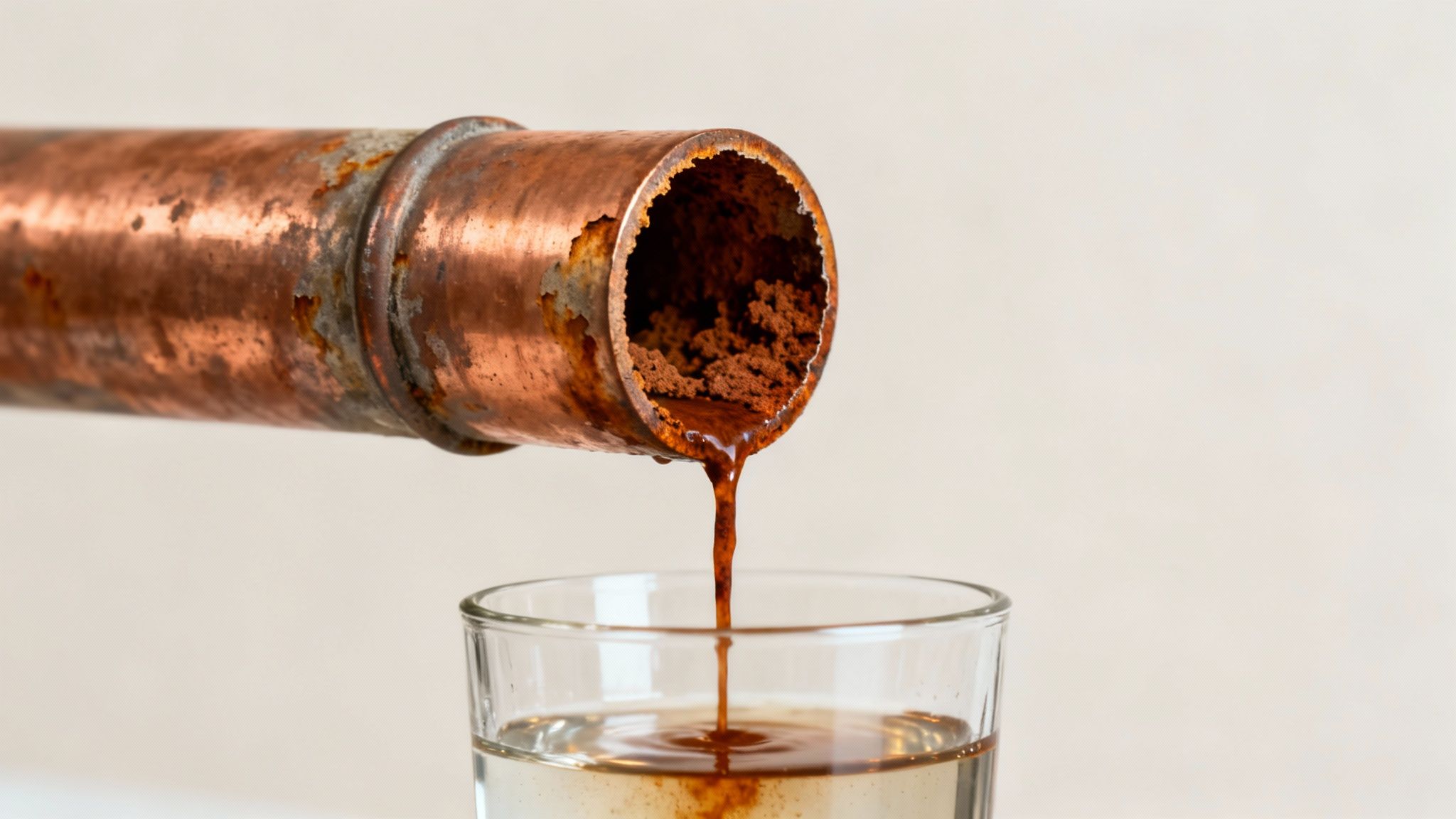
Your home’s plumbing doesn't just fail out of the blue. It almost always sends out quiet warnings first—subtle clues that a bigger problem is brewing behind your walls. Learning to recognize these signs is the key to knowing when it's time to think about a repipe.
Many homeowners here in Pacific Grove and Carmel Valley notice these issues but don't always realize they all point back to the same root cause: old, failing pipes. Let's break down the most common symptoms and what they’re really telling you about your home.
The Clogged Artery Effect: Low Water Pressure
Does your shower feel more like a weak drizzle than a refreshing spray? Does it take forever to fill a pot of water at the kitchen sink? This isn't just a minor annoyance; it's a critical sign that something is wrong deep inside your pipes.
Think of your water lines like the arteries in your body. Over decades, mineral deposits from Monterey County's hard water, combined with rust and corrosion, build up on the inside walls. This buildup, known as scale, slowly narrows the pipe's internal diameter, essentially choking off the water flow.
Just like a clogged artery restricts blood flow, this internal blockage starves your home of the water pressure it needs. No amount of cleaning faucet aerators is going to fix a problem that's happening inside the pipes themselves.
Red Flags in Your Water Glass
Another unmistakable sign of trouble is a sudden change in your water's appearance, smell, or even its taste. If you turn on the tap and see brown, reddish, or yellow-tinted water, your pipes are sending you a direct message.
That color is rust. It means the inside of your galvanized steel or old copper pipes is actively corroding and flaking off into your water supply. You’re literally seeing pieces of your plumbing system coming through the faucet.
This isn’t just an aesthetic problem; it’s clear evidence that the structural integrity of your pipes is compromised from the inside out.
Key Takeaway: Discolored or metallic-tasting water is a serious warning sign. It suggests that your pipes are corroding and leaching rust and other materials into the water your family uses every day.
A Symphony of Strange Noises
Your plumbing system should operate quietly in the background. So, when you start hearing strange new noises, it’s time to pay close attention. Banging, rattling, or clanking sounds when you turn faucets on or off can be a symptom of a problem we call water hammer.
Water hammer happens when fast-moving water is forced to a sudden stop, creating a shockwave that rattles the pipes. While it can have a few different causes, in older systems it’s often made worse by failing pipe supports and the high pressure needed just to force water through constricted, corroded lines.
These vibrations aren't just noisy; they put a ton of stress on your entire plumbing network, weakening joints and dramatically increasing the risk of a burst pipe.
The Most Obvious Sign: Recurring Leaks
One or two leaks over a decade might be manageable. But if you find yourself calling a plumber for leaks every few months, you’re no longer dealing with isolated incidents—you have a systemic failure on your hands. Understanding the warning signs that indicate your home needs repiping is crucial for preventing costly water damage.
Persistent, hidden drips behind walls or under sinks in your Watsonville home are a sure sign your pipes are at the end of their functional lifespan. Each new leak is just a symptom of widespread corrosion. When one spot fails, it's a guarantee that other sections are just as weak and ready to spring a leak next.
Patching these spots one by one is like putting a band-aid on a deep wound. It’s a temporary fix that completely ignores the underlying disease. If this sounds familiar, it may be time to learn more about the signs that your older home's plumbing needs a major upgrade.
Why Patching Leaks Can Be an Expensive Mistake
When a pipe springs a leak in your Seaside or Marina home, your first thought is probably to get it patched. Fast. It feels like the cheapest, most direct way to stop the drip and move on with your life. And for a single, one-off leak, it often is.
But when those "one-off" leaks start happening again and again, that quick fix becomes a costly trap. Many homeowners think they’re saving money by tackling leaks one at a time, but this can be one of the most expensive plumbing mistakes you can make. The reality is that the cycle of emergency spot repairs often ends up costing more than a single, planned repipe.
Even worse, the corrosion you can't see is weakening other parts of your plumbing right now, just waiting to create the next surprise. This "patch and pray" approach is a gamble against a system that's already telling you it’s failing.
The True Cost of Multiple Repairs
Let's walk through a realistic scenario. Imagine a pipe under your kitchen sink starts leaking on a Saturday morning. You call for an emergency repair, which comes with a premium service fee, labor, and parts. A few months later, a drip starts inside a bathroom wall, leading to another urgent call—this time with the added cost of cutting into and patching up drywall.
By the time the third leak pops up within a year, you’ve spent a significant amount on reactive fixes. The cost goes way beyond just the plumber's bill.
Here’s where the expenses really start to pile up:
- Emergency Service Fees: Weekend, holiday, or after-hours calls always come at a premium.
- Water Damage Restoration: Every leak, no matter how small, can ruin drywall, warp flooring, and destroy cabinets.
- Mold Remediation: Moisture trapped behind walls is the perfect breeding ground for mold, which is a costly and complicated problem to remove safely.
- Higher Water Bills: A slow, hidden leak can waste hundreds of gallons of water, silently driving up your monthly bill.
- The Stress Factor: Let's be honest, constantly worrying about where the next leak will appear takes a serious toll.
When you add it all up, the true cost of just three or four "small" repairs can easily meet—or even exceed—the price of a planned, partial repipe. A full or partial repipe may actually save you money in the long run and prevent serious water damage.
From Annoyance to Catastrophe
The biggest risk of constant patching isn’t just about money; it’s the potential for a catastrophic failure. Every patched leak is a warning sign that the entire system is brittle and corroded. The same water pressure and internal decay that caused the first leak are still working away on every other pipe in your house.
This is why patching is so often a short-term fix for a long-term problem. You aren’t actually strengthening your plumbing system; you’re just playing a waiting game for the next weakest spot to burst. While it can be tempting to try and handle a leak yourself, it's critical to understand the risks of DIY plumbing fixes before you end up making things worse.
An investment in repiping is an investment in your home's safety and value. It’s a permanent solution that stops the cycle of emergency repairs and protects you from the massive costs and headaches of a major pipe burst.
At Alvarez Plumbing, we've seen this exact scenario play out in homes all across Monterey County since 1988. We can help you look at the big picture, comparing the long-term costs of repeated repairs against the security of a new, reliable plumbing system.
Your Repiping Options: Copper vs. PEX in Monterey Bay Homes
Once you know a repipe is in your future, the next big question is what material to use. For most homeowners in Monterey Bay, this choice almost always comes down to two fantastic options: traditional copper and modern PEX.
Both will get the job done and give you a reliable plumbing system, but they have key differences in cost, how they're installed, and how they perform over the long haul. The right choice isn’t about which one is "better" in general, but which one is the best fit for your home, your budget, and your future plans. Let's break down the pros and cons of each to help you make a confident decision.
The Enduring Strength of Copper Piping
For decades, copper was the undisputed gold standard in plumbing, and for good reason. It's incredibly durable and has a long, proven history of reliability that's hard to argue with. When a skilled plumber installs a copper system, it can easily last for 50 years or more, making it a true long-term investment in your property.
Here’s why so many people still swear by copper:
- Extreme Durability: As a rigid metal, copper stands up to damage, high water pressure, and temperature swings without breaking a sweat.
- Proven Lifespan: We know exactly how it performs over decades because it’s been around for so long. There's no guesswork involved.
- Natural Material: Copper is naturally resistant to bacteria and isn't affected by UV light, meaning it can be used for exposed outdoor pipes.
But copper isn't without its downsides. The material itself costs more than PEX, and the installation is much more labor-intensive. Every connection has to be skillfully soldered by a plumber, which adds both time and cost to the project. And while it's tough, copper can fall victim to corrosion over time, especially in parts of Monterey County where we have very hard water.
The Smart Flexibility of PEX Piping
PEX (an abbreviation for cross-linked polyethylene) is a flexible plastic tubing that has become the go-to choice for home repiping in the last couple of decades. Its flexibility is its superpower. It allows plumbers to install it with far less disruption to your home.
Instead of cutting big, messy sections out of your drywall, PEX can often be snaked through walls and around corners, much like an electrician runs wiring. For most homeowners, this means fewer holes to patch up, a faster installation, and a lot less mess.
Here's why PEX is so popular today:
- Lower Installation Cost: The material is more affordable, and the quicker, easier installation significantly cuts down on labor costs. PEX is often a cost-effective option that minimizes wall damage.
- Corrosion and Scale Resistance: PEX is completely immune to the rust and mineral buildup that can clog up metal pipes over time—a huge advantage given our local water conditions.
- Freeze Resistance: Its flexibility allows it to expand a bit if water freezes inside, making it much less likely to burst during a rare Central Coast cold snap.
The main trade-off is its lifespan. While PEX is still very durable, its systems are generally expected to last between 25 to 40 years—a solid run, but shorter than copper. It’s also sensitive to UV light, so it can't be used for outdoor plumbing that gets direct sunlight. To better understand your options for bringing an older system up to date, you can learn more about key plumbing upgrades for aging homes in Monterey.
The choice between PEX and copper often comes down to balancing upfront cost with long-term durability. PEX offers a cost-effective, modern solution with a faster, cleaner installation. Copper provides a classic, long-lasting system for homeowners who know they'll be in their home for decades to come.
Comparing Repiping Materials: Copper vs. PEX
To make the decision even clearer, here's a simple side-by-side look at how these two materials stack up. This table helps break down the key features at a glance so you can see which option aligns best with your priorities.
| Feature | Copper Piping | PEX Piping |
|---|---|---|
| Average Lifespan | 50+ years | 25-40 years |
| Upfront Cost | Higher (both material & labor) | Lower (more affordable) |
| Installation Time | Slower, more labor-intensive | Faster, less disruptive |
| Corrosion Resistance | Can corrode with hard water | Highly resistant to corrosion/scale |
| Freeze Resistance | Prone to bursting when frozen | Can expand, less likely to burst |
| Best For | Long-term durability, resale value | Budget-friendliness, faster projects |
Ultimately, both are excellent materials. The best one for you depends entirely on what you value most—the proven, long-term durability of copper or the modern, cost-effective convenience of PEX.
What to Expect During a Repiping Project
The very idea of a whole-house repipe can sound overwhelming. Many homeowners we talk to in places like Carmel-by-the-Sea imagine their homes being torn apart for weeks, filled with dust and chaos. But that's just not how modern repiping works.
With an experienced crew and the right techniques, the process is far more like a carefully planned surgical upgrade than a messy demolition. We know you need to live in your home, so our entire focus is on getting the job done efficiently while respecting your space.
From Consultation to Completion
The whole project follows a clear, predictable path from the moment we first talk to the final handshake. As a family-owned team, we've been perfecting this process since 1988, making sure it's as smooth and stress-free as possible for you.
Here’s a look at the typical steps involved:
- Initial Consultation: It all starts with a no-pressure evaluation. We'll come out, take a look at your home’s current plumbing, listen to your concerns, and lay out all your options—whether that's a full repipe or just a sectional repair.
- Home Preparation: Before a single pipe is touched, our plumbers take the time to protect your home. We carefully lay down drop cloths and put up plastic sheeting to cover floors, furniture, and belongings in the work areas.
- New Pipe Installation: This is the main event. Our team gets to work installing the new water lines, often using flexible PEX piping. Because PEX can be threaded through walls much like electrical wiring, we only need to make small, strategic openings in the drywall. This is a game-changer, drastically cutting down on the mess and the repair work needed later.
- System Connection & Testing: Once the new lines are run, we connect them to all your fixtures—sinks, showers, toilets. Then, we pressurize the entire system and test every single connection to make absolutely sure it's secure and leak-free. You’ll almost always have your water service restored at the end of each workday.
- Final Walkthrough: After the drywall is patched up, we'll walk through the entire project with you. We want to make sure you're completely happy with the work and take the time to answer any final questions you might have.
The infographic below breaks down the two most common materials we use, PEX and Copper, comparing them on key factors like cost and installation.
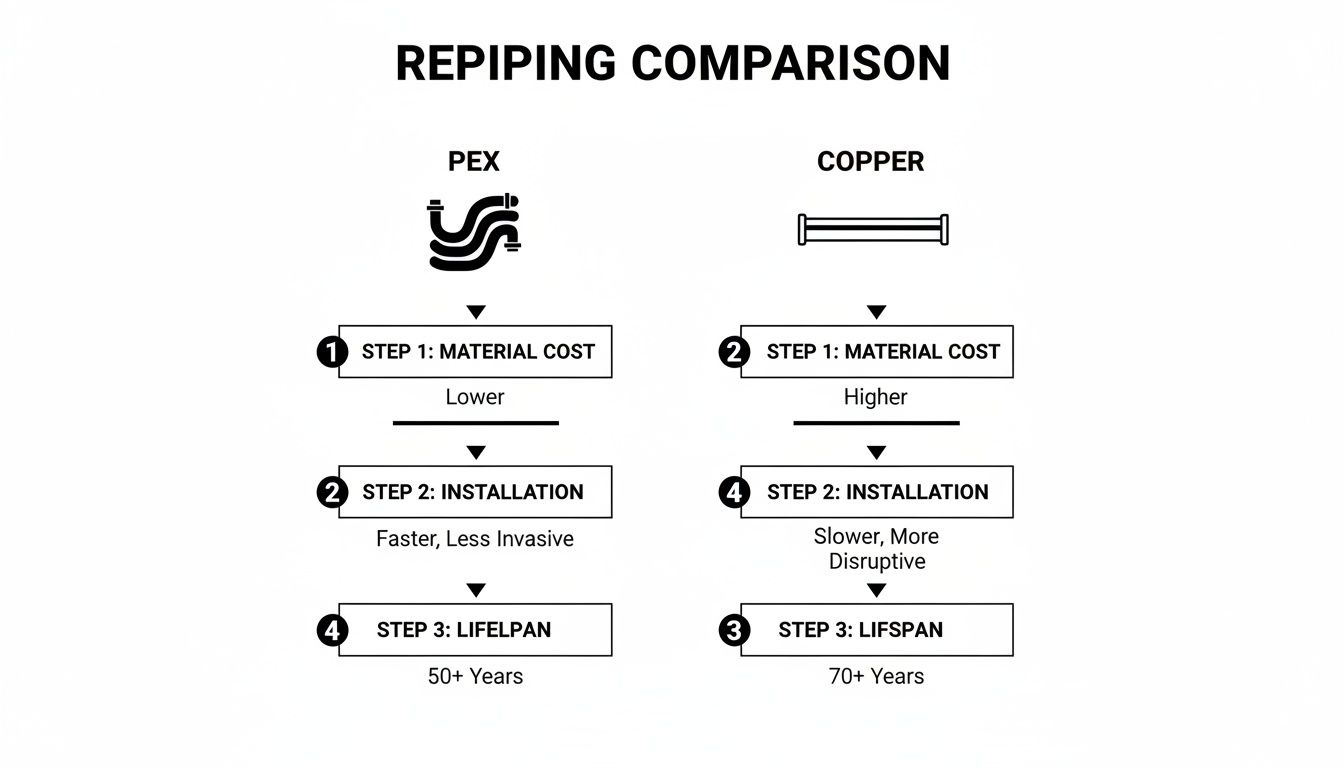
As you can see, while traditional Copper has a longer lifespan, PEX often comes out ahead for its cost-effectiveness and less invasive installation, making it a very popular choice for modern repiping projects.
Minimizing the Disruption
We get it—having work done inside your home is an interruption to your daily routine. Our entire process is built to keep that disruption to a minimum. By working methodically in sections and using modern materials, we can usually complete a full repipe on an average-sized home in just a few days, not weeks.
Knowing what’s going on with your home's systems is empowering. For example, before any major plumbing work, it’s always a good idea to learn how to locate your main water valve so you’re prepared for any situation. At Alvarez Plumbing, we believe an informed homeowner is a confident one, and we're here to guide you every step of the way.
Understanding the Real Cost of Repiping a House in the Salinas Area
When you realize that frequent leaks are more than just bad luck, the conversation naturally shifts to money. For a lot of homeowners in Salinas and Monterey, the price tag for a full repipe can feel like a pretty big hurdle. But if you understand what actually goes into that final number, you can start to see it less as an expense and more as a critical investment in your home’s value, safety, and your own peace of mind.
A repiping job isn't a one-size-fits-all kind of thing. The final cost really hinges on a few key variables that are totally unique to your house. Thinking about these factors ahead of time will give you a much clearer picture of what to expect when you get an estimate.
What Determines the Final Price
So, what are the big-ticket items that drive the cost up or down? It usually boils down to these four things:
- The Size of Your Home: This one’s pretty straightforward. A larger home with more square footage simply has more feet of pipe to replace, which directly bumps up the cost for both materials and labor.
- Number of Bathrooms and Fixtures: Every sink, toilet, shower, and washing machine adds another connection point. A home with three bathrooms is just a more complex job than a home with one, and that means more time and materials.
- Accessibility of Pipes: This is a huge factor. Can our plumbers get to the pipes easily through a crawl space or basement? Or are they buried behind finished walls, custom tile, or a concrete slab? The harder it is to get to the old pipes, the more labor is involved.
- Your Choice of Materials: Like we’ve talked about, classic copper piping costs more upfront than modern PEX. This choice is probably the biggest lever you have when it comes to managing the total project cost.
The investment needed for a full repipe can vary quite a bit based on these factors. For a broader look at national averages, you can explore repiping cost breakdowns from Angi.com, but a local expert can give you the most accurate estimate for our area.
An Investment in Prevention
It's easy to get sticker shock when you see those numbers, but it’s so important to frame the cost correctly. A proactive repipe is an investment that prevents the much higher, totally unpredictable costs that come with an emergency. A single major pipe burst can easily cause tens of thousands of dollars in water damage, leading to flooring replacement, mold remediation, and even structural repairs.
A clear, upfront estimate for a repipe is a tool for financial planning. An emergency pipe burst, on the other hand, is a financial crisis that leaves you with no control over the timeline or the final bill.
At Alvarez Plumbing, we believe in being completely transparent. We provide clear, detailed estimates that break down all the costs so you can make a confident, informed decision. We’ll walk you through the pros and cons of different options, helping you find a solution that protects your home and fits your budget. If you're getting worried about the state of your pipes, getting a professional opinion on your home's water line repair needs is a smart first step toward preventing a disaster.
Common Questions About Home Repiping in Monterey County
Even when you know a repipe is in your future, it’s a big decision. We get it. It’s a major home improvement project, and our team at Alvarez Plumbing believes you should feel completely confident and informed before moving forward. We’ve been helping homeowners across Monterey County navigate this process since 1988, and a few questions always come up.
Here are the straightforward answers to the most common concerns we hear from your neighbors in Salinas, Carmel-by-the-Sea, and beyond.
How Long Does a Full House Repipe Take?
This is one of the biggest worries for homeowners, but the timeline is probably shorter than you think. For an average-sized home around here, a complete repipe by a professional team usually takes between 3 to 5 days. We work as efficiently as possible to minimize the disruption and always aim to have your water running at the end of each workday. The final schedule really just depends on the size of your home and how complex its plumbing layout is.
Will My Walls Be Destroyed During the Process?
Absolutely not. Modern repiping, especially when we use flexible PEX piping, requires very little wall intrusion. Our expert plumbers make small, precise openings in the drywall only where it’s necessary to run the new pipes. Once the installation is complete and we’ve thoroughly tested everything, those areas are properly patched, leaving your home clean and with as little impact as possible.
The goal of a professional repipe isn't just to replace pipes; it's to do so with the utmost respect for your home. Minimal disruption is a key part of the service.
Do I Need to Repipe My Entire House at Once?
Not always. If the problems are truly isolated to one specific area—like an older bathroom addition with galvanized pipes—a partial repipe can be a perfectly good solution. During our initial inspection, we’ll take a look at the overall condition of your entire plumbing system. We give you honest, no-pressure advice to help you decide if a full or partial repipe is the most cost-effective and secure long-term solution for your home.
Is Repiping Covered by Homeowners Insurance?
Generally, no. Homeowners insurance doesn't cover the cost of replacing pipes due to age or normal wear and tear, as that’s considered part of routine home maintenance. However, your policy will often cover the water damage caused by a sudden pipe burst. The best way to think of it is that repiping is a proactive investment you make to prevent those catastrophic, insurable events from ever happening in the first place.
If you're dealing with persistent plumbing issues, you don't have to figure it out alone. For a clear, honest assessment of your home's needs, trust the local experts at Alvarez Plumbing. Schedule your no-pressure consultation with us today!