If you live in an older home in Salinas or Monterey, you've probably wondered what’s going on behind the walls. You're not alone. Many homes in the Monterey Bay area are over 40 years old, meaning their original plumbing might be a ticking time bomb of corrosion and leaks, posing a real risk of serious water damage.
Is It Time to Replace Your Home's Old Pipes?
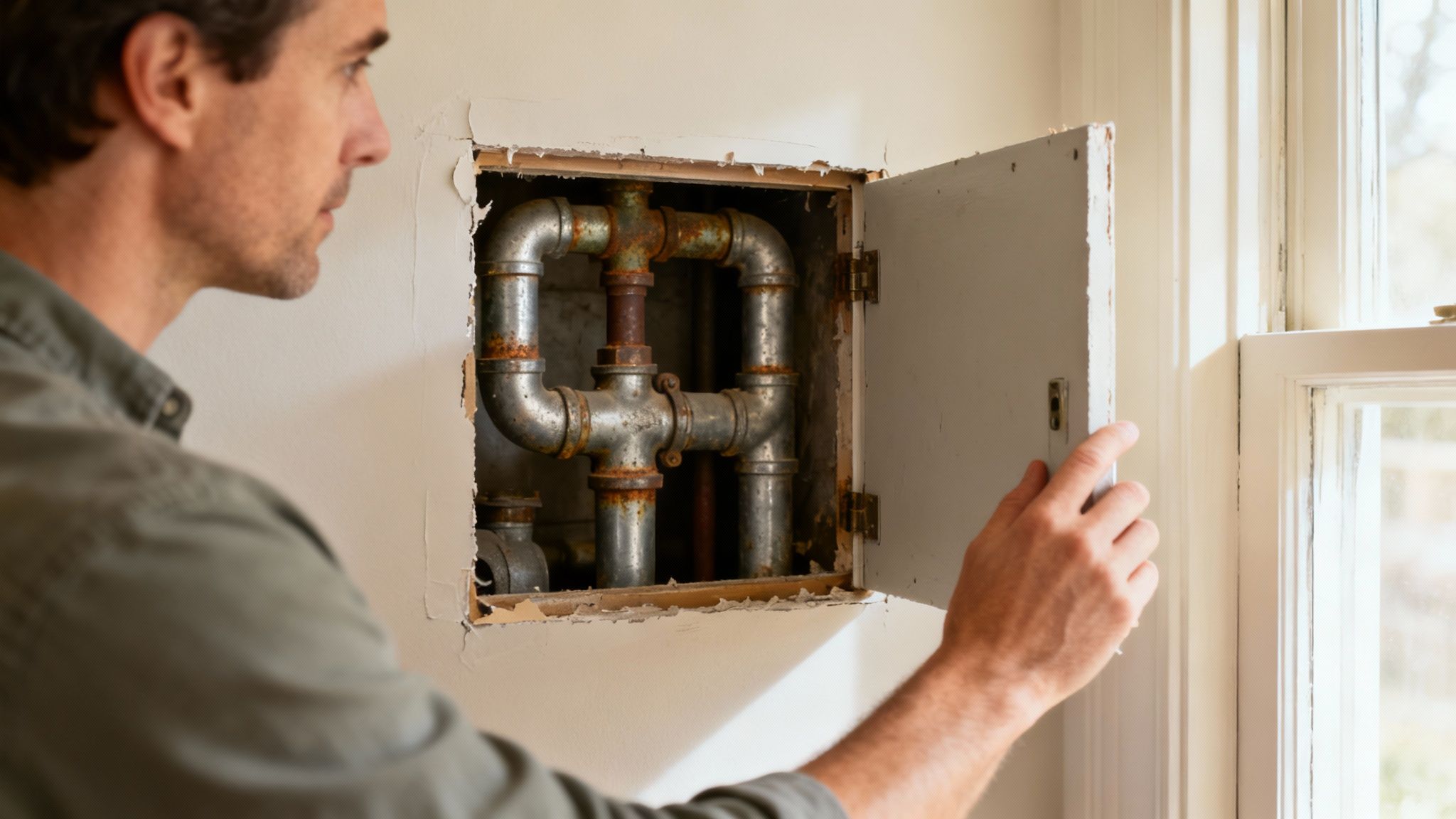
Many homes in our beautiful communities, from Castroville to Carmel Valley, were built decades ago. While these homes have incredible character, their plumbing is often outdated. Many were built with galvanized steel or polybutylene pipes that are now vulnerable to leaks and low water pressure. This isn't just a minor issue; it's about protecting the value and structure of your home.
With high interest rates, more people are choosing to renovate instead of move. Investing in your current home is a smart move, and upgrading your plumbing is one of the best ways to protect that investment. Repiping is a long-term solution that secures your home's infrastructure for decades.
Old pipes, often made of materials like galvanized steel, are incredibly prone to corrosion. Over time, that leads to low water pressure, frustrating leaks, and even potential water contamination.
Understanding the Risks of Old Pipes
An aging plumbing system is more than an inconvenience; it’s a liability. Old pipes can cause a cascade of problems that homeowners often ignore until it’s too late. A critical question to ask is, "Is Your Home Leak Proof?"
Ignoring the warning signs can lead to huge expenses. Some of the most common issues we see in older homes in Salinas and nearby communities include:
- Frequent and Costly Leaks: Small drips can turn into major bursts, causing extensive water damage to your floors, walls, and even your home's foundation.
- Low Water Pressure: Mineral and rust buildup inside the pipes acts like a clog, restricting water flow and turning your satisfying shower into a disappointing trickle.
- Discolored or Rusty Water: If your water comes out brown or yellow, that’s a clear sign your pipes are corroding from the inside out. It's a red flag that your home’s plumbing could be failing.
We've put together a quick table to help you connect the dots between what you're seeing and what a plumbing upgrade can fix.
Quick Guide to Upgrading Your Plumbing
| Warning Sign in Your Home | Benefit of Upgrading |
|---|---|
| Low or inconsistent water pressure | Enjoy strong, reliable water flow for showers and appliances. |
| Rusty or discolored water | Get clean, clear water that's safe for drinking and cooking. |
| Frequent leaks and drips | Prevent costly water damage and protect your home's structure. |
| Visible corrosion on exposed pipes | Eliminate the risk of sudden pipe bursts and emergency repairs. |
| Slow drains throughout the house | Improve drainage and reduce the chance of messy backups. |
| Unusually high water bills | Stop hidden leaks and lower your monthly utility costs. |
This table makes it clear: the symptoms you might be tempted to ignore are direct signs that your plumbing needs attention.
Proactively addressing these issues is one of the smartest investments you can make. If you suspect your home is wasting water due to old pipes, take a look at our guide on sustainable plumbing fixes for older homes. It's the first step toward a more reliable and efficient system.
The Hidden Dangers Lurking in Your Walls
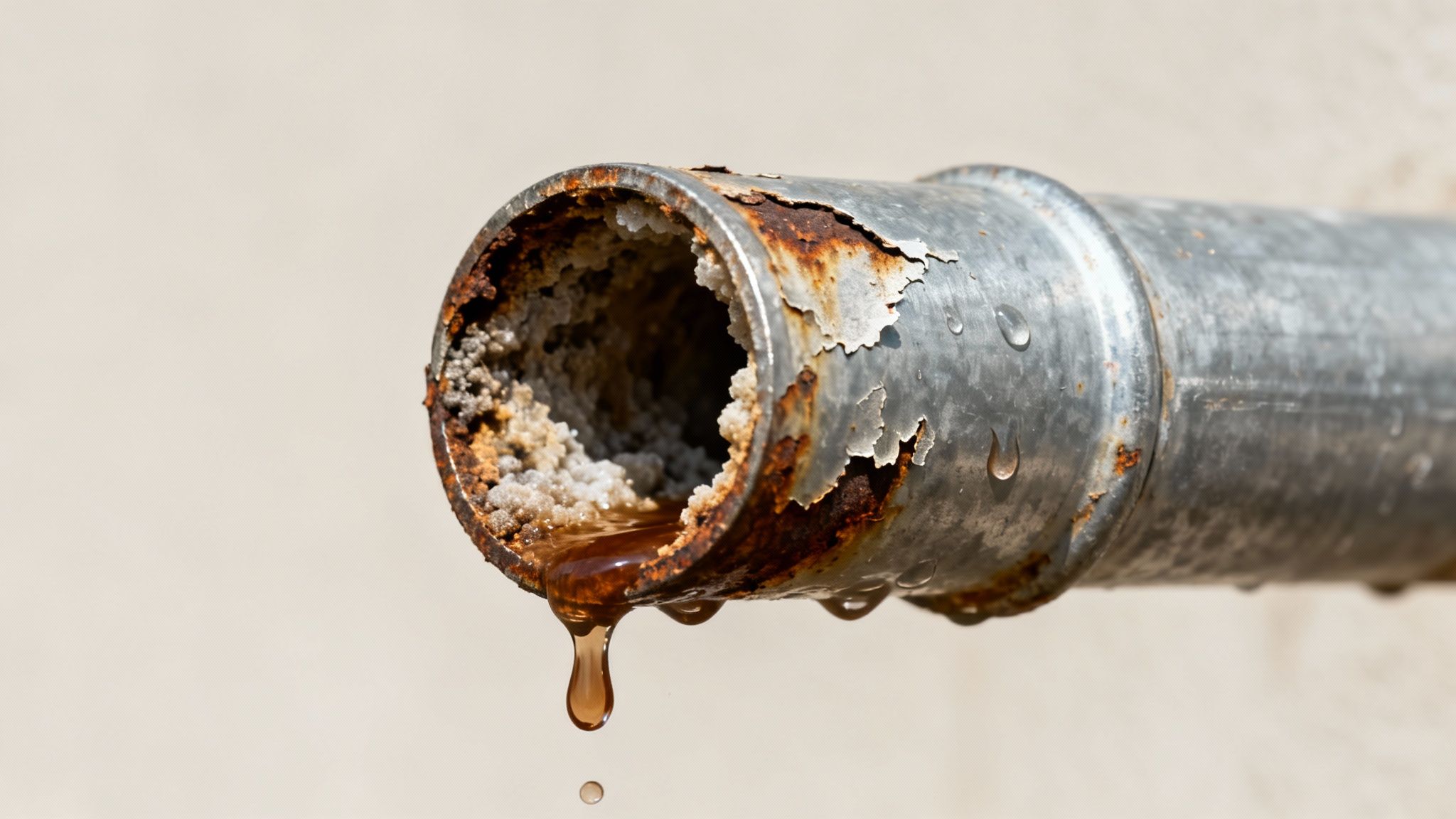
It’s what you can’t see behind the drywall that often causes the most problems. In many classic Monterey County homes, from Watsonville to Carmel-by-the-Sea, the original plumbing is made of materials now way past their prime.
Two of the biggest offenders we run into are galvanized steel and polybutylene pipes. Think of old galvanized pipes as the clogged arteries of your home. Over decades, rust and mineral deposits build up on the inside, choking off water flow and sometimes turning your water a nasty brown.
Polybutylene pipes—a grayish plastic popular for a time—are even riskier. This material gets brittle with age, making it known for suddenly bursting without any warning. We're not talking about a small leak; we're talking about a full-blown flood that can destroy floors, furniture, and walls.
Understanding the Materials
As a family-owned business serving this area since 1988, Alvarez Plumbing has seen firsthand how these outdated materials fail. We specialize in whole-home repiping and know the local housing stock and the common issues found in this region’s plumbing systems.
The slow, steady corrosion of galvanized steel often flies under the radar until you notice your water pressure has dropped to a frustrating trickle. Meanwhile, polybutylene pipes can seem perfectly fine one day and cause a catastrophic flood the next.
A slow leak inside a wall is more than just a drip. It creates the perfect, damp environment for mold and mildew to thrive, which can ruin your home’s air quality and lead to even more expensive repairs.
The problem with these hidden threats is that by the time you see the evidence—like a damp spot on the ceiling—the damage is already done. The only way to get ahead of old pipes and their big problems is to be proactive.
Common Risks of Outdated Piping
- Sudden Bursts and Flooding: Brittle polybutylene or severely corroded steel pipes can fail completely, dumping gallons of water into your home in minutes.
- Contaminated Water: Rust particles flaking off old galvanized pipes can leach into your drinking water, affecting its taste, color, and quality.
- Persistent Low Water Pressure: The internal buildup in old pipes can make it impossible to run the shower and the dishwasher at the same time.
- Hidden Mold Growth: Small, undetected leaks behind walls create a breeding ground for mold, which can spread silently and compromise your home’s structure.
To better protect your property, it helps to explore effective ways to prevent water from leaking into your house. The best defense is knowing the state of your pipes. If you're not sure what's lurking in your walls, learn more about what plumbing camera inspections reveal in our detailed guide.
Five Clear Signs Your Plumbing System Is Failing
Your house has a way of telling you when something is wrong—you just have to know the signs. Old pipes rarely fail overnight; they usually send out plenty of warnings. Ignoring these red flags is like ignoring the check engine light on your car. You might get away with it for a while, but a major breakdown is often just around the corner.
Many homes in the Salinas Valley and on the Monterey Peninsula are at an age where their original plumbing is becoming a real liability. These five signs can help you spot old pipes and big problems before they turn into a crisis.
1. Low Water Pressure
Have you noticed your shower feels more like a weak trickle than a powerful spray? If it’s happening all over the house, that’s a classic symptom of aging pipes.
Over decades, galvanized steel pipes corrode from the inside. Mineral deposits from the hard water common in our area, combined with rust, create a thick layer of buildup. This scale slowly chokes the inside of your pipes, restricting water flow and causing that frustrating drop in pressure.
2. Discolored or Strange-Tasting Water
When you turn on the tap, your water should be crystal clear. If it comes out looking brown, yellow, or rusty, that’s a red flag you can't ignore.
That discoloration is caused by rust flaking off from the inside of old galvanized pipes. Not only does it look bad, but it can also give your water a metallic taste. It’s a direct sign that your plumbing system is breaking down and putting contaminants into your family's water.
3. Frequent Leaks and Drips
A single leaky faucet is annoying. But when you start seeing multiple leaks popping up around your home in areas like Seaside or Marina, you’re looking at a bigger issue. Constantly patching up small drips is a strong hint that the entire system is becoming weak.
These small, persistent leaks are more than just a nuisance. They can be early signs of widespread corrosion. When one section of an old pipe fails, it’s a strong signal that other sections are not far behind.
Dealing with one leak after another is a stressful and costly cycle. To get ahead of the problem, it’s important to understand how to detect a hidden water leak before it causes serious damage.
4. Strange Noises in the Walls
Your plumbing should be pretty quiet. If you hear rattling, banging, or groaning sounds when you turn the water on or off, that’s your pipes trying to tell you something. These noises, often called "water hammer," can mean that pipes are loose or that the system is struggling because of internal blockages.
5. Visible Corrosion on Exposed Pipes
Finally, do a quick visual check. Look at any exposed pipes under your sinks or in the basement. If you see obvious signs of rust, flaking, or discoloration on the outside of the pipes, you can bet the inside is in even worse shape. This visible decay is a clear warning that your pipes have reached the end of their lifespan and are at a high risk of bursting.
Why Repiping Is a Smart Investment, Not Just a Repair
With the current housing market, many families in communities like Marina and Prunedale are choosing to renovate instead of moving. If you're putting money into your property, a whole-home repipe is one of the smartest upgrades you can make. This isn't just about fixing a leak; it's an improvement that secures your home's health and value for the long haul.
New pipes don’t just stop leaks—they improve water quality, boost pressure, and reduce the risk of flooding. This upgrade means the water you drink, cook with, and bathe in is clean and free from the rust that builds up in old, corroded pipes.
More Than Just a Fix—It's a Future-Proof Upgrade
Think about your daily routine. A whole-home repipe means enjoying powerful water pressure for modern showers and appliances. No more frustrating trickles when someone else flushes a toilet. It also brings peace of mind, knowing you’ve gotten rid of the risk of a catastrophic pipe burst that could cause thousands in water damage.
Upgrading also gets your home ready for the future. Plumbing standards are always evolving, with a focus on efficiency. By 2025, trends point toward reducing water consumption with low-flow fixtures and smart leak detection systems—a crucial step for dealing with the drought conditions we often see here in Monterey County. You can get more insights on these upcoming plumbing trends on christiansonco.com.
Repiping your home isn't an expense—it's an investment. It significantly increases your property's resale value, acting as a major selling point for potential buyers.
Boosting Your Home’s Value and Appeal
When it's time to sell, a new plumbing system is a huge advantage. It shows buyers that the home’s core infrastructure is solid, saving them from worrying about future old pipes and big problems. This often leads to a faster sale and a higher asking price.
Investing in a repipe also makes good financial sense. By eliminating persistent leaks and improving efficiency, you’ll likely see a drop in your monthly water bills. While there is an upfront cost, you have to weigh it against the slow bleed of constant repairs and the massive potential expense of an emergency flood. If you're looking for guidance, our guide on finding the best-priced plumber in Monterey without sacrificing quality can help.
A professionally installed new plumbing system offers decades of reliable, worry-free performance. It’s a smart, proactive move that protects your family, your property, and your financial investment.
How The Repiping Process Actually Works
The idea of replacing all the pipes in your home can sound like a huge, messy project. It’s understandable why homeowners in Salinas and across Monterey Bay put it off. But a professional whole-home repipe is a much smoother process than you might think, especially when handled by an experienced team.
This isn’t a step-by-step DIY guide. Instead, it’s a simple overview of the steps our friendly experts at Alvarez Plumbing have perfected since 1988. Our system is designed to have the smallest possible impact on your daily life.
The Initial Evaluation And Plan
The first step is a thorough evaluation of your current plumbing. This is where our licensed plumbers come to your home for an expert evaluation. We’ll assess the condition of your pipes, identify the material (like old, corroded galvanized steel), and check for all those tell-tale signs of trouble. This is a deep dive to understand the unique layout of your home's plumbing.
From there, we create a detailed plan tailored to your property. We'll walk you through the best modern materials, like PEX or copper, and map out the most efficient way to run the new lines. This strategic approach allows us to complete the work with minimal cuts into your walls and ceilings, ensuring minimal disruption.
The infographic below highlights the core benefits you’ll get from making this upgrade.
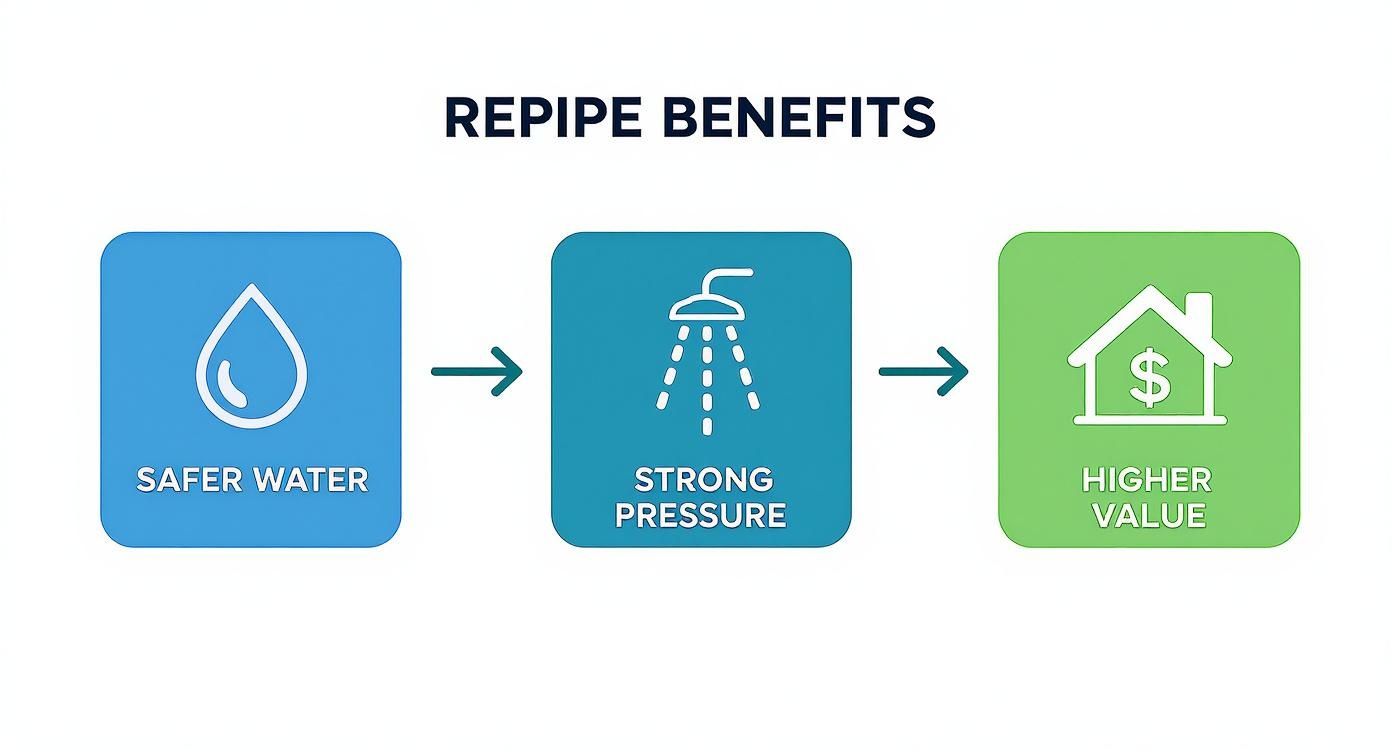
As you can see, the outcome is a plumbing system that not only delivers cleaner water and better performance but also adds real value to your property.
Modern Pipe Material Comparison
Choosing the right material is a key part of the planning process. Today, we have a few excellent options, each with its own strengths.
| Material | Key Benefits | Best For |
|---|---|---|
| Copper | Extremely durable, long-lasting (50+ years), corrosion-resistant. | Homeowners looking for a premium, time-tested material for longevity. |
| PEX | Flexible, freeze-resistant, fewer fittings needed, lower cost. | Versatile and cost-effective solution for most modern residential repipes. |
| CPVC | Inexpensive, easy to install, resistant to corrosion. | Budget-conscious projects and areas where it meets local code requirements. |
Each of these materials is a huge leap forward from the old pipes they replace. We'll help you decide which one makes the most sense for your home, your budget, and your long-term goals.
Execution With Minimal Disruption
Once the plan is set, our team gets to work. First, we protect your home by carefully laying down drop cloths and plastic sheeting to keep everything clean. Our technicians then make small, precise openings in the drywall to access the old pipes and run the new ones.
We understand that we’re working in your home, not just a job site. Our team works efficiently and respectfully, often completing the bulk of the installation in just a few days. We always strive to have your water service restored at the end of each day.
After the new pipes are installed and thoroughly tested, we professionally patch and texture any drywall openings. Our goal is to leave your home in the same condition we found it, but with a brand-new, reliable plumbing system hidden behind the walls.
To get a detailed look at our approach, you can learn more about our professional re-piping services for water, gas, and waste lines and see how we handle these critical upgrades.
It’s Time to Protect Your Monterey Bay Home
Let’s bring it all together. You now know that the old pipes hiding in your Monterey Bay home are a serious risk. You can spot the warning signs, from rusty water to strange rattling sounds, and you understand that a full repipe is a powerful investment in your home's safety and value.
If you live in an older house in Salinas, Monterey, or anywhere on the Central Coast, the most important step is the one you take next. Don’t wait for a pipe to burst and flood your kitchen during the winter rains. The quiet damage happening inside your walls right now is the real threat.
Being proactive is the key to avoiding old pipes and big problems. Catching these issues early can save you thousands of dollars in emergency repairs and water damage.
Take the Next Step with a Trusted Local Expert
The friendly, expert team at Alvarez Plumbing is here to help you make an informed decision without any pressure. As a family-owned business serving our neighbors since 1988, we've seen every type of plumbing issue common to the housing stock in communities from Pacific Grove to Watsonville.
Don’t guess about the health of your home’s plumbing. A professional inspection is the only way to know for sure if your pipes are a hidden liability.
We provide honest assessments, plain and simple. We’ll help you figure out if a repair will do the trick or if repiping is the right long-term choice to protect your home.
Contact Alvarez Plumbing today to schedule a professional inspection. We’ll give you the peace of mind that comes from knowing exactly what’s going on inside your walls.
Of course, starting a big home project brings up a lot of questions. For homeowners in places like Salinas and Prunedale, the main worries are about the cost, timeline, and mess of a whole-home repipe. Let's tackle some of the most common concerns we hear.
How Long Does a Repipe Take?
One of the biggest fears is having your home turned into a construction zone for weeks. That’s just not how it works with a professional crew.
A typical whole-home repipe for an average-sized house is usually wrapped up in just a few days. Our plumbers work efficiently to keep the disruption to your daily life at a minimum, and we always make it a priority to have your water back on at the end of each workday.
Will It Damage My Walls?
This is another huge concern. While we do need to get to the pipes behind your drywall, our approach is surgical. We make small, precise openings only where absolutely necessary.
We treat your home with the same respect we’d treat our own. After the new pipes are installed and tested, we professionally patch and texture any drywall we opened, leaving your walls ready for a fresh coat of paint.
Our goal isn't just to give you a brand-new plumbing system—it's to do it without leaving a mess behind. The process is far less invasive than most people imagine.
Is Repiping Worth the Cost?
Think of it this way: a single pipe bursting can easily cause tens of thousands of dollars in water damage, which far outweighs the cost of a proactive repipe. It’s a significant investment, but repiping takes the risk of a catastrophic leak off the table, improves your water quality, and boosts your home's resale value.
Considering that old galvanized pipes only have a lifespan of about 40-50 years, replacing them isn't just a repair—it's a necessary upgrade to protect your biggest investment.
Don't let unanswered questions stop you from protecting your home. For a clear, honest assessment of your plumbing system, trust the local experts at Alvarez Plumbing. Schedule your professional inspection today!