Living on the beautiful Monterey Peninsula, from the farmlands of Salinas to the coastal breezes of Carmel-by-the-Sea, we all know how precious water is. With California's ongoing drought cycles and local water restrictions, finding smart ways to conserve is more important than ever. The good news? Saving water doesn't mean sacrificing comfort. In fact, making a few smart upgrades and habit changes can significantly cut your water use and lower your monthly bills.
As a family-owned plumbing company serving this community since 1988, Alvarez Plumbing has seen firsthand how small changes lead to big savings. This guide shares some of the best smart ways to reduce water waste and lower your bill, with tips for homeowners in Salinas, Monterey, Marina, and our neighboring communities. We’ll cover everything from simple fixture swaps like faucet aerators to high-tech, water-efficient appliances.
Our goal is to give you practical advice that helps you stay compliant with local regulations, protect our shared water resources, and keep more money in your pocket. Let's dive into the strategies that can transform your home's water usage.
1. Install Low-Flow Fixtures and Aerators
One of the most effective ways to reduce water waste and lower your bill is to upgrade your home's fixtures. Modern low-flow showerheads, toilets, and faucet aerators are designed to use much less water without sacrificing performance. Unlike old models that just restricted flow, today's designs use technology to maintain strong pressure, giving you the same experience while using less water.
For homeowners in Salinas and Monterey County, this upgrade is a powerful tool. Switching to water-efficient fixtures helps you comply with California's drought restrictions and can lead to big savings on your utility bills. The EPA's WaterSense program, a trusted label for efficient products, has helped Americans save trillions of gallons of water since 2006.
How Much Water Can You Really Save?
The difference between old and new fixtures is huge. A standard showerhead can use up to 5 gallons per minute (GPM), while a WaterSense-labeled model uses 2 GPM or less. Old toilets can guzzle 4 or more gallons per flush, but modern high-efficiency versions use as little as 1.2 gallons. These small changes add up to massive savings over time.
This bar chart below clearly shows the big drop in water usage you can get by upgrading three common household fixtures.
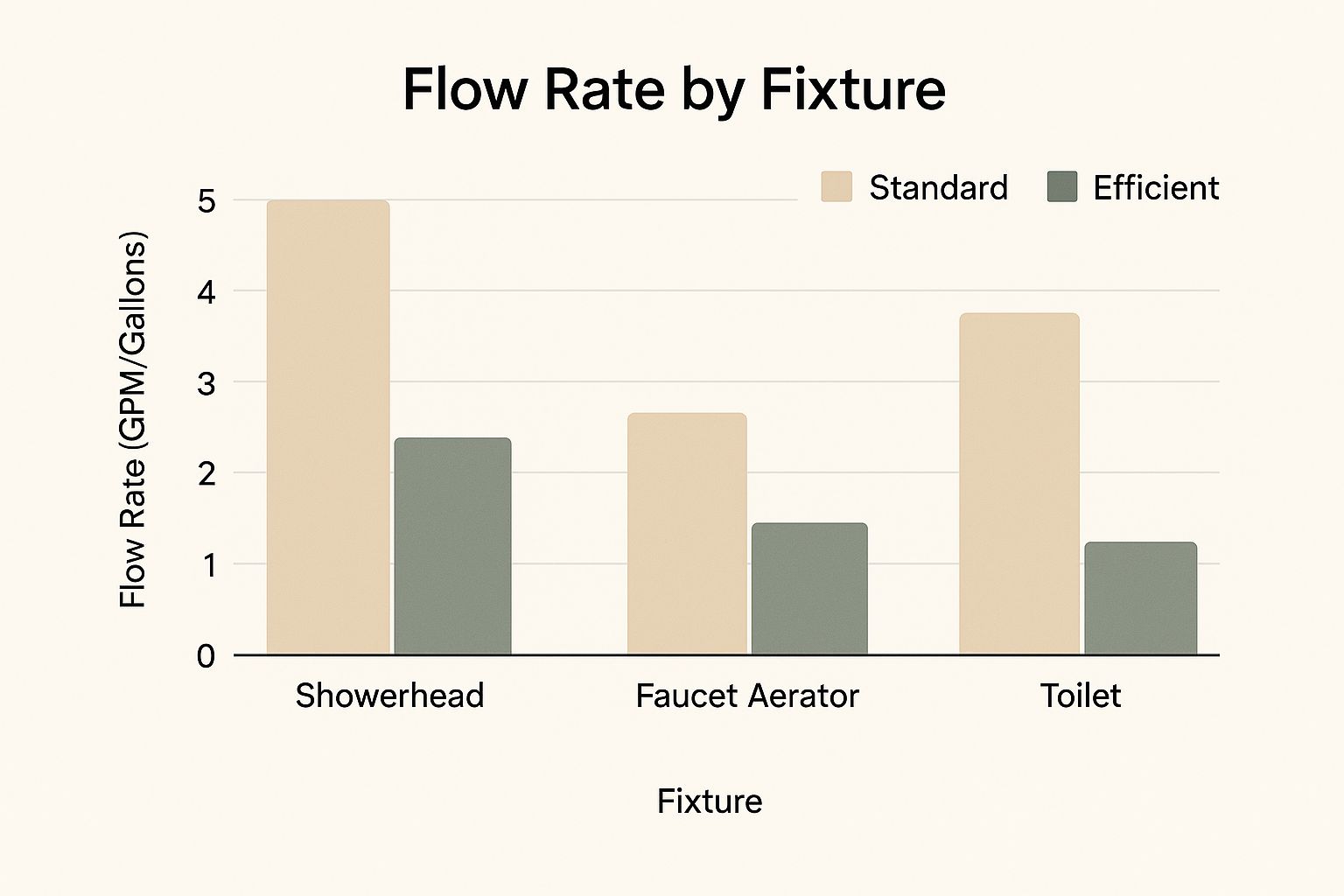
As you can see, efficient fixtures can cut water use by more than half. That means lower monthly bills and a smaller environmental footprint for your home in communities like Carmel-by-the-Sea or Pacific Grove.
Getting Started with Low-Flow Fixtures
Making the switch is easier than you might think. A few practical tips:
- Start Small: The easiest first step is installing faucet aerators. These tiny devices cost just a few dollars and screw onto most bathroom and kitchen faucets in minutes.
- Look for the Label: Always choose products with the EPA WaterSense label. This ensures they meet strict standards for performance and efficiency.
- Check for Rebates: Many local water utilities, including those serving the Monterey Peninsula, offer rebates for buying and installing high-efficiency toilets and showerheads. Check their websites before you buy.
- Call the Professionals: While aerators are simple, installing new toilets or showerheads can be tricky. To ensure a leak-free installation, it's best to call a licensed plumber. Our family-owned business, Alvarez Plumbing, has been helping local homeowners save water since 1988.
2. Fix Leaks Promptly and Conduct Regular Inspections
One of the most overlooked ways to reduce water waste and lower your bill is to be vigilant about leaks. Even a small drip can have a massive impact over time. A single dripping faucet can waste thousands of gallons a year, while a silent toilet leak can waste hundreds of gallons a day. This can drive up your water bill unexpectedly in places like Marina or Seaside. Catching and fixing leaks quickly is one of the smartest things a homeowner can do.
According to the American Water Works Association, a lot of home water use is lost to leaks. By setting up a routine for inspections, homeowners in communities like Prunedale and Castroville can catch these problems early. This not only saves water and money but also prevents small issues from turning into major water damage, a common concern during our rainy season on the Peninsula.
How Much Water Can You Really Save?
The amount of water lost to small leaks is shocking. A faucet that drips just once per second wastes over 3,000 gallons per year. A silent toilet leak, often caused by a bad flapper, can waste up to 200 gallons every single day. One local homeowner, for example, saved over $300 a year just by fixing a silent toilet leak they didn't even know they had.
These hidden drips are like leaving a tap open 24/7, directly hitting your wallet and straining our local water supply. Finding and fixing them is a powerful step toward a more efficient home.
Getting Started with Leak Detection
Finding leaks is a manageable task when you know what to look for. Here are a few practical tips to create your own inspection routine:
- Use Your Water Meter: A great way to check for hidden leaks is to read your water meter, don't use any water for two hours, and then read it again. If the reading has changed, you probably have a leak somewhere.
- The Food Coloring Test: To find silent toilet leaks, add a few drops of food coloring to the toilet tank. Wait about 15 minutes without flushing. If color shows up in the bowl, you have a leak.
- Listen Carefully: Turn off all water-using appliances and faucets. If you still hear running water, it's a clear sign of a leak that needs professional attention.
- Call the Professionals: While some fixes are simple, finding the source of a hidden leak can be hard. The expert plumbers at Alvarez Plumbing have been serving Salinas and Monterey County since 1988 and can help you detect and repair water leaks fast, keeping your home safe.
3. Optimize Dishwasher and Washing Machine Usage
Another practical way to reduce water waste and lower your bill is to change how you use your large appliances. Modern dishwashers and washing machines are much more efficient than old models, but the biggest savings come from how you use them. Simply adjusting your habits can dramatically cut down on water and energy use without sacrificing cleanliness.
For residents in water-conscious communities like Salinas and Prunedale, making every gallon count is key. Using your appliances wisely helps you meet local water conservation goals and saves you money. For example, an Energy Star certified dishwasher can save an average of 1,300 gallons of water over its lifetime compared to washing dishes by hand.
How Much Water Can You Really Save?
The savings can be huge, especially when you upgrade from older machines. A standard top-loading washing machine from ten years ago could use over 40 gallons per load. In contrast, a modern high-efficiency (HE) front-loader uses as little as 13-25 gallons. When you multiply that savings over hundreds of loads per year, the impact on your water bill is clear.
Many newer appliances also have eco-friendly cycles that use even less water. These small changes in your routine can lead to big, long-term reductions in your household's water use, which is a major plus for anyone living on the Monterey Peninsula.
Getting Started with Efficient Appliance Use
You don't need a brand-new appliance to start saving water today. Follow these simple tips:
- Run Full Loads Only: This is the golden rule for both dishwashers and washing machines. Running a half-empty machine uses almost the same amount of water as a full one, so always wait until you have a full load.
- Scrape, Don't Rinse: Most modern dishwashers are powerful enough to clean dishes without a pre-rinse. Just scrape food into the trash to save dozens of gallons of water each week.
- Choose the Right Cycle: Don't just use the "heavy duty" setting. Use shorter or "eco" cycles for lightly soiled loads to save both water and energy. For more tips, you can learn more about how to help your dishwasher run better.
- Consider an Upgrade: If your appliances are over 10 years old, replacing them with Energy Star models is a great investment. When it's time to install a new machine, trust the pros at Alvarez Plumbing to make sure the connections are secure and leak-free. Our family has been providing reliable plumbing services since 1988.
4. Implement Smart Irrigation and Outdoor Water Management
A lot of water waste happens outside the home. Outdoor watering, mainly for lawns and gardens, can account for 30% or more of a household's total water use. One of the smartest ways to reduce water waste and lower your bill is to use smart irrigation and landscaping strategies. This is critical for homeowners in water-conscious areas like Marina and Seaside.
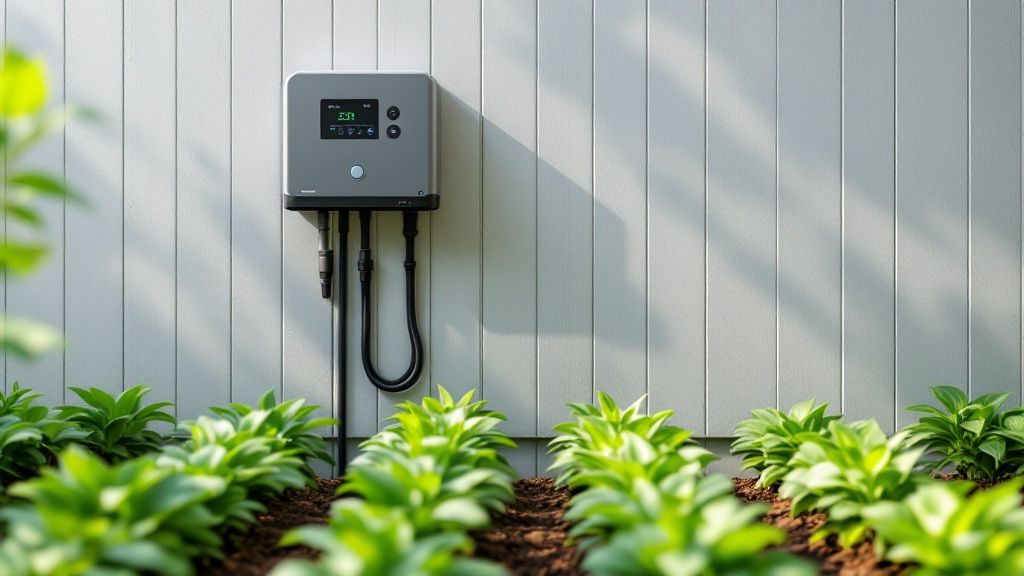
Smart irrigation systems use technology, like weather data and soil moisture sensors, to give your landscape the exact amount of water it needs, and no more. This prevents the overwatering that's common with old sprinkler timers, which run on a fixed schedule no matter what. These systems not only save a huge amount of water but also lead to healthier plants.
How Much Water Can You Really Save?
The savings from smart outdoor watering are significant. The EPA estimates that a home that switches to a WaterSense-labeled smart irrigation controller can save nearly 8,800 gallons of water a year. For residents in communities from Salinas to Carmel Valley, these savings help combat California's recurring droughts and keep utility costs down.
Getting Started with Smart Outdoor Watering
Upgrading your outdoor water management is a practical investment. Here are a few tips to get started:
- Water at the Right Time: The best time to water your lawn and garden is in the early morning, usually between 5 AM and 9 AM. This reduces water loss from wind and evaporation.
- Embrace Mulch: Adding a 2-to-3-inch layer of mulch around your plants and trees helps the soil hold moisture, so you don't have to water as often.
- Choose Native and Drought-Tolerant Plants: When planning your landscape, picking plants that naturally need less water is a smart move. You can find great choices for drought-tolerant plants that are made for drier climates.
- Install a Smart Controller: Adding a smart irrigation controller to your existing sprinkler system is a powerful upgrade. These devices automatically adjust watering schedules based on local weather, saving water without any effort.
- Check for Leaks: Regularly check your sprinkler heads, valves, and hoses for leaks. A small drip can waste hundreds of gallons over a season. A professional inspection by a team like Alvarez Plumbing can ensure your system is perfectly efficient.
5. Adopt Water-Conscious Daily Habits
Beyond new hardware, adopting water-conscious habits is one of the quickest ways to reduce water waste and lower your bill. This approach costs nothing and just relies on being mindful in your daily routines. By simply being more aware of how you use water, you can achieve big savings without any new equipment.
For residents in communities like Salinas and Watsonville, these small changes can make a huge impact when we all do them. Simple acts, like turning off the tap while you brush your teeth, can save gallons of water every day. This helps our region save its precious water resources.
How Much Water Can You Really Save?
The savings from simple habits are surprisingly big. For example, cutting a 10-minute shower down to 5 minutes can save over 12 gallons of water each time. If you turn off the tap while brushing your teeth, you can save up to 8 gallons, which adds up to thousands of gallons per year.
Consider this:
- An 8-minute shower can use 17+ gallons, while a 4-minute shower uses half that.
- Letting the tap run while shaving can waste 10 or more gallons, but filling the sink basin uses just 1 gallon.
- Washing dishes with the tap running can use 20 gallons, while the two-basin method uses only about 5 gallons.
These changes show that mindful water use is a key part of any good water-saving plan for homeowners in areas like Prunedale or Marina.
Getting Started with Water-Conscious Habits
Adding these habits to your daily life is easier than you think. Here are a few tips to get you started:
- Time Your Showers: Use a waterproof timer or play a favorite 4-minute song to keep your showers short. Turn off the water while you lather up.
- Turn Off the Tap: Make it a rule to never let the water run when you're not using it. Turn it off while brushing your teeth, washing your hands, or shaving.
- Cook Smarter: Keep a pitcher of cold water in the fridge instead of running the tap until it gets cold. When cooking, steam vegetables instead of boiling them to use less water.
- Capture and Reuse: While waiting for your shower to heat up, place a bucket in the tub to catch the cold water. You can use this water for houseplants or cleaning.
For a comprehensive list of ideas, you can learn more about how to conserve water at home on our blog.
6. Harvest Rainwater and Implement Greywater Systems
A more advanced way to reduce water waste is to capture water that would otherwise go down the drain. Rainwater harvesting and greywater recycling systems collect and reuse this valuable resource. This provides a free water source for things like landscape irrigation, which is especially important in dry climates like Monterey County.
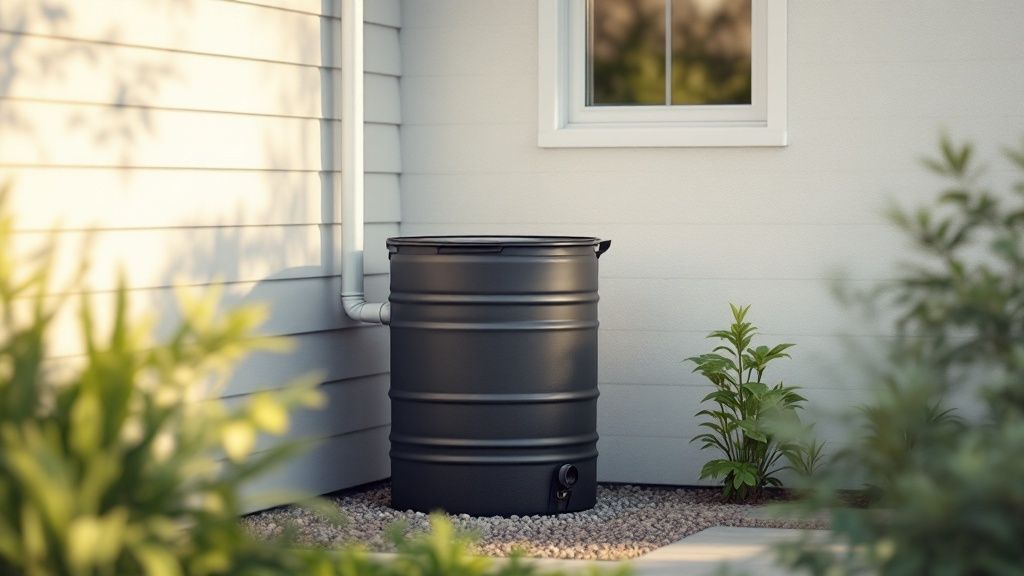
These systems can be as simple as a rain barrel connected to your downspout or more complex greywater systems that reroute water from your washing machine. For homeowners in Salinas and Watsonville, these strategies can greatly reduce your reliance on city water, especially during California’s droughts. Just one inch of rain on a 1,000-square-foot roof can provide 600 gallons of water.
How Much Water Can You Really Save?
The potential savings are big. A simple rain barrel setup can provide hundreds of gallons of free water for your garden after just a few storms. More advanced greywater systems can supply 50-80% of a home's irrigation needs. This recycled water from laundry and showers is perfect for watering plants and lawns, directly cutting your metered water use.
This approach not only lowers your utility bill but also lessens the strain on local water resources, a critical benefit for communities from Carmel Valley to Prunedale.
Getting Started with Water Recycling
Adopting these systems can be a step-by-step process. Here's how to begin:
- Start with a Rain Barrel: This is the easiest first step. A basic rain barrel costs between $50 and $150 and can be set up quickly under a downspout.
- Keep it Clean and Safe: Install leaf screens on your gutters to keep debris out of your collected water. Use the water within a week to prevent mosquitoes.
- Check Local Codes: Before installing a permanent system, check with your local city. Rules for water collection can vary between places like Seaside and Marina.
- Consult the Professionals: For a complex setup like a whole-house greywater system, professional installation is key. For homeowners looking into advanced water-saving solutions, such as setting up a rainwater harvesting system, practical advice is invaluable. You can find comprehensive guidance on how to install polyethylene tanks, which are crucial components for efficient water storage. Alvarez Plumbing can help you determine if a residential greywater system is right for you and ensure the installation is safe, efficient, and up to code.
7. Upgrade to Water-Efficient Appliances and Smart Technology
Beyond fixtures, your home's appliances and technology offer another powerful way to save water. This is one of the smartest ways to reduce water waste and lower your bill because it's automatic. Modern water-efficient dishwashers, washing machines, and smart water monitors use advanced sensors to optimize water use, saving you money and effort.
For homeowners in communities like Marina or Prunedale, where every drop counts, these upgrades give you precise control. Smart technology, like a water monitoring system, can find hidden leaks long before they cause expensive damage or a surprise high water bill, a common worry for Monterey County residents.
How Much Water Can You Really Save?
The impact of smart appliances is significant. ENERGY STAR certified dishwashers use as little as 3 gallons per cycle, compared to 10 gallons for older models. Tankless water heaters eliminate the waste of keeping water hot 24/7, saving water and cutting energy costs.
These technologies don't just save water; they protect your home. A single leak can cause thousands of dollars in damage. Smart leak sensors can automatically shut off your water, preventing costly repairs.
Getting Started with Smart Water Tech
Integrating these upgrades into your home is a smart investment. Here are a few tips to get started:
- Start with Monitoring: Consider a smart water monitor. It provides a baseline of your usage and can immediately pinpoint leaks, offering a fast return on investment.
- Look for the Labels: When shopping for new dishwashers or washing machines, always choose models with both the ENERGY STAR and EPA WaterSense labels to ensure top efficiency.
- Check for Local Rebates: Many local utilities offer rebates for buying high-efficiency appliances. Check your water provider's website for programs available in Salinas or Pacific Grove before you buy.
- Consult the Professionals: Installing smart water shut-off valves, tankless water heaters, or new appliance lines requires precision. For a seamless and reliable installation, trust a licensed plumber from Alvarez Plumbing. Our family-owned business has been helping local homeowners with advanced plumbing solutions since 1988.
Smart Water-Saving Strategies Comparison
| Item | Implementation Complexity 🔄 | Resource Requirements ⚡ | Expected Outcomes 📊 | Ideal Use Cases 💡 | Key Advantages ⭐ |
|---|---|---|---|---|---|
| Install Low-Flow Fixtures and Aerators | Low – easy DIY or professional | Low – minimal tools, low upfront cost | 15-40% water reduction, $50-200 savings/yr | Homes upgrading fixtures; renovations | Quick payback, maintains comfort, rebates |
| Fix Leaks Promptly and Conduct Regular Inspections | Low to Moderate – ongoing effort | Low – DIY or professional tools | 10-35% reduction in water waste, $35-500/yr | All households needing leak prevention | Immediate bill impact, prevents damage |
| Optimize Dishwasher and Washing Machine Usage | Moderate – behavior and appliance | Moderate – efficient appliances costly | 20-30% appliance water use reduction, $40-120/yr | Homes with modern appliances or replacing old ones | Saves water & energy, time-saving, rebates |
| Implement Smart Irrigation and Outdoor Water Management | Moderate to High – tech and landscaping | Moderate to High – smart systems and design | 25-50% outdoor water reduction, $100-400/yr | Homes with significant outdoor irrigation | Automated, healthier plants, property value |
| Adopt Water-Conscious Daily Habits | Very Low – simple behavior change | None | 15-25% indoor water reduction, $75-200/yr | All households regardless of equipment | No cost, immediate effect, builds habits |
| Harvest Rainwater and Implement Greywater Systems | High – installation and permits | High – cost varies from barrels to systems | 10-40% outdoor water use reduction, $50-300/yr | Properties with space & local regulations allowing | Reduces municipal demand, backup water source |
| Upgrade to Water-Efficient Appliances and Smart Technology | High – tech complexity, installation | High – appliance and system cost | 15-30% overall water reduction, $100-500/yr | Tech-savvy users, new constructions, renovations | Automated, detailed data, damage prevention |
Your Local Partner in Water Conservation
In this guide, we've explored many smart ways to reduce water waste and lower your bill. We've seen how small adjustments, like installing faucet aerators in your Salinas kitchen or running full laundry loads in your Prunedale home, can lead to real savings. By using these strategies, you’re not just controlling your monthly expenses—you’re helping protect Monterey County's most precious resource.
The journey to a water-wise home is a marathon, not a sprint. The key is to start somewhere. Maybe your first step is fixing that dripping faucet in your Pacific Grove bathroom or getting serious about smart irrigation for Carmel Valley’s dry summers. Every action contributes to a larger effort to build a more sustainable community.
Turning Knowledge into Action
The most impactful strategies often combine mindful habits with modern technology. Here are the key takeaways:
- Audit Your Home: The first step to saving is knowing where you're wasting water. Use our downloadable checklist to pinpoint your home's unique issues.
- Fix Leaks Immediately: A single dripping faucet can waste thousands of gallons a year. Finding and fixing leaks offers the highest return on investment.
- Upgrade Strategically: Low-flow fixtures, WaterSense-certified appliances, and smart irrigation controllers are powerful tools that pay for themselves over time in lower utility bills.
- Stay Local and Compliant: Understanding local water restrictions, especially during California’s droughts, is crucial. Partnering with a local expert ensures your upgrades meet all rules in cities from Monterey to Watsonville.
While new habits are a great start, big upgrades like new low-flow toilets or a greywater system require professional help. Proper installation is key to getting the most savings and preventing future problems. Since 1988, our family-owned business has helped homeowners across Monterey County with smart ways to reduce water waste and lower their bills. We are more than just plumbers; we are your neighbors, committed to providing friendly, expert advice and reliable service.
Ready to take control of your water usage? Download our Water-Use Checklist to find your biggest savings opportunities. For a professional water-use audit or to discuss eco-friendly upgrades for your home, contact Alvarez Plumbing. Visit us online at Alvarez Plumbing to schedule your consultation and see how our 35+ years of local experience can benefit you.