That constant hissing sound from your bathroom isn't just a minor annoyance. It's the sound of your money—and our precious local water—literally going down the drain. A toilet that keeps running is a common problem, and it's usually caused by a simple worn-out part like a flapper or a broken fill valve.
But while the cause might be simple, ignoring it can lead to big headaches and even bigger water bills.
The Hidden Costs of a Constantly Running Toilet
For those of us living in Salinas and around Monterey County, a running toilet is a bigger deal than many people think. It's more than just a frustrating noise that keeps you up at night. It's a silent drain on both your bank account and our community's water supply.
A single toilet that won't stop running can waste an incredible 200 gallons of water every single day. Let that sink in for a minute. That's like flushing your toilet more than 120 extra times. This waste adds up fast, often leading to a nasty surprise on your next water bill.
With our distinct wet and dry seasons here on the Central Coast, every drop counts. This kind of leak is something none of us can afford to ignore. For more tips on saving water, check out our guide on how to conserve water at home.
What’s Happening Inside the Tank?
So, what's actually causing this constant flow of water? The problem almost always lives inside the toilet tank. It usually comes down to a couple of simple, inexpensive parts that have just worn out from normal use.
Before you start poking around, it helps to know the key players inside your toilet tank. These parts work together every time you flush. When one fails, the whole system can get stuck in a wasteful cycle.
Here’s a quick rundown of the parts and what can go wrong.
Quick Guide to Running Toilet Causes
| Component | What It Does | The Common Problem |
|---|---|---|
| Flapper | A rubber seal at the tank bottom that holds water until you flush. | Over time, the rubber can warp, crack, or degrade, letting water leak from the tank into the bowl. |
| Fill Valve | The tall tube-like part that refills the tank after a flush. | If it's set too high or the shut-off fails, it will keep pouring water into the overflow tube in an endless cycle. |
| Float Ball/Cup | Sits on the water and tells the fill valve when to stop filling. | If it's waterlogged or at the wrong height, it won't signal the fill valve to shut off correctly. |
| Flush Handle & Chain | Connects the handle you press to the flapper inside. | A chain that's too long can get caught under the flapper, preventing a good seal. If it's too short, it holds the flapper open. |
While a DIY fix might seem simple, a small mistake can easily turn into a bigger, wetter problem. As a family-owned business serving our neighbors in the Monterey Bay area since 1988, we know how to find the issue and provide a repair that lasts. We'll protect your home, your budget, and our community's water.
A Look Inside Your Toilet Tank
You don't need to be a master plumber to understand why your toilet keeps running. The first step is to lift the tank lid and take a peek inside. Think of the parts in there as a small team that needs to work together perfectly. When one part isn't doing its job, the whole system gets thrown off.
This is a problem we see all the time, especially in the beautiful, older homes throughout Pacific Grove and Castroville. Over the years, our local hard water leaves mineral buildup, causing these simple plastic and rubber parts to wear out much faster than you'd think.
Let's break down what’s going on in there so you can get a clearer picture of the problem.
The Key Players in Your Toilet Tank
There are four main parts inside your toilet tank that control the flush. When you know what they do, it's easier to see how a tiny issue can lead to a huge waste of water.
- The Fill Valve: This is the tall tower that refills the tank after you flush. If it's broken or not set right, it doesn't get the signal to shut off and lets water pour into the overflow tube.
- The Flapper: This is the simple rubber seal at the bottom of the tank. Its job is to create a tight seal. When it gets old or warped, it lets water silently leak from the tank into the bowl.
- The Float: This is usually a ball or cup attached to the fill valve. It's supposed to rise with the water and tell the fill valve when to stop filling. A damaged float sends the wrong signal—or no signal at all.
- The Overflow Tube: This hollow pipe is a key safety feature that stops the tank from overflowing onto your bathroom floor. If you see water draining into it, that’s a sure sign the water level is too high and something is wrong.
These parts are all designed to work in a specific balance. When that balance is off, even a little bit, you get a running toilet. The system seems simple, but getting it just right often requires a professional touch to avoid bigger problems later on.
While these parts manage water leaving the toilet, other systems in your home remove water from places like basements. If you're curious about how those work, you can learn more about what a sump pump is and the vital role it plays in protecting your home from flooding. Spotting the true cause of a problem, whether in a toilet or somewhere else, is what we’ve been doing for Monterey County families since 1988.
Simple Checks to Diagnose the Problem
Before calling a professional, you can do a little detective work to figure out what's wrong with your toilet. This isn't a full DIY guide, but it shows the first things our licensed plumbers at Alvarez Plumbing check when we arrive at a home in Marina or Seaside. These simple observations can help you understand the situation.
First, just listen. Can you hear a faint hissing sound? That almost always points to a problem with the fill valve.
Next, take a long stick (like a ruler or a wooden spoon) and gently press down on the flapper at the bottom of the tank. If the running sound stops right away, you've found the problem. It's most likely a worn-out flapper that isn't creating a good seal anymore.
Finally, look at the water level inside the tank. It should sit about an inch below the top of the overflow tube (the big open pipe in the middle). If water is constantly spilling into that tube, your fill valve or the float is probably set too high or has failed.
Understanding the Basic Fix
Finding the problem is one thing, but fixing it correctly is another. One small mistake can easily turn into a bigger, wetter mess. This visual guide shows the basic steps for replacing a flapper, which is one of the most common toilet repairs we handle.
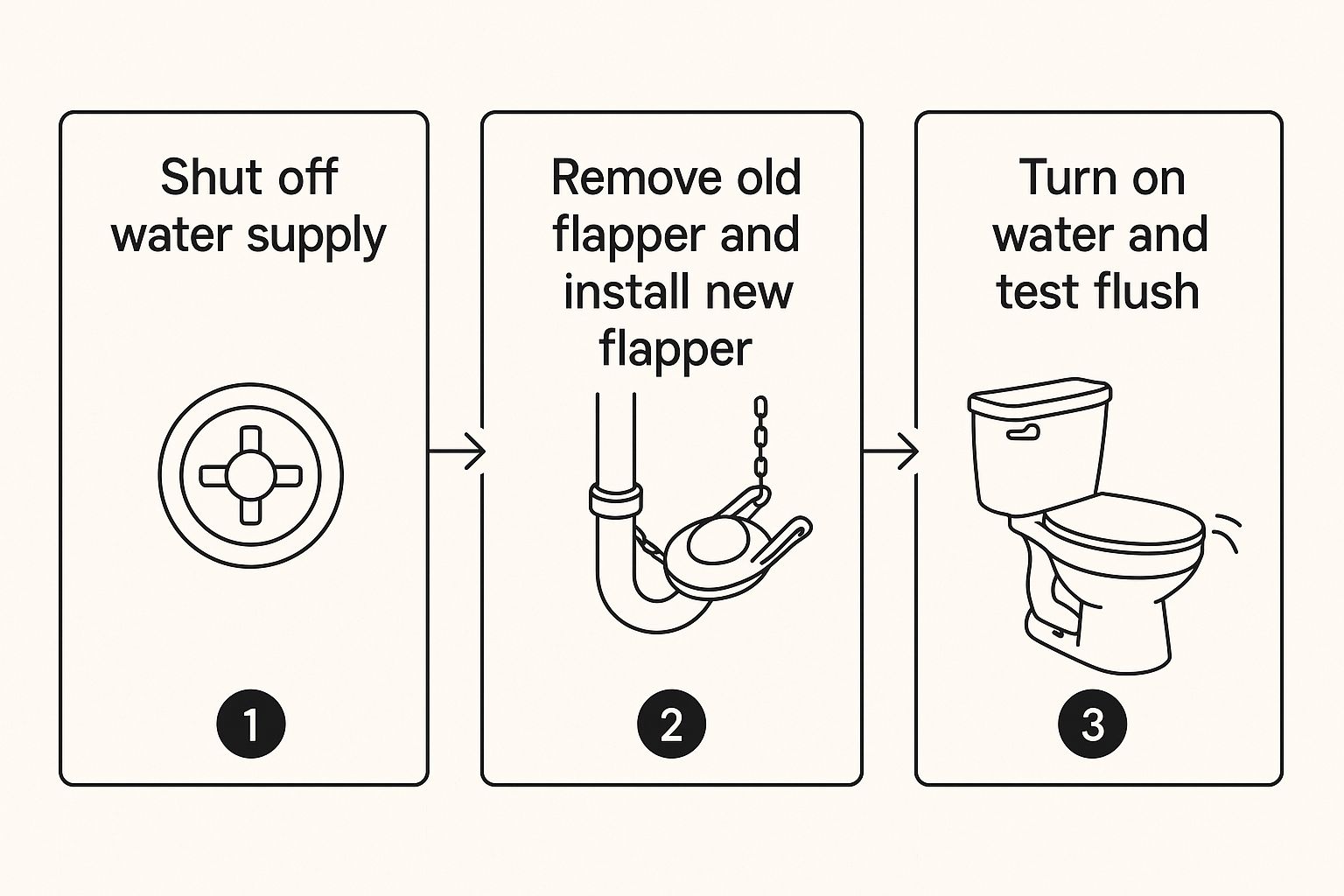
The process might look easy, but getting the new part aligned perfectly and making sure the chain has the right amount of slack is key for a repair that lasts. Instead of risking a mistake, it's often best to call a professional.
It's no surprise that more and more homeowners are choosing to call in an expert. The global market for toilet repair services is projected to hit $7.5 billion by 2033. This growth is driven by aging plumbing in many homes and a clear preference for reliable solutions over frustrating DIY attempts. You can learn more about the growing toilet repair services market and its trends.
Key Takeaway: A running toilet is almost always caused by a faulty flapper, a bad float, or a failing fill valve. While you can often spot the problem yourself, a professional repair is the best way to prevent future leaks and water damage.
When a Small Leak Signals a Bigger Issue
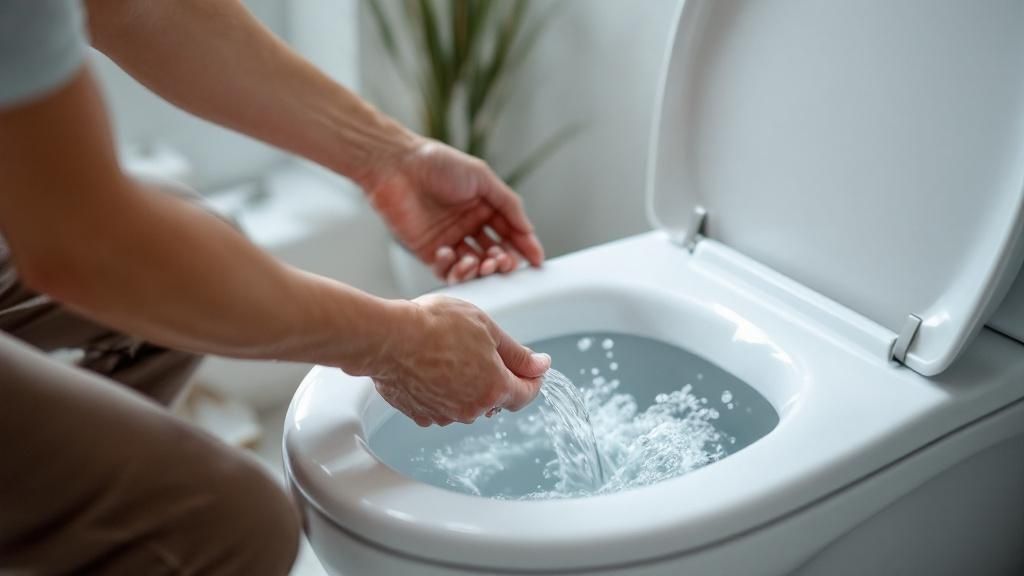
Sometimes, that annoying running sound isn’t just about a worn-out flapper. We’ve seen it time and time again—ignoring a running toilet or trying a quick fix can cover up a more serious problem in your home’s plumbing.
With over 35+ years of experience serving the Monterey Bay area, we’ve learned that a simple toilet issue is often a cry for help from the entire system.
A Real-World Example from Carmel Valley
We recently got a call from a homeowner in Carmel Valley who was frustrated with a toilet that wouldn't stop running. They had already tried replacing the parts inside twice, but the problem kept coming back.
It turned out the running toilet wasn't the root cause at all—it was a symptom. The real issue was dangerously high water pressure throughout their house. This extra pressure was constantly forcing water past the toilet's fill valve. Not only did this make the toilet run, but it was also putting a lot of strain on their pipes, fixtures, and even their water heater.
What they thought was a simple $20 part replacement was actually a warning sign that their whole system was at risk.
Coastal Concerns in Carmel-by-the-Sea
Another tricky issue we see a lot involves slow, hidden leaks caused by a flapper that isn't seated quite right. This is a huge concern for homes along the coast, especially in places like Carmel-by-the-Sea, where the high humidity can make water damage worse.
A tiny, constant leak can go unnoticed for months, slowly seeping water into the subfloor. Over time, this moisture can lead to:
- Wood rot and serious structural damage
- Mold and mildew growth in hidden spaces
- Costly and extensive repairs down the road
This is a perfect example of how what seems like a small problem can turn into a massive headache. If you even think you have a hidden leak, it's important to act fast. You can learn more about how our team can help you detect water leaks in your home before they cause big damage.
A running toilet might just be the most obvious sign of a bigger issue. It's often your plumbing system's way of telling you that something, like water pressure or a hidden leak, needs an expert's attention right away.
The toilet repair industry is a major part of the global plumbing market, which was valued at around $15 billion in 2025. This growth is driven by aging infrastructure and new construction, showing just how common these problems are. Discover more insights about the global toilet repair market and see why professional service is so essential.
Your Trusted Local Plumbers Since 1988
When a plumbing problem pops up, you want someone you can count on, not just a random name from a search. We get it. At Alvarez Plumbing, we're not just contractors; we're your neighbors. Our family started this business way back in 1988, and we’ve been proudly serving our communities from Watsonville to Prunedale ever since.
For over three decades, our reputation has been built on honest, reliable work. We've seen it all—from the hard water issues common in Salinas to the quirky plumbing in Pacific Grove's historic homes. Our approach is simple: we find out what’s wrong, explain it in plain English, and give you a clear, upfront quote. No surprises, just solid service.
Why Go With a Local, Family-Owned Plumber?
Choosing a local plumber means you’re getting someone who’s part of the community and cares about doing right by their neighbors. We’re not just here to fix a leaky pipe and disappear; we're here to build lasting relationships.
Our goal is simple: get the job done right the first time with high-quality parts that we know will last. This gives you peace of mind and stops water waste, saving you money and protecting your home.
It’s no secret that homeowners are looking for real expertise. In fact, the global market for toilet repair services is projected to hit around $33.2 billion by 2033, a clear sign that people value professional skill over a quick fix. And our expertise doesn't stop at simple repairs; we also handle larger projects like full bathroom remodeling services.
Whether you're dealing with a toilet that won't quit running or have bigger questions about your water heater repair needs in Salinas, CA, we’re the team you can call.
Your Questions About Running Toilets, Answered
Over the years, we've heard just about every question there is from homeowners between Salinas and Carmel-by-the-Sea about that phantom flushing sound. We've pulled together some of the most common ones to give you quick, straightforward answers.
How Much Water Does A Running Toilet Really Waste?
It's a number that always shocks people, but a toilet that's running can easily waste up to 200 gallons of water every single day. Here on the Monterey Peninsula, that's not just a hit to your wallet—it's a significant drain on our local water supply. Getting it fixed fast is one of the smartest things a homeowner can do.
Are Those All-in-One Toilet Repair Kits Any Good?
We get why those kits look tempting on the shelf at the hardware store. They promise a quick, cheap fix. But the truth is, they're almost always packed with flimsy, generic parts that just don't hold up.
A professional plumber doesn't just install a part; we match the right, durable component to your specific toilet model. This means the repair will actually last, saving you the headache of doing the same job again in six months.
The secret to a lasting toilet repair is simple: use the right parts and install them correctly. A cheap kit often just kicks the can down the road, wasting more water and causing more frustration.
How Quickly Can You Get Out to Prunedale to Fix My Toilet?
We know that the sound of a running toilet is more than just an annoyance—it's an urgent problem that's costing you money. As a local, family-owned business that's been serving Prunedale, Watsonville, and the surrounding areas since 1988, we're built for fast, friendly service.
In many cases, we can get a technician out to diagnose and fix the issue on the very same day you call. And to help you avoid future surprises, we recommend regular check-ups. Our guide on plumbing preventative maintenance has some great tips for staying ahead of problems.
Don't let a running toilet flush your money away. For a fast, permanent fix from a team that knows Monterey County plumbing inside and out, you can count on Alvarez Plumbing. Contact us online or give us a call today!