It starts with a simple, familiar annoyance: water pooling around your feet just a few minutes into a shower. For homeowners all over Monterey County, from Salinas to Carmel-by-the-Sea, this is usually the first sign that trouble is brewing in your drain.
While it’s tempting to reach for a bottle of chemical drain cleaner and hope for the best, understanding why your bathtub is clogged is the real first step toward a fix that actually lasts. The goal isn't just to learn "how to fix a clogged bathtub" for today, but to prevent it from happening again.
The Telltale Signs of a Bathtub Clog
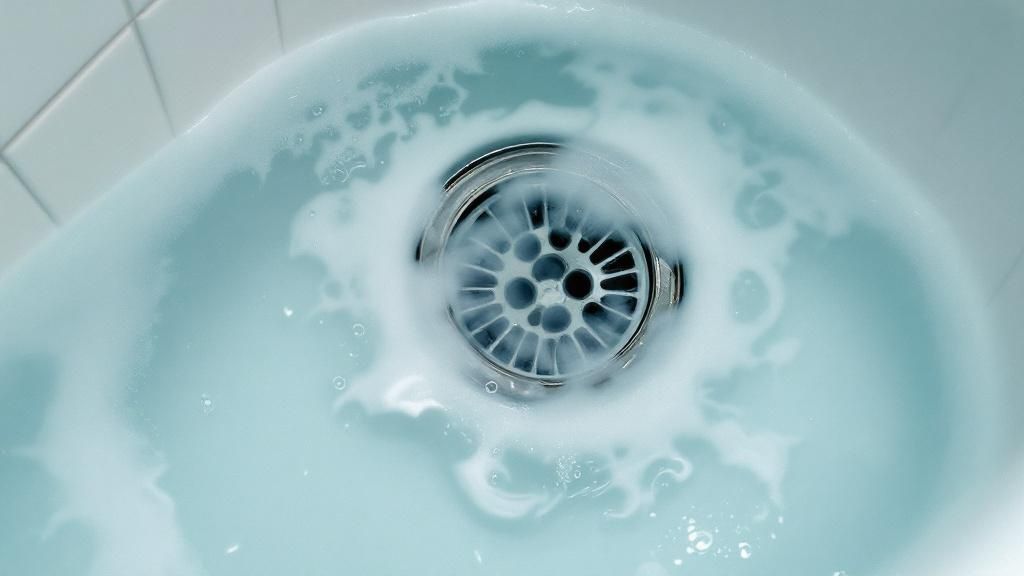
That slow-draining tub is more than just inconvenient; it’s a clear message from your plumbing that something is wrong. An issue like this rarely pops up overnight. Instead, it’s a gradual buildup of common culprits—hair, soap scum, and other gunk—that eventually creates a stubborn blockage.
Recognizing the early warnings can help you gauge how serious the problem is before your tub becomes a makeshift wading pool.
What to Watch (and Listen) For
The most obvious sign, of course, is standing water that seems to take forever to drain away. But there are other, more subtle clues that can point to a clog long before things get that bad.
You should pay close attention if you notice:
- Gurgling Sounds: Do you hear strange bubbling or gurgling noises from the drain as the water goes down? That’s often the sound of air being forced through a partial blockage.
- Foul Odors: Trapped debris like hair and soap scum doesn’t just sit there—it starts to decay. This can release some truly unpleasant smells from deep within your drain, a common complaint we hear from homes in Marina and Seaside.
- Water Backups: This is a big one. If flushing a nearby toilet or running the bathroom sink causes water or bubbles to come up your tub drain, you could be dealing with a much deeper problem in your main sewer line.
These symptoms are your home’s way of asking for a little help. Here in Monterey County, our notoriously hard water can make things worse. Mineral scale builds up on the inside of pipes, creating a rough surface that acts like a magnet for hair and soap scum. This combination forms dense, sticky clogs that most store-bought fixes just can’t touch.
What Your Clogged Bathtub Is Telling You
Not all clogs are created equal. Use this quick guide to understand the common causes behind bathtub clogs here in the Monterey Bay area.
| Symptom You Are Seeing | What It Usually Means Here | Next Steps to Consider |
|---|---|---|
| Slow Draining Water | A partial clog, likely hair and soap scum. | A simple drain snake might work, but the problem could return. |
| Gurgling or Bubbling | Air is trapped, indicating a more solid blockage forming. | Try a plunger first, but be prepared for a tougher fight. |
| Unpleasant Drain Odors | Decomposing organic matter is stuck in the P-trap or pipe. | Professional cleaning is needed to remove the source of the smell. |
| Water Backs Up From Other Drains | A serious blockage in the main drain or sewer line. | Stop using water immediately and call a professional plumber. |
Understanding these signs helps you know when a simple DIY attempt is appropriate and when it's time to call for backup.
Since our family started this business back in 1988, we've seen it all. A slow drain is rarely just about a clump of hair—it's about how local water conditions and daily habits combine to create a real problem. Ignoring these signs almost always leads to a bigger, more expensive headache down the road.
Learning how to keep drains clear with good preventative habits is the smartest move. But once a clog has already formed, getting a professional diagnosis is the surest way to solve it for good.
Why Bathtub Drains Keep Clogging in Our Area
If you feel like you’re constantly battling a slow-draining or completely blocked bathtub, you’re definitely not alone. It's a frustratingly common problem in homes all across our area, from new builds out in Prunedale to the classic properties in Pacific Grove. When you have a clog that just keeps coming back, it’s usually a sign of something deeper than a simple clump of hair.
These stubborn, recurring blockages are often tied to specific conditions we see in local plumbing systems all the time. One of the biggest culprits? The notoriously hard water found throughout the Salinas Valley.
The Problem with Hard Water and Older Pipes
Hard water is loaded with dissolved minerals, mainly calcium and magnesium. As water flows through your pipes day after day, these minerals gradually fall out of the solution and build up a crusty, rock-like layer of scale on the pipe's interior walls. This mineral scale effectively narrows the pipe's diameter and creates a rough, sticky surface that grabs onto hair, soap scum, and conditioner like Velcro.
This one-two punch of mineral buildup and soapy gunk creates incredibly dense, stubborn clogs that most DIY methods just can't touch. A drain that's just a little slow can quickly turn into a complete standstill. It's a classic situation we see on calls for clogged drain repair in Monterey.
The kind of pipes you have matters, too. Many older homes in our community, especially in areas like Carmel-by-the-Sea, still have galvanized steel pipes, which are especially vulnerable to this type of internal corrosion and scale buildup.
"A persistent clog is rarely just about what went down the drain today. It’s often the result of years of buildup that finally reached its tipping point. That’s why you need an expert who understands the local conditions, not just a temporary fix."
While the choice between plastic and metal drains is a factor everywhere—plastic is often favored in North America for its lower cost—it's the combination of pipe material and local water chemistry that really tells the story of your drain's health. You can learn more about how plumbing materials are used worldwide in this market report.
When you see that same clog rearing its ugly head again and again, it's a sure-fire sign the real problem isn't on the surface, but deep inside the pipes themselves.
Safe First Steps for a Slow Drain
We get it. You see that water pooling around your ankles in the tub, and the first thought is to find a quick fix before you have to call for help. For a minor, slow-moving drain, there are a couple of safe first steps you can take for a little at-home troubleshooting.
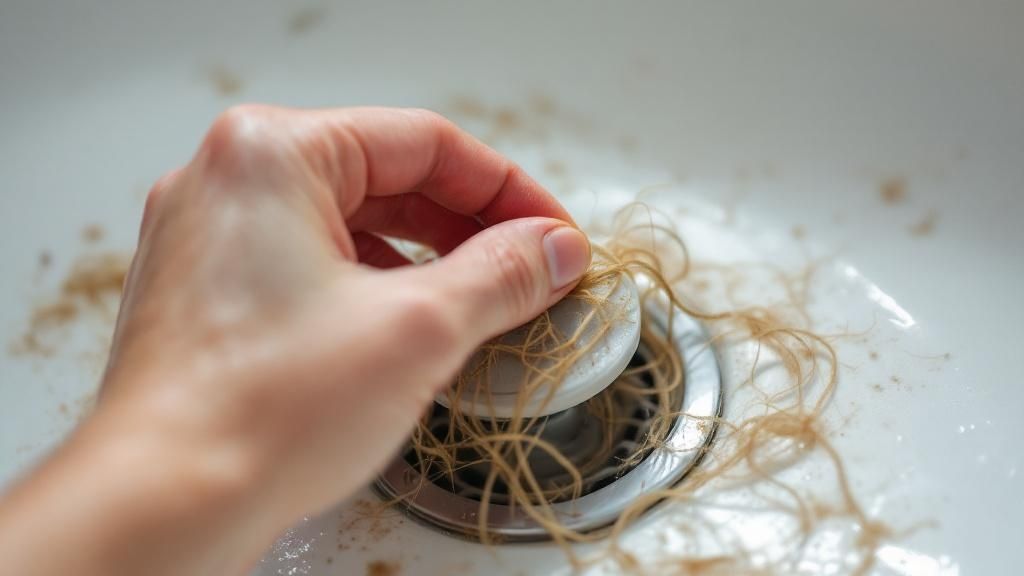
First, you can often solve a minor slowdown just by clearing visible gunk and hair from the drain stopper or grate. If that doesn't do the trick, carefully pouring a kettle of boiling water down the drain can sometimes dissolve a fresh buildup of soap scum.
For a slightly more stubborn (but still minor) clog, you can try this gentle, pipe-safe alternative to harsh chemicals.
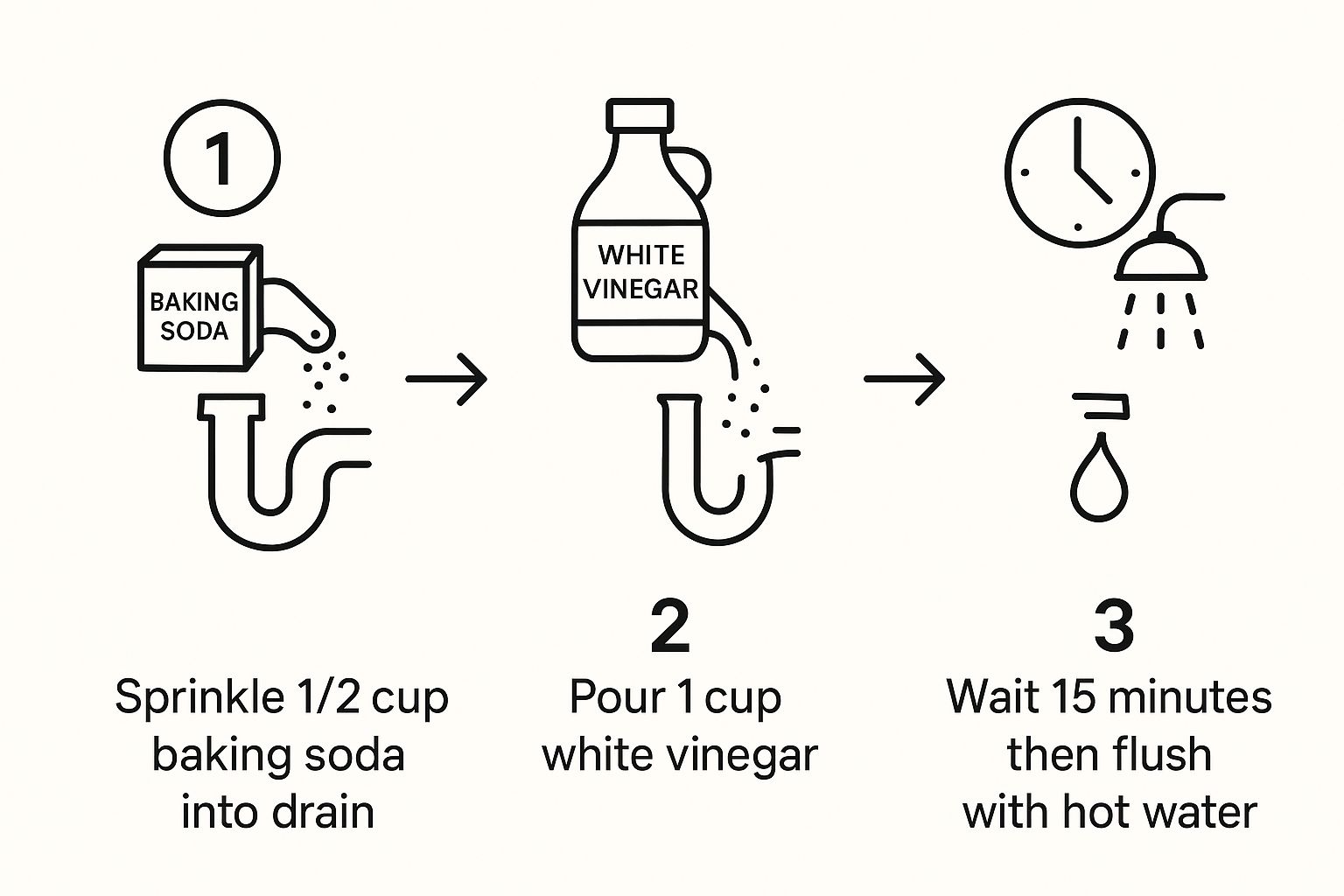
Brief Summary: You can pour a half cup of baking soda down the drain, followed by a half cup of white vinegar. Let it fizz for about 15-20 minutes, then flush with hot water. This can sometimes loosen fresh buildup.
When to Stop and Call a Pro
It's really important to know that these steps are purely for a first attempt at a minor slow-down. If they don’t give you immediate results, the clog is deeper and more serious than what you can see at the surface. This is especially true for homes in Carmel and Monterey, which often have older, more delicate plumbing that can be easily damaged.
One thing we’ve learned since 1988 is that store-bought chemical drain cleaners are a major gamble. They use harsh acids that can eat away at metal pipes, turning a small clog into a catastrophic leak. Worse, they often don't even fix the problem; they just burn a small tunnel through the blockage that clogs right back up again.
If these simple actions don't work, please don't reach for a bottle of chemicals or a flimsy tool from the hardware store. While you can learn about the different kinds of tools out there, like a handheld snake for drain cleaning, trying to use one without experience can easily scratch your tub or just push the clog deeper, making it worse.
A persistent clog is a clear sign that it's time to let a professional with the right equipment handle it safely.
The Hidden Dangers of DIY Drain Cleaners
When your tub won’t drain, reaching for a bottle of liquid drain cleaner feels like the obvious first step. They promise a quick, easy fix. But from what we've seen in homes across our coastal communities like Seaside and Marina, these harsh chemicals often create more problems than they solve.
The corrosive agents in these products are powerful—they have to be to dissolve gunk. The trouble is, they can’t distinguish between a stubborn hairball and your actual pipes. Over time, that acid can eat away at your plumbing, creating weak spots that eventually lead to leaks. Suddenly, a simple clog has turned into a much more expensive plumbing disaster.
When Good Tools Go Bad
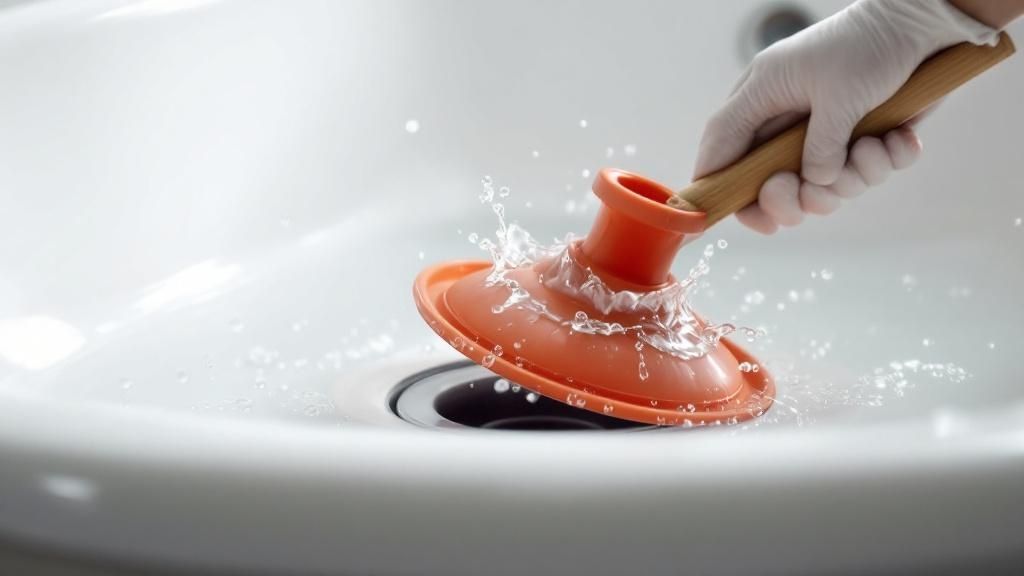
It’s not just chemicals, either. Using the wrong tool, or even the right tool incorrectly, can backfire. A cheap, flimsy hand snake from the hardware store can easily scratch up the finish of your bathtub. Even worse, if you’re not careful, you can push a simple clog deeper into your pipes, turning it into a serious blockage in your main sewer line.
A clog that seems to disappear after using a chemical cleaner often comes right back. Why? Because the product only burned a tiny channel through the blockage instead of removing it completely. It’s a temporary fix at best, which is why we’ve relied on safe, professional-grade equipment since our family business started back in 1988.
There’s no doubt these products are big business. The global drain cleaner market is projected to skyrocket to over $3.2 billion by 2031. But just because they’re popular doesn’t make them the best or safest choice for your home.
Thankfully, there are better, safer options out there, and it’s worth exploring what a natural drain cleaner can accomplish before resorting to harsh chemicals.
If you do decide to use these products despite the risks, please be careful. Protecting yourself is non-negotiable. Using appropriate personal protective equipment is absolutely vital to shield yourself from the harmful fumes these chemicals release.
When You Need to Call a Professional Plumber
Sometimes, a clogged bathtub isn't just a minor hassle—it's a warning shot from your plumbing system. While it's tempting to keep wrestling with a plunger or drain snake, knowing when to throw in the towel is crucial. A stubborn clog can signal a much bigger problem lurking deeper in your pipes, and pushing a DIY fix too far can turn a small issue into a costly catastrophe. This is a story we see play out all too often for homeowners across Salinas, Carmel Valley, and Watsonville.
Certain symptoms are non-negotiable red flags. If you see or hear any of these, it’s time to stop what you're doing and call in a licensed plumber.
Don't Ignore These Warning Signs
A few specific signs tell you the clog is beyond a simple fix. These symptoms usually point to a blockage that's deep in your main drain or sewer line, which requires specialized equipment to resolve safely and effectively.
- Water Backing Up Elsewhere: This is the big one. If flushing your toilet causes water to gurgle up into your bathtub or shower, you're almost certainly dealing with a main sewer line clog. Stop using all water immediately.
- Persistent Foul Odors: A bad smell that lingers long after you've cleaned the drain is often caused by trapped, decaying waste deep within the system. A simple snake just won't reach it.
- Multiple Clogged Drains: Is your bathtub, toilet, and bathroom sink all draining slowly at the same time? That’s not a coincidence. It almost always points to a blockage in the main drain that serves all of them.
- Recurring Clogs: You spend an afternoon clearing a clog, only for it to return a few days later. What gives? You likely just poked a temporary hole in a much larger obstruction, and it's already filled back in.
"A stubborn clog that keeps coming back is your plumbing system telling you the problem is serious. Ignoring these signs can lead to messy, unsanitary backups and potential water damage. It’s the kind of issue we’ve seen turn into an emergency for families all across Monterey County."
In these situations, a professional plumber is your only real solution. When the clog proves too stubborn for your tools, experts can provide comprehensive drain services to resolve those deep-seated issues. Our local team at Alvarez Plumbing is always ready with fully stocked trucks and over 35+ years of local experience. We know that well-maintained plumbing is essential—in fact, over 90% of American households rely on it to prevent these very problems.
For those serious blockages, especially ones causing backups into your home, you need help, fast. We offer reliable emergency plumbing services in Salinas and Monterey to diagnose and fix the problem before it gets any worse.
Common Questions About Clogged Bathtubs
After serving Monterey County as plumbers for over 35 years, we've fielded just about every question you can imagine about a clogged bathtub. Here are some of the most common ones we hear from homeowners, along with some straightforward, neighborly advice.
How Can I Prevent My Bathtub From Clogging?
The old saying is true: the best defense is a good offense! We always recommend using a quality hair catcher over the drain. It’s the simplest solution and tackles the number one culprit we find in homes from Salinas to Carmel.
Another great habit is a weekly hot water flush. This simple step can help dissolve the soap scum and conditioner residue that builds up surprisingly fast. Given the hard water we have here in the Salinas Valley, we also suggest a professional drain cleaning every couple of years. It’s a smart investment and the only real way to prevent the slow, steady mineral buildup that eventually leads to stubborn blockages.
Are Chemical Drain Cleaners Really That Bad?
In our professional experience, yes. We strongly advise homeowners to steer clear of them. Those harsh, off-the-shelf chemicals might promise a quick fix, but they can be incredibly corrosive to your pipes—a serious concern in the beautiful, older, historic homes you find in Pacific Grove.
We’ve seen this countless times: a chemical cleaner just burns a small tunnel through the gunk, which clogs right back up almost immediately. It’s far safer for your plumbing and much more effective to have a professional clear the clog the right way from the start.
I Cleared Some Hair, But My Tub Is Still Draining Slowly. Why?
That's a story we hear all the time in Watsonville and Seaside. The hair you can reach is usually just the visible tip of a much bigger, nastier iceberg. The real problem is almost always further down the line.
Deep in the drain, layers of soap scum, conditioner, and hard water minerals have likely formed a sticky, dense mass that surface-level cleaning just can't touch. When a quick clean-out doesn't solve the problem, it’s a sure sign the blockage is deep in the P-trap or beyond, and you'll need a professional plumber's auger to remove it completely.
What Does It Typically Cost to Have a Pro Unclog My Bathtub?
The cost really boils down to the clog's location and how severe it is. A simple clog located right in the tub's P-trap is usually a quick and affordable service call for our team. If the blockage is deeper in your home's main line, however, it becomes a more involved job that requires more time and equipment.
At Alvarez Plumbing, we pride ourselves on being completely transparent. When you call us, we'll visit your home, use our professional tools to diagnose the problem, and give you a clear, upfront price before we start any work. You won't get any surprises from us—just honest, reliable service from a local, family-owned business you can trust.
If you're tired of standing in ankle-deep water, don't wait for a stubborn clog to turn into a full-blown emergency. The experienced, friendly team at Alvarez Plumbing has been serving homeowners across Monterey County since 1988. Give us a call today for fast, professional drain cleaning service.