For homeowners from Salinas to Carmel-by-the-Sea, peace of mind often starts with the systems you can't see. Your home's plumbing is a complex network that works tirelessly behind walls and under floors, but what happens when it stops working? Our local climate, from the heavy winter rains that can challenge drainage in Watsonville to the summer water conservation needs in drought-aware Carmel Valley, puts constant stress on pipes, fixtures, and appliances. An annual plumbing inspection isn't just a routine task; it's the single most effective way to prevent catastrophic failures, save money on water bills, and ensure your family's safety.
As a family-owned business serving Monterey County since 1988, we at Alvarez Plumbing have seen firsthand how a proactive approach turns potential disasters into minor adjustments. This comprehensive plumbing inspection checklist outlines the critical areas our licensed professionals examine. It gives you an inside look at how we protect your home and investment, whether you're in Marina, Seaside, or a historic home in Pacific Grove. While this guide helps you understand your pipes, a full-scale renovation requires broader planning; integrating a plumbing review into your ultimate home remodel checklist ensures every system works together seamlessly from the start. Let's explore the essential checks that keep your home's plumbing ready for anything.
1. Water Pressure and Flow Rate Testing
The first and most critical item on any comprehensive plumbing inspection checklist is evaluating water pressure. This isn't just about whether your shower feels powerful enough; it's a diagnostic test that reveals the health of your entire plumbing system, from the municipal supply line to the farthest fixture. High or low pressure can be a symptom of a much larger problem lurking behind your walls.
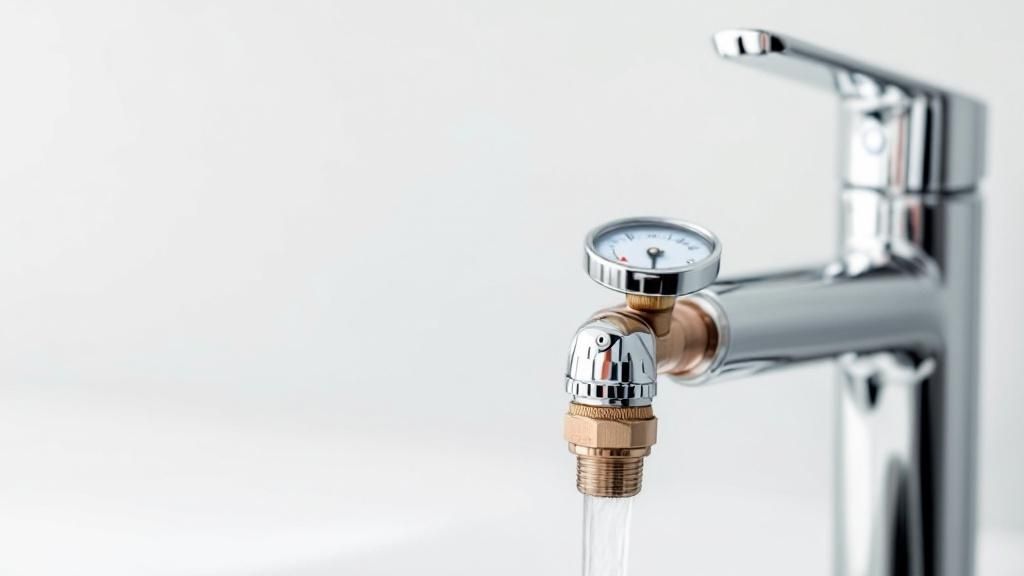
For homeowners in Salinas and Monterey, proper pressure is vital. The ideal residential range is 40 to 80 PSI (pounds per square inch). Pressure that’s too low can signal hidden leaks or mineral buildup in pipes, a common issue in areas with hard water. Conversely, pressure that’s too high—a problem we often see in homes near elevated water tanks—can stress your appliances, cause noisy pipe "hammering," and lead to burst pipes. A simple test can catch this before it becomes a catastrophe.
Why This Test Is Essential
This test is foundational because pressure issues often point to serious problems. A commercial property manager in Carmel-by-the-Sea might notice tenants complaining about weak showers, only for an inspection to reveal a failing pressure regulator that’s been overworking for months. Similarly, a residential inspection in a historic Pacific Grove home could uncover dangerously high pressure, putting the entire system at risk of a major pipe burst.
Friendly Expert Insight: We often find that what a customer perceives as a simple clog is actually a system-wide pressure problem. A thorough test at multiple points allows us to diagnose the root cause accurately, saving you time and preventing more expensive repairs down the road.
What a Professional Looks For
A quick DIY test might give you a single number, but a professional assessment is more thorough. To get a true picture of your system's health, a licensed plumber will:
- Test pressure at multiple points (e.g., an outdoor spigot and a second-floor bathroom) to check for consistency.
- Measure how much the pressure drops when multiple fixtures are running, which can indicate flow rate or pipe size issues.
- Check the pressure regulator valve to ensure it's functioning correctly and protecting your home.
If you're experiencing inconsistent water flow in your Prunedale or Watsonville property, it's a sign that a professional check-up is in order.
2. Leak Detection and Water Damage Assessment
Following water pressure tests, a meticulous search for active and potential leaks is the next critical step. This involves a comprehensive examination of every visible pipe, fixture, and appliance connection for signs of moisture. More than just looking for drips, this assessment aims to uncover hidden issues that could lead to catastrophic water damage, mold growth, and costly structural repairs.
For property owners from Marina to Castroville, where homes can range from new builds to historic structures, even a minor, slow leak can cause significant problems over time. We're looking for active drips under sinks, corrosion around water heater connections, and subtle signs like warped cabinet bottoms or faint water stains on drywall. This proactive approach identifies problems before they escalate from a small repair into a major insurance claim.
Why This Test Is Essential
A visual inspection paired with professional tools can save thousands. For instance, a routine inspection for a homeowner in Monterey uncovered a slow leak from a second-story toilet flange that had gone unnoticed. Catching it early prevented a massive water damage claim that would have destroyed the ceiling and flooring below. Similarly, an assessment at a busy restaurant in Salinas identified a subtle slab leak in the kitchen, allowing the owner to address it before a planned floor replacement.
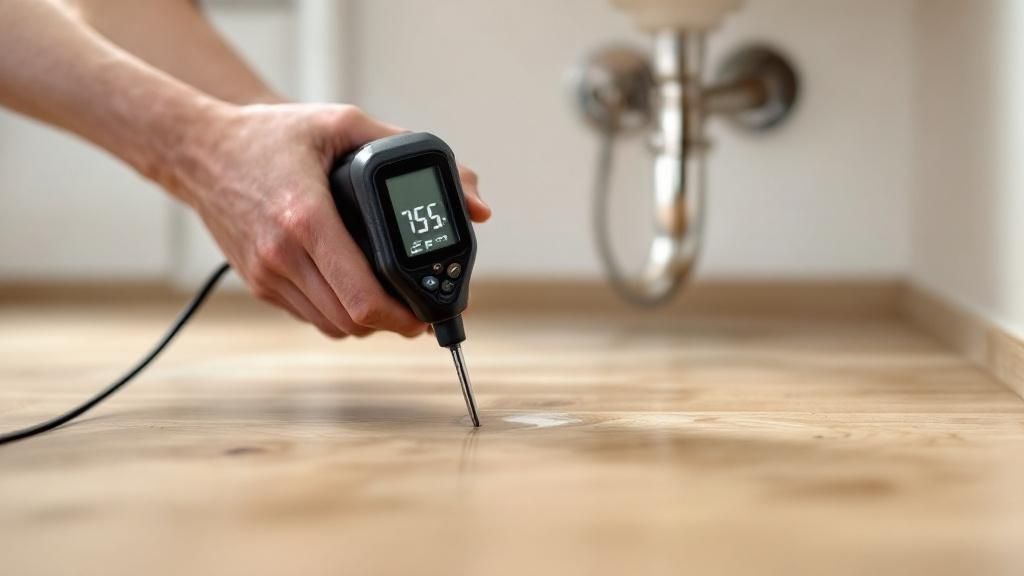
Friendly Expert Insight: The most damaging leaks are often the ones you can't see. We use professional-grade moisture meters to detect elevated humidity levels inside walls and under floors, which is a tell-tale sign of a hidden pipe or drain issue. Finding these early is the key to protecting your property's value.
What a Professional Looks For
A complete leak detection process requires a systematic approach. Our plumbers will:
- Use Moisture Meters to scan areas around toilet bases, under all sinks, near water heaters, and at the base of dishwashers and washing machines.
- Check for Physical Evidence like water stains, bubbling paint, mineral deposits on pipes, and warped baseboards.
- Test All Shut-Off Valves under sinks and toilets to ensure they operate correctly and don't leak when turned.
- Inspect Seals and Caulking around tubs, showers, and sinks, as deteriorated seals are a common entry point for water.
If you suspect a hidden problem in your Seaside or Carmel Valley home, addressing it immediately is crucial. For a professional evaluation, you can learn more about our advanced water leak detection services.
3. Drain and Sewer Line Functionality
While water pressure tests the supply side, this next item on our plumbing inspection checklist tackles the equally critical waste side: your drains and main sewer line. This inspection evaluates how effectively your home or business removes wastewater. It involves assessing everything from individual sink drains to the main sewer lateral connecting your property to the Salinas municipal system, ensuring there are no blockages or hazardous backups.
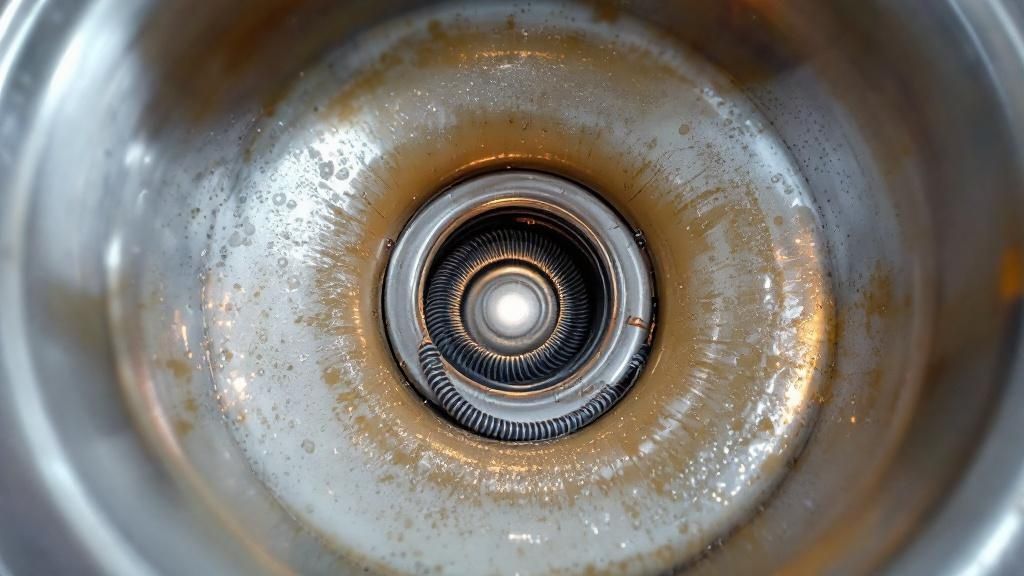
For property owners across Monterey County, from residential homes in Marina to commercial kitchens in Carmel-by-the-Sea, a functional drainage system is non-negotiable. Slow drains are more than an inconvenience; they are early warnings of bigger problems like grease buildup or invasive tree roots from our beautiful local landscaping. Ignoring these signs can lead to foul odors, property damage from overflows, and costly emergency sewer line repairs.
Why This Test Is Essential
This inspection is vital because it catches silent threats before they become catastrophic failures. For instance, a routine inspection at a commercial facility in Castroville might uncover significant grease buildup that, if left untreated, would violate local health codes and cause a complete business shutdown. Similarly, gurgling sounds in a Pacific Grove home’s plumbing could point to a blocked vent stack on the roof, a subtle issue that can compromise every drain in the house.
Friendly Expert Insight: We often discover that what a client thinks is a simple clogged toilet is actually a symptom of tree root intrusion in their main sewer line. A basic flow test combined with a visual check of the sewer cleanout can quickly tell us if the problem is isolated or system-wide, guiding us to the right solution.
What a Professional Looks For
A professional plumber performs a multi-point check to assess drain and sewer health:
- Test All Drains Individually by running hot water for at least a minute in every sink, tub, and shower to check for slow drainage.
- Check for Gurgling Noises, which often indicate a venting problem that can create negative pressure and pull water from P-traps.
- Inspect Floor Drains in basements and laundry rooms to ensure they are clear and their traps are full, preventing sewer gas from entering.
- Visually Inspect the Sewer Cleanout. Any signs of moisture or backup around the cap are red flags that demand a more in-depth camera inspection.
If you suspect a deeper issue within your Prunedale or Watsonville property’s sewer lines, a simple visual check isn't enough. A professional camera inspection is often the next step to see exactly what's happening inside your pipes.
4. Water Heater Safety and Performance Evaluation
A crucial part of any plumbing inspection checklist is the comprehensive evaluation of the water heater. Whether it's a traditional tank or a modern tankless unit, its safe and efficient operation is non-negotiable. This inspection goes beyond simply checking for hot water; it involves a detailed assessment of safety mechanisms, performance, and compliance with local codes to prevent hazards like gas leaks, carbon monoxide buildup, or catastrophic tank failure.
For homeowners in Salinas and surrounding communities, a failing water heater is more than an inconvenience. A leaking tank can cause significant water damage, while an improperly vented gas unit poses a serious health risk. We ensure every unit is operating at peak safety and efficiency. This includes verifying correct temperature settings to prevent scalding and checking for the proper installation of earthquake straps, a mandatory safety feature in our seismically active region.
Why This Test Is Essential
A thorough water heater inspection is fundamentally about safety. For example, a routine check at an apartment complex in Seaside could uncover an improperly vented gas heater, silently leaking deadly carbon monoxide. In another scenario, a commercial facility in Castroville might be experiencing operational disruptions, only for an inspection to reveal an undersized unit that cannot meet demand, leading to premature failure and expensive downtime.
Friendly Expert Insight: The Temperature and Pressure (T&P) relief valve is a small but critical safety device. We often find these valves seized or improperly installed, which is like disarming a bomb’s fail-safe. A functioning T&P valve is essential to prevent a tank from rupturing under excess pressure.
What a Professional Looks For
A professional plumber will conduct a meticulous evaluation to guarantee safety and performance:
- Check the Age and Lifespan (typically 8-12 years for tank models) to anticipate replacement needs.
- Test the T&P Relief Valve to ensure it opens and closes correctly.
- Inspect Venting Systems on gas heaters for proper pitch, secure connections, and clearance from combustible materials.
- Examine for Corrosion and Leaks on the tank, pipes, and connections.
- Verify Earthquake Straps are correctly installed per local code.
5. Fixture Condition and Code Compliance
A thorough plumbing inspection checklist must go beyond the hidden pipes and address the parts you use every day: your fixtures. This involves evaluating every toilet, sink, faucet, and showerhead to assess not just its function but also its safety, structural integrity, and adherence to current plumbing codes. It’s a hands-on process that checks everything from a loose faucet handle to whether a commercial restroom meets accessibility standards.
For property managers in Marina or business owners in Seaside, fixtures are a primary point of interaction for tenants and customers. A dripping faucet isn't just an annoyance; it's a direct hit to the water bill. Similarly, a wobbly toilet is more than an inconvenience; it can indicate a compromised wax ring, which could lead to serious subfloor water damage and costly repairs.
Why This Test Is Essential
This part of the inspection is critical because fixtures are frequent failure points. For a school in Watsonville, verifying that restrooms are ADA-compliant is a legal necessity. For a medical clinic in Salinas, ensuring hand-washing stations meet stringent healthcare standards is a matter of public health. Each fixture must be checked against both performance benchmarks and local building codes.
Friendly Expert Insight: We often find older fixtures in both homes and businesses that waste a tremendous amount of water. Updating a single toilet in a busy Carmel office from an old 3.5-gallon model to a modern 1.28-gallon high-efficiency unit can save thousands of gallons and dollars annually. It's a key part of drought-smart plumbing.
What a Professional Looks For
To perform a comprehensive fixture assessment, a professional will methodically:
- Test All Moving Parts like handles, levers, and pop-up drains to ensure smooth operation without leaks.
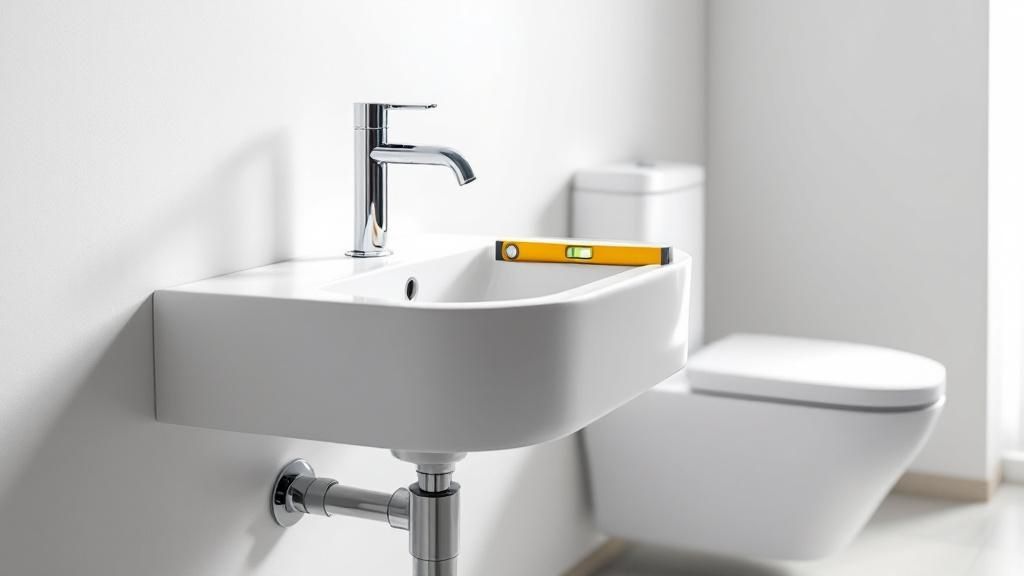
- Check Mounting Stability to confirm that toilets, sinks, and faucets are securely mounted and do not wobble.
- Verify Proper Clearances to ensure adequate space around fixtures as required by ADA and local building codes.
- Inspect Seals and Caulking around sinks, tubs, and toilet bases for any signs of cracking, mold, or water intrusion.
- Measure Flow Rates of faucets and showerheads to check for compliance with water conservation standards.
6. Backflow Prevention System Inspection
A critical safety component of any commercial plumbing inspection checklist is the examination of backflow prevention systems. These devices are non-negotiable safeguards, ensuring that non-potable water from irrigation, fire sprinklers, or other sources cannot reverse flow and contaminate the clean, drinkable water supply. This inspection verifies that these devices are functioning correctly and are in full compliance with local health codes.
For businesses and multi-unit properties across Monterey County, this is not just a best practice; it's a legal and public health mandate. A hospital in Salinas, for example, relies on a properly functioning backflow preventer to stop medical or cleaning fluids from entering its potable water lines. Similarly, a restaurant in Carmel-by-the-Sea must ensure its beverage systems and dishwashers are properly isolated to prevent any chance of contamination.
Why This Test Is Essential
This inspection is essential because a backflow incident can have catastrophic consequences, posing serious health risks. Commercial facilities in industrial areas like Watsonville often handle chemicals that must be kept separate from the municipal supply. A failed backflow device could lead to a public health crisis and significant legal liability. Regular, certified testing is the only way to guarantee these systems will work when needed.
Friendly Expert Insight: We frequently see commercial clients who are unaware that their backflow prevention device certification has lapsed. It’s a common oversight that can result in fines and shutdown orders from the water authority. We make it a priority to check these records during every commercial inspection.
What a Professional Looks For
To perform a compliant backflow inspection, a certified professional will:
- Verify Certification and Records by checking the device's tag for the last test date and confirming records are current.
- Check Installation and Clearances to ensure the device is installed per local codes in places like Seaside or Marina.
- Inspect Test Ports to ensure they are accessible and operable for connecting the testing gauge.
- Document Device Details, including make, model, and serial number, for the property owner and the local water authority.
Ensuring your system is up to code is a responsibility you can't ignore. A certified plumber can handle the testing and paperwork to keep your business compliant.
7. Gas Line and Connection Safety Assessment
Beyond water and waste systems, a crucial component of any complete plumbing inspection checklist is the safety assessment of gas lines and connections. This inspection focuses on the natural gas or propane systems that fuel essential appliances like water heaters, furnaces, and commercial kitchen equipment. It's a non-negotiable safety measure designed to detect leaks, verify code compliance, and prevent catastrophic failures.
For any property owner in Salinas or Marina, a gas line issue represents a significant hazard. This assessment involves meticulously checking every pipe, valve, and connection from the gas meter to each appliance, ensuring the system is leak-free and properly configured to safely meet demand.
Why This Test Is Essential
This inspection is fundamentally about preventing emergencies. A small, undetected gas leak in a Castroville home can lead to health issues or, in the worst-case scenario, an explosion. For commercial clients, the stakes are even higher. A restaurant in Carmel-by-the-Sea relies on a complex gas system; a failure here could mean a business shutdown and a severe threat to staff and patrons.
Friendly Expert Insight: We've seen situations where improperly installed gas connections, often done by unlicensed individuals, have created ticking time bombs. A professional inspection identifies these hazards before they become tragedies, ensuring all work meets local codes and safety standards.
What a Professional Looks For
To conduct a thorough gas line safety assessment, a qualified technician will:
- Utilize Electronic Gas Detectors to test every joint, valve, and connection for even the smallest leaks.
- Check for Proper Support and Protection to ensure gas pipes are securely strapped and protected from physical damage.
- Verify Emergency Shut-Offs are accessible, clearly marked, and functioning correctly.
- Inspect for Corrosion or Damage on pipes, a common concern in coastal areas like Pacific Grove.
- Ensure Proper Ventilation for gas-burning appliances to prevent the buildup of deadly carbon monoxide.
If you ever smell gas or suspect an issue in your Prunedale or surrounding area property, evacuate immediately and call your gas utility, then call a licensed plumber.
7-Point Plumbing Inspection Checklist Comparison
| Inspection Type | Implementation Complexity 🔄 | Resource Requirements ⚡ | Expected Outcomes 📊 | Ideal Use Cases 💡 | Key Advantages ⭐ |
|---|---|---|---|---|---|
| Water Pressure and Flow Rate Testing | Moderate – requires specialized equipment and multiple tests | Digital pressure gauges, flow measurement tools | Identifies pressure issues, blockages; ensures adequate supply | Residential, commercial buildings, hotels | Early detection of pressure problems and blockages |
| Leak Detection and Water Damage Assessment | Moderate to High – involves inspections in confined areas and moisture detection | Moisture meters, thermal cameras, leak detectors | Detects active/hidden leaks, prevents costly water damage | Residential, commercial, insurance inspections | Prevents mold, reduces water bills |
| Drain and Sewer Line Functionality | High – may need camera inspection and expertise | Sewer cameras, drain snakes, flow testers | Early blockage detection, prevents backups | Municipal, commercial, restaurant, healthcare facilities | Avoids health hazards and expensive emergency repairs |
| Water Heater Safety and Performance Evaluation | Moderate – requires specialized knowledge and some system shutdown | Pressure relief valve testers, vent inspection tools | Ensures safety, efficiency, extends unit lifespan | Residential, multi-family, commercial buildings | Prevents failures, CO risks, improves energy efficiency |
| Fixture Condition and Code Compliance | Low to Moderate – mainly visual and functional testing | Basic testing tools, compliance checklists | Ensures code compliance, fixture functionality | Hospitals, schools, offices, any building requiring compliance | Avoids liability, ensures ADA and water conservation compliance |
| Backflow Prevention System Inspection | High – requires certified technicians and annual testing | Backflow testers, certification tools | Prevents water supply contamination, ensures regulatory compliance | Hospitals, industrial, commercial properties | Protects public health, reduces liability |
| Gas Line and Connection Safety Assessment | High – requires licensed technicians and specialized testing | Gas detectors, pressure manometers | Prevents explosions, CO poisoning; verifies safe operation | Restaurants, multi-family housing, commercial laundry | Critical safety assurance, ensures proper gas flow |
Your Trusted Partner for Plumbing Peace of Mind in Salinas and Beyond
Navigating the complexities of your property's plumbing can feel overwhelming. This comprehensive plumbing inspection checklist provides a solid framework, moving you from uncertainty to informed awareness about your system's health. We’ve covered the crucial checkpoints, from verifying correct water pressure in your Pacific Grove home to ensuring your water heater in Watsonville is operating with the required earthquake straps.
By understanding the key components of a thorough inspection, you are better equipped to protect your investment. You now know the importance of checking for subtle leaks that can lead to significant water damage, a serious concern during the rainy seasons in Carmel Valley. You can appreciate why drain and sewer line functionality is non-negotiable for both a busy commercial kitchen in downtown Salinas and a family home in Prunedale. This knowledge empowers you to spot potential issues before they escalate.
From Checklist to Confident Action
The real value of this checklist isn't just in ticking boxes; it's about understanding the "why" behind each item. A dripping faucet is more than an annoyance; it's a sign of potential fixture failure. An inefficient water heater doesn’t just mean a lukewarm shower; it means wasted energy and higher utility bills.
This guide helps you have more productive conversations with a professional and ask the right questions. It transforms you into a proactive property owner, whether you're managing a building in Seaside or safeguarding your family's home in Marina. This proactive stance is essential for maintaining property value and ensuring safety.
Key Takeaway: A detailed plumbing inspection is not an expense; it's a vital investment in your property's longevity, safety, and efficiency. It provides a clear, actionable roadmap for maintenance and prevents minor issues from becoming major catastrophes.
While this guide empowers you with critical knowledge, the trained eye and advanced diagnostic tools of a seasoned professional are irreplaceable. Issues like hairline cracks in pipes, improper venting, or specific code compliance for commercial properties require expertise honed over years of experience. Since 1988, our family-owned business has built a legacy of trust by combining this checklist with deep, hands-on knowledge specific to Monterey County. We’ve seen how local hard water affects pipes and the unique challenges older homes in our communities face. Don't leave your property’s health to chance.
Ready to move from checklist to certainty? The experts at Alvarez Plumbing use state-of-the-art tools and over 35 years of local experience to perform the most thorough plumbing inspections in the region. Schedule your comprehensive evaluation today by visiting Alvarez Plumbing and gain the confidence that comes with knowing your system is in trusted hands.