The best way to insulate pipes isn't about grabbing a one-size-fits-all product from the hardware store. It's about a tailored, professional approach. For homes in our area—from the salty air of Carmel-by-the-Sea to the cooler inland winters in Salinas—the right method means having a pro assess your specific needs to pick the perfect material and thickness for real efficiency and protection.
Why a Custom Insulation Strategy Is Best for Your Home
When you hear "pipe insulation," you probably picture those simple foam tubes you can slip over visible pipes. That’s a decent start, but it’s far from a complete solution for protecting your home and saving money.
A truly effective strategy considers the unique challenges of living right here in Monterey County. A foggy summer morning in Pacific Grove can be just as rough on your plumbing as a frosty winter night in Prunedale.
The goal isn't just to cover pipes; it's to create a complete thermal barrier. This prevents two major headaches we see our customers deal with all the time:
- Winter Freezing: Pipes in unheated spots like crawlspaces, garages, or attics are sitting ducks when the temperature drops. We’ve seen firsthand how a sudden cold snap can freeze and burst pipes in Carmel Valley, leading to thousands of dollars in water damage.
- Energy Waste: Hot water loses a surprising amount of heat traveling from the water heater to your faucets. Good insulation keeps that water hotter for longer. You won't have to run the tap as long, which saves you money on both water and energy bills all year.
Beyond the Basics of DIY Insulation
A professional plan goes way beyond what any DIY kit can accomplish. Sure, wrapping pipes seems easy enough, but common mistakes like using the wrong material, leaving small gaps, or squishing the insulation too tight can make your efforts almost useless. Think about it: the plumbing in a historic Monterey home is a world away from a modern build in Marina. They need different solutions.
Since 1988, our family-owned business has seen it time and again: the most reliable pipe protection comes from a plan designed specifically for your home. It’s about knowing which pipes are most at risk and using the right materials to defend them.
A professional assessment is the critical first step. It pinpoints every vulnerable spot in your plumbing system, not just the easy-to-see ones. This includes pipes running through exterior walls or those exposed to our damp coastal air, which can cause condensation and lead to mold. For a detailed guide on getting your plumbing ready, check out our article on plumbing tips for freezing weather—it has great insights for local homeowners.
Comparing Professional Assessment vs. DIY
To really see why a professional strategy is the best way to insulate pipes, let's put the two approaches side-by-side.
| Aspect | DIY Approach | Professional Assessment (Alvarez Plumbing) |
|---|---|---|
| Material Selection | Limited to what's on the shelf, leaving you to guess which foam is best. | We select the ideal material (foam, fiberglass, etc.) based on pipe location, what it's used for, and local climate factors. |
| Coverage | Usually only covers the easy-to-reach pipes under a sink or in the garage. | A full-home evaluation finds all at-risk pipes, including those hidden in walls, attics, and crawlspaces. |
| Installation Quality | Often full of gaps, improper seals, and compressed spots that kill effectiveness. | We ensure an airtight, perfect fit with no gaps, maximizing thermal resistance and long-term protection. |
| Long-Term Value | Offers minimal real protection and can create a false sense of security. | This is a long-term investment that prevents expensive bursts, lowers energy bills, and protects your home's value. |
Why Pipe Insulation Is a Necessity in Monterey County
It’s easy for homeowners across Monterey County to think of pipe insulation as just another optional upgrade. That’s a common and costly mistake. In reality, it’s essential home maintenance that pays for itself, and its benefits go far beyond just preventing frozen pipes when a surprise cold front rolls into Salinas.
Proper insulation is a workhorse for your home all year long. For your hot water lines, it drastically cuts down on heat loss as water travels from your heater to the faucet in your Watsonville home. This simple fix means you get hot water faster and waste less energy, which can help trim down that monthly PG&E bill.
But the protection doesn’t end when the weather warms up. During our foggy, humid summers along the coast in places like Pacific Grove and Carmel-by-the-Sea, insulation plays another critical role. It stops cold water pipes from "sweating" by forming a barrier against the damp air.
Protecting Your Home from Moisture and Mold
This condensation might not look like a big deal, but over time, it becomes a destructive force. The constant dampness drips onto wood framing, subfloors, and drywall, creating the perfect breeding ground for moisture damage, rot, and even toxic mold.
As a family-owned business that’s been serving this area since 1988, we've seen the aftermath firsthand. We've been called out to homes in Marina and Castroville where slow, undetected pipe condensation has led to thousands of dollars in structural damage.
A small investment in professional pipe insulation is one of the most effective ways to protect your home’s structural integrity and property value. It’s not just about comfort; it's about preservation.
This proactive step is far more affordable than dealing with the headache and cost of mold remediation or replacing rotted support beams. It’s a key part of responsible homeownership, especially in our unique coastal climate.
Energy Savings and System Longevity
Reducing heat loss is another huge advantage. When hot water pipes are left uninsulated, your water heater has to work much harder to deliver water at the temperature you’ve set on the dial. This constant extra effort not only inflates your energy costs but also puts unnecessary strain on the appliance itself, which can shorten its lifespan.
Insulating your pipes is a foundational step toward a more energy-efficient home. While a full DIY guide is beyond our scope, you can gain a broader perspective on home efficiency by exploring concepts like DIY window insulation.
Ultimately, choosing the best way to insulate pipes means thinking about your home's overall health. The benefits are clear:
- Lower Energy Bills: Keep hot water hotter, reducing your water heater's workload and energy use.
- Moisture Damage Prevention: Stop pipe sweating that leads to wood rot, rust, and dangerous mold.
- Burst Pipe Protection: Add a crucial defense against freezing during the occasional cold snaps we get inland.
- Faster Hot Water: Spend less time waiting at the sink or shower, which means less water wasted down the drain.
This isn’t just a minor home improvement task; it's a critical investment in your property. If you're looking to protect your home and boost its efficiency, exploring comprehensive plumbing services in Salinas, CA can ensure your entire system is in top shape.
Comparing Pipe Insulation Materials for Our Climate
Choosing the right insulation isn’t like picking out paint; the material you select is critical for performance, especially in our unique coastal environment. The best way to insulate pipes depends entirely on matching the material to the pipe’s location and function—whether it's battling damp, foggy air in Marina or enduring temperature swings in an unheated Prunedale garage.
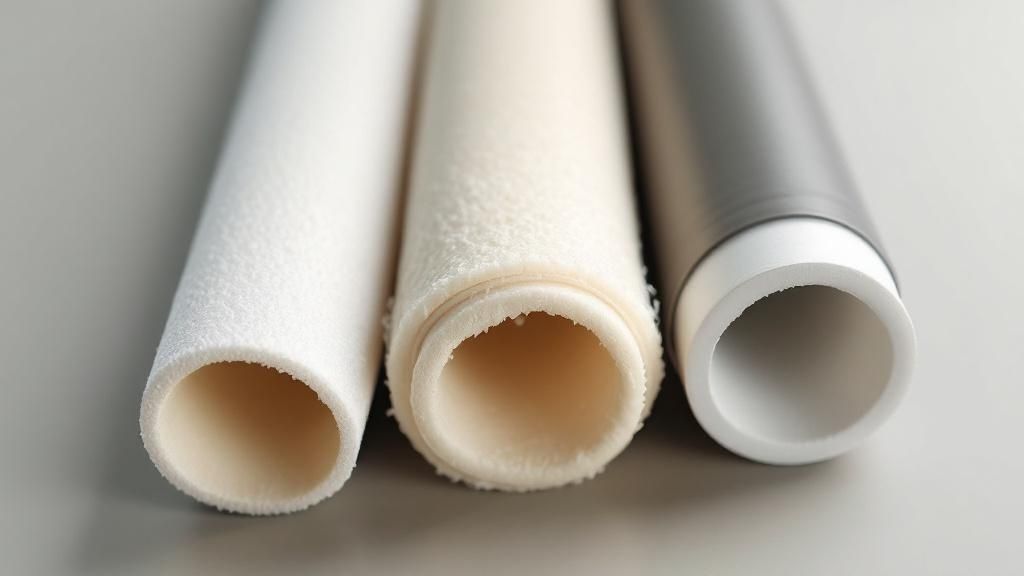
While a quick summary of materials can be helpful, a professional plumber is your best resource for selecting the right one. The main options include foam rubber, polyethylene foam, and fiberglass. Let's look at these through the lens of a Monterey County homeowner.
Foam Rubber Insulation: The Flexible Protector
Foam rubber insulation is a closed-cell, highly flexible material that really shines in tight spots and areas exposed to moisture. Its dense structure is incredibly effective at preventing condensation, which is a major headache for homes near the coast.
- Best Use Case: This is our go-to recommendation for cold water pipes in damp crawlspaces or garages, especially in foggy areas like Seaside and Pacific Grove. Its flexibility is perfect for wrapping around the elbows and joints of older plumbing systems commonly found in historic Carmel-by-the-Sea homes.
- Performance: It offers solid thermal resistance (R-value) for both hot and cold lines and is naturally resistant to mold and mildew—a huge plus in our climate.
While it’s a bit more expensive than basic foam, its durability and moisture resistance often make it the most reliable long-term investment.
Polyethylene Foam: The DIY Standard
This is the most common and affordable type of pipe insulation you'll find. It's lightweight and often comes with a self-sealing adhesive strip, making it a popular choice for quick DIY projects.
But that’s where the benefits often end. Its lower density means it’s less effective at insulating against extreme temperatures compared to rubber or fiberglass. It's a "good enough" solution for easily accessible indoor pipes but falls short in more demanding situations. For these reasons, we always recommend calling a licensed plumber to ensure your pipes are truly protected.
Alvarez Plumbing's Take: Polyethylene foam is better than no insulation at all, but we rarely consider it the best solution. It can be a decent choice for interior hot water lines in a climate-controlled part of a Watsonville home, but we wouldn't trust it to protect pipes in a cold, exposed Castroville crawlspace.
Fiberglass Insulation: The High-Heat Champion
Made from woven glass fibers, fiberglass insulation is the top performer for high-temperature applications. It’s the undisputed champion for insulating hot water pipes, especially the long, straight runs connected to your water heater.
- Best Use Case: We often recommend fiberglass for the hot water lines coming directly off a water heater or for pipes running through an attic in a newer build. Its superior heat retention means your water stays hotter, longer.
- Considerations: While excellent for heat, it requires careful handling. The glass fibers can irritate the skin and lungs, which is a key reason its installation is best left to professionals. It also loses its insulating properties if it gets wet, so it's not ideal for damp areas without a proper vapor barrier.
The right material choice can make a real difference in your energy bills over the course of a year.
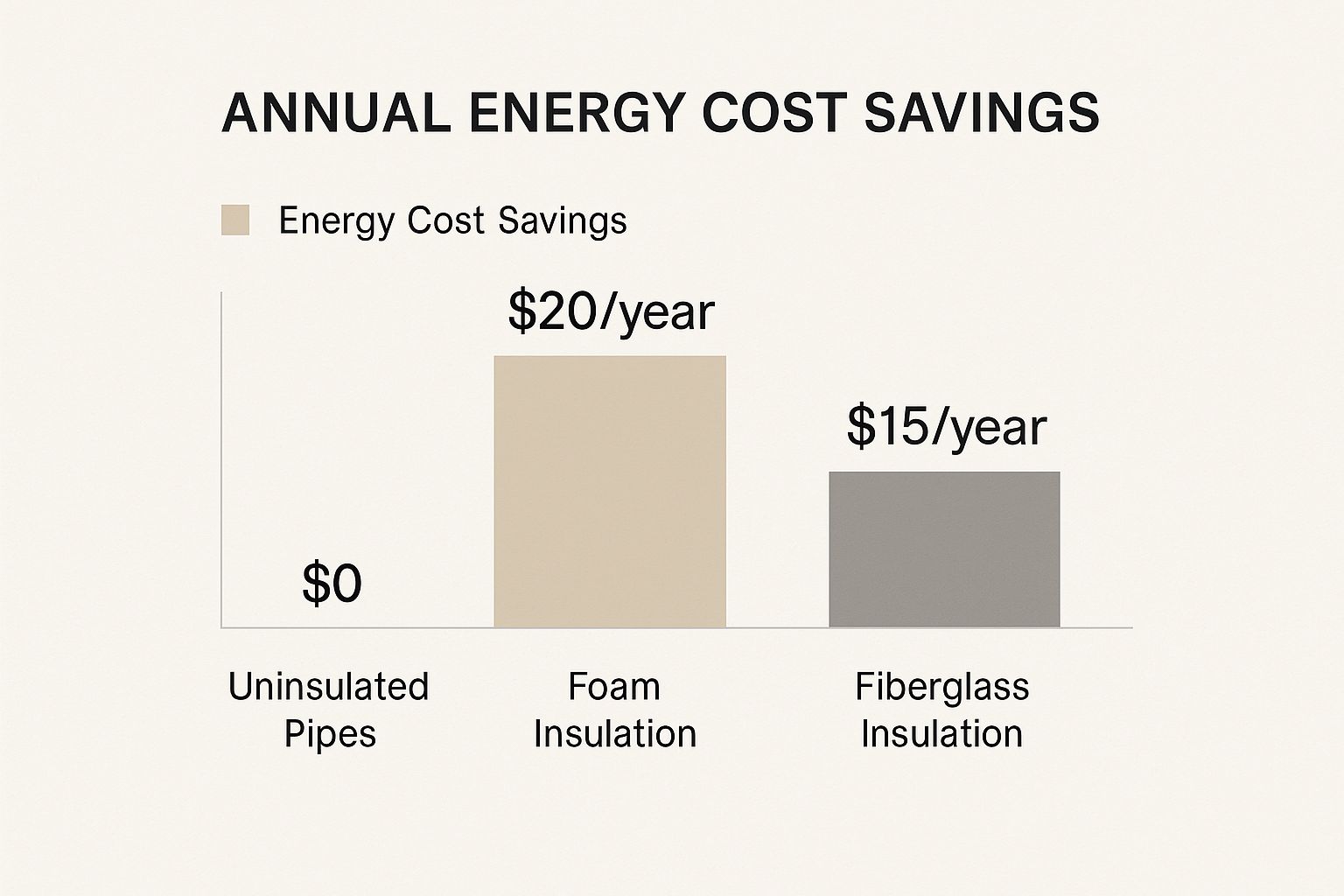
As you can see, even basic insulation provides noticeable savings. Applying the correct material can slash heat loss by up to 90%, which directly translates into lower energy bills and a longer lifespan for your pipes by preventing corrosion from condensation.
To make the decision easier, here's a direct comparison of the top materials for homes in our area.
Pipe Insulation Material Comparison for Monterey County Homes
This table breaks down the best insulation materials based on performance, their ideal use cases in our local climate, and overall durability.
| Material Type | Best For | R-Value (Efficiency) | Moisture Resistance | Alvarez Plumbing's Take |
|---|---|---|---|---|
| Foam Rubber | Cold water pipes, damp areas (crawlspaces, garages), and tight bends. | Good (R-3 to R-5 per inch) | Excellent | The best all-around choice for our coastal climate. Its moisture resistance is a key advantage. |
| Polyethylene Foam | Accessible, indoor hot water lines in dry areas. | Fair (R-3 per inch) | Poor to Fair | An acceptable budget option, but not for critical pipes in unconditioned spaces. Better than nothing. |
| Fiberglass | Hot water lines, especially straight runs from the water heater. | Excellent (R-4 to R-7 per inch) | Poor (Useless when wet) | The champion for heat retention but requires professional installation and must be kept dry. |
Ultimately, the best material is the one that’s right for your specific situation. This is why a professional assessment is so valuable—it ensures you get the right protection for every pipe in your home. Our team has extensive experience with the unique plumbing challenges in our area, and our Monterey plumbing services are designed to provide a solution that lasts.
How Insulation Thickness And Fit Maximize Savings
Choosing the right insulation material is a great start, but it's only half the battle. The real effectiveness—and your return on investment—boils down to two details that often get overlooked: insulation thickness and a professional fit. Just covering a pipe isn’t enough; the goal is to create a perfect thermal barrier that maximizes your energy savings and protects your plumbing.
Think of it like wearing a coat in winter. A thin jacket is better than nothing, but a thick, well-fitted parka is what actually keeps you warm. The same idea applies to your plumbing. A hot water pipe running through a cold, damp Castroville crawlspace needs much thicker insulation than one tucked inside an interior wall to deliver the same results.
The whole point is to stop heat from getting out, and thickness is the number one factor in how well the insulation does its job.
Why Thickness Is Not A One-Size-Fits-All Decision
The right thickness depends entirely on where the pipe is and the temperature difference between the water inside and the air outside. A pipe in a Prunedale garage during a winter cold snap faces a much bigger challenge than one in a heated laundry room. This is where professional experience really counts.
Industry data shows a direct line between thickness and performance. For hot water pipes carrying water around 140°F (60°C), insulation that’s 20-30 mm thick can cut heat loss by roughly 70-80%. But if you bump that thickness up to 50 mm, you can push the heat loss reduction close to an impressive 90%.
That's why a professional assessment is so critical. We don’t guess; we calculate the best thickness to deliver maximum energy savings for every single pipe.
The Pitfalls Of A Poor Fit: Common DIY Mistakes
Even if you buy the thickest, most expensive material on the shelf, a poor fit can make your insulation almost useless. This is where we see most DIY projects go wrong. A professional installation is meticulous, making sure every seam and joint is perfectly sealed.
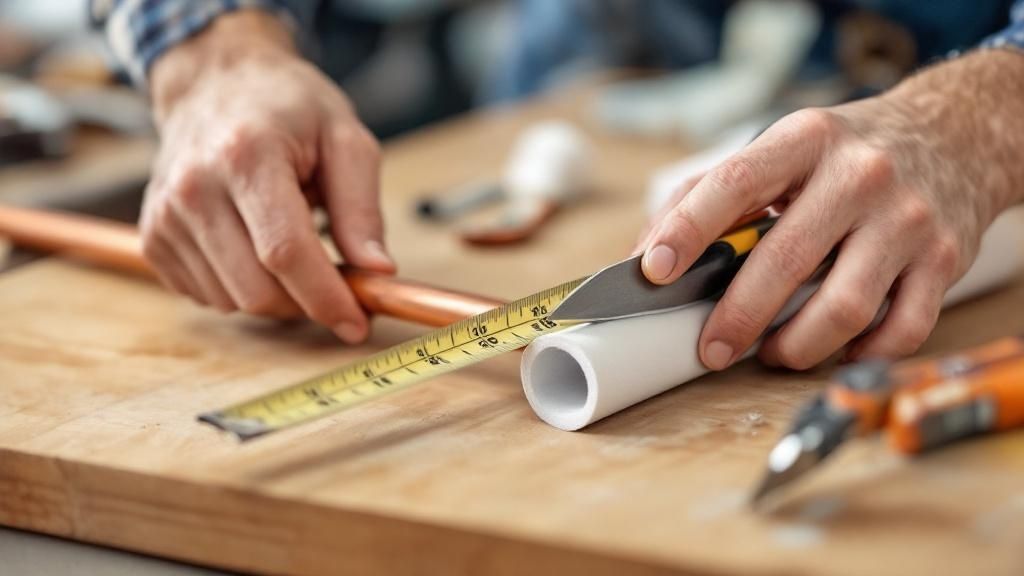
Briefly, the main steps are measuring the pipe, cutting the insulation to size, and fitting it around the pipe before sealing all the seams. However, common DIY mistakes include:
- Gaps at Seams: Even a tiny unsealed gap creates a "thermal bridge" that lets heat escape easily.
- Compression: Squeezing insulation too tightly crushes its air pockets, drastically reducing its insulating power.
- Improper Sealing: Using the wrong tape or failing to properly seal joints lets moisture sneak in.
Since our family started this business in 1988, we've repaired countless plumbing systems where poorly installed insulation gave homeowners a false sense of security. An airtight, perfectly sealed application is the only way to guarantee long-term performance and protect your home. For that reason, we always recommend calling a professional plumber.
Beyond just the pipes, looking at your home's overall energy use, like reviewing HVAC efficiency tips to lower energy bills, can lead to even bigger savings.
At Alvarez Plumbing, our technicians are trained to deliver a perfect fit, every time. This precision is what turns a simple material into a high-performance system that protects your home and lowers your utility bills for years to come.
The Alvarez Plumbing Professional Insulation Method
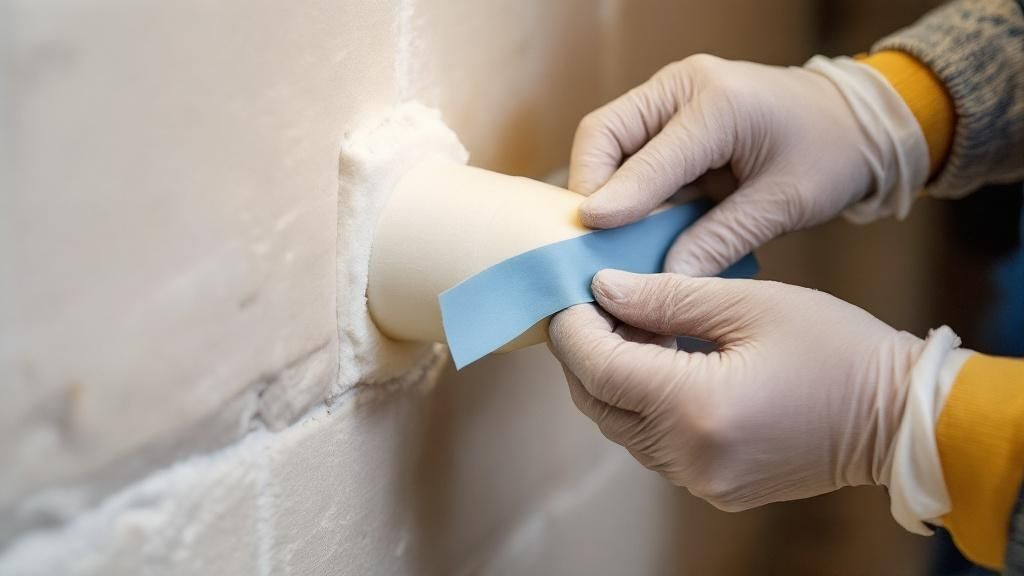
While picking the right insulation material is a great start, the best way to insulate pipes for real, long-term protection comes down to having a proven, professional process. At Alvarez Plumbing, we don’t just wrap pipes. We’ve spent over 35+ years serving Monterey County, refining a complete strategy that treats your plumbing as one interconnected system.
This isn't about following a generic checklist. It's about being problem-solvers who understand how to protect your investment, whether you're in a historic Carmel home or a newer build in Seaside. We know that true protection starts with understanding your home's unique weak spots.
It’s this commitment that has led so many of your neighbors to trust our family-owned business since 1988. We're not just providing a service; we're offering peace of mind.
Step 1: A Comprehensive Plumbing Inspection
Everything kicks off with a thorough, top-to-bottom inspection of your entire plumbing system. Our technicians go way beyond the easy-to-reach pipes under the sink. We methodically trace your plumbing from the source—your water heater—all the way to the most distant outdoor spigots and fixtures.
This initial review means evaluating pipes in all the critical zones:
- Unconditioned Spaces: We meticulously check crawlspaces, basements, garages, and attics. These are the most common spots for frozen pipe disasters, especially in places like Prunedale and Carmel Valley.
- Exterior Walls: Pipes running through walls that face the outdoors are often forgotten, but they're highly susceptible to cold air seeping in.
- Coastal Exposure: For homes in Pacific Grove or Marina, we pay close attention to pipes exposed to damp, salty air, looking for early signs of corrosion and condensation risk.
This first step is the foundation of an effective plan. It allows us to pinpoint not just the obvious risks but also the hidden vulnerabilities a typical DIY job would completely miss.
Step 2: Creating a Customized Insulation Plan
Once we have a complete picture of your plumbing, we build a customized insulation plan. This is never a one-size-fits-all solution. Instead, we map out a specific strategy that dictates the right material and the correct thickness for each section of pipe based on its environment.
For example, the hot water lines coming right off your water heater need insulation with a high R-value, like fiberglass, to keep as much heat in as possible. On the other hand, cold water pipes in a damp crawlspace demand a moisture-resistant material like closed-cell rubber foam to stop them from "sweating" and encouraging mold.
Our approach is all about precision. We believe that applying the right material in the right place is far more effective than just wrapping everything in the same foam tubing. This targeted method ensures you get maximum protection and efficiency for your investment.
This custom plan also takes your water heater's health into account. Properly insulating hot water lines reduces the constant workload on the unit, which can extend its lifespan. To learn more about this, check out our detailed guide on creating a proper water heater maintenance schedule.
Step 3: Meticulous and Professional Installation
With a solid plan locked in, our skilled technicians get to work. Professional installation is the final, crucial piece of the puzzle. We pair top-grade materials with careful craftsmanship to guarantee a flawless application that will perform for years.
Our installation process is all about the details that prevent failure:
- Airtight Seals: We make sure every seam, joint, and valve is perfectly sealed. We don't use flimsy duct tape; we use high-quality, purpose-made sealants and tapes to create an airtight thermal barrier.
- No Gaps or Compression: Our team is trained to fit insulation perfectly. We never compress it—which would reduce its R-value—and we leave absolutely no gaps where heat can escape or cold can get in.
- Securing Everything Properly: We ensure the insulation is fastened securely without damaging the pipes or the insulation itself, making sure it stays put for years.
This professional method is more than an installation—it's a long-term upgrade to your home's plumbing. It’s our neighborly commitment to protecting your home from costly surprises. When you're ready to safeguard your investment, schedule a consultation with the Alvarez Plumbing team.
Your Pipe Insulation Questions Answered
As a family-owned business serving Monterey County since 1988, we've talked to countless homeowners about their pipes. Over the years, the same questions tend to pop up. Here are some clear, straightforward answers to help you understand the best way to protect your home.
We’ve seen it all, and our goal is to give you the expert advice you need to feel confident about your plumbing, guiding you toward a reliable, professional solution.
Can I Just Insulate The Pipes In My Garage Or Crawlspace?
While tackling the exposed pipes in your garage or crawlspace is a fantastic first step, it's often not the whole picture. We get plenty of calls about pipes freezing in exterior walls or unconditioned attics, especially during those surprise cold snaps that can hit inland areas like Salinas or Carmel Valley.
But it’s not just about freezes. Insulating the hot water lines throughout your house, even in heated spaces, is a smart move that drastically cuts down on heat loss. That simple step means less energy wasted and a lower utility bill every single month. A professional from Alvarez Plumbing can do a full walkthrough to spot all the critical areas, making sure your investment delivers the maximum benefit.
How Much Money Can I Really Save By Insulating My Pipes?
The savings are real, and they come in two flavors. First, properly insulating your hot water pipes can slash heat loss by as much as 90%. This often means you can turn down your water heater's temperature, which directly shaves money off your monthly energy bill. For a typical family here in Salinas or Monterey, those savings add up over the year.
More importantly, preventing just one frozen pipe burst can save you thousands of dollars in water damage repairs, not to mention the massive headache and disruption. Professional insulation is one of the most cost-effective ways to protect your home's value and your wallet.
If you think a pipe has already burst, you have to act fast. Our team is always ready to provide emergency plumbing services in Salinas and Monterey for urgent situations.
Is Insulating Copper Pipes Different From PEX Pipes?
Yes, it is. While you absolutely should insulate both types, the why and how differ a bit. Copper is a fantastic conductor of heat, which unfortunately means it loses heat—and gets cold—very quickly. This makes robust, well-fitted insulation non-negotiable for preventing both freezes and energy waste.
PEX tubing isn't as conductive, but don't be fooled; it can still freeze and burst when conditions are right. The real secret isn't just slapping some foam over the pipe. It’s about ensuring the insulation material and the fit are perfect. Those DIY foam tubes often leave tiny gaps or get compressed incorrectly, which seriously undermines their effectiveness. Our team makes sure the right material and application technique are used for whatever pipes you have—copper, PEX, or even older galvanized—for protection you can count on.
Don't leave your home's protection to chance. For a professional assessment and a customized insulation plan that guarantees peace of mind, trust the local experts at Alvarez Plumbing. Visit us at https://alvarezplumbingsalinas.com to schedule your consultation today.