
When you start looking into professional sump pump installation, you'll find that the cost typically lands somewhere between $1,200 and $2,500. For most homeowners, the final bill for a standard setup, including the new pump and the plumber's time, hovers right around $1,500. But think of that as a starting point—the final price tag really depends on the unique needs of your home.
Understanding Your Sump Pump Investment
Think of installing a sump pump like buying good car insurance. It's an upfront cost, for sure, but it’s there to protect you from a much larger, more devastating expense down the road. A flooded basement isn't just a mess; it can easily cause tens of thousands of dollars in damage, not to mention the incredible stress and headache of cleanup and repairs. Your investment in a quality sump pump is a proactive shield against water damage, especially if you live where heavy rains or a high water table are common.
The wide price range really comes down to the complexity of the job. If you're just swapping out an old, failing pump for a new one in the same spot, you’ll be on the lower end of that cost spectrum. But a brand-new installation is a different story. It’s far more involved than just plugging something in. The project can require a plumber to cut through a concrete floor, dig out a pit (the sump), and run entirely new plumbing and drainage lines.
What Does the Average Cost Include?
A typical quote will cover all the essentials needed to get your sump pump system up and running. Of course, the specifics can differ from one plumber to the next, but you can generally expect the price to include:
- The Sump Pump Unit: This is the heart of the system. There are different types and strengths of pumps, and their cost is a major part of the total.
- Professional Labor: You're paying for a skilled plumber's expertise to properly fit, connect, and test everything to make sure it works when you need it most.
- Basic Materials: This covers the necessary pipes, fittings, and check valves for a standard installation.
It's those non-standard situations where the costs can really change. For example, some industry reports confirm that while $1,500 is a solid average, projects that require cutting into a concrete floor can tack on as much as $3,000 to the final bill. The location of the pump also plays a huge role. Trying to install a pump in a tight, hard-to-reach crawl space can be up to three times more expensive than working in an open, accessible basement. This is exactly why getting a professional on-site assessment is the only way to get a truly accurate quote for your home.
While a sump pump is your best defense against groundwater flooding, it's a different beast from a burst pipe inside your home. It’s always a good idea to know what to do when a waterline breaks so you’re prepared for any kind of water emergency.
Estimated Sump Pump Installation Cost Scenarios
To give you a clearer picture, let's break down a few common scenarios. The table below shows how the total cost can shift based on the work involved.
| Installation Scenario | Estimated Cost Range | Key Cost Drivers |
|---|---|---|
| Simple Pump Replacement | $450 – $1,100 | Labor to swap out an existing unit; cost of the new pump. |
| New Installation (Accessible Basement) | $1,200 – $2,500 | Labor for digging pit, concrete cutting, running new discharge pipe, electrical work. |
| New Installation (Complex Crawl Space) | $2,500 – $5,000+ | All the work of a new install, plus significant added labor for working in a confined space. |
| High-End System with Battery Backup | $2,000 – $4,500 | Includes a primary pump, a secondary battery-powered pump for power outages, and advanced monitoring. |
As you can see, the difference between a simple swap and a full-blown new system is significant. This is why a detailed, itemized quote from a qualified plumber is so important—it ensures you know exactly what you're paying for and why.
Key Factors That Influence Your Final Bill
Trying to pin down a single price for a sump pump installation is a bit like asking "how much does a car cost?" The answer is always, "it depends." The final bill isn't a fixed number because every home, basement, and water situation is completely unique.
Several key factors come together to shape your specific quote. Understanding these variables is crucial because it helps you see exactly where your money is going. More importantly, it empowers you to compare bids from different contractors and know you're making a smart investment.
The Pump Itself: Type and Power
The first big-ticket item that drives the cost is the pump unit you choose. This decision really sets the foundation for the project's price. Submersible pumps, which sit right down in the water inside the sump pit, are usually more expensive than pedestal pumps, which have their motors positioned up and out of the pit. That extra cost often buys you quieter operation and more power.
Beyond the basic type, the pump's horsepower (HP) is a huge factor. If your home is in a low-risk area with just occasional water issues, a basic ⅓ HP model might be all you need, and it’s the most affordable option. But if you're in a floodplain or have a high water table, you absolutely need a more muscular ½ or ¾ HP pump. It costs more, but it provides the critical protection you need when the water really starts coming.
The material of the pump matters, too. A heavy-duty cast iron pump will have a higher price tag than a plastic one, but its durability is on another level. That upfront investment can easily save you money down the road by lasting longer and preventing premature replacement.
Key Takeaway: A higher upfront cost for a more powerful, durable pump is often a wise investment. It's not just about buying a pump; it's about buying long-term peace of mind and protection against catastrophic water damage.
Labor and Site Preparation
While the pump itself is a key part of the cost, don't be surprised if labor and site-specific challenges make up a huge chunk of the final bill. If a plumber is just swapping out an old, dead pump for a new one, the job is pretty straightforward and less expensive. A brand-new installation, however, is a much bigger project.
Here are a few common on-site jobs that can add to the total cost:
- Creating a New Sump Pit: If your basement doesn't already have a pit, we have to make one. This almost always means breaking through the concrete floor, digging out the hole, and lining it. It's a tough, labor-intensive process that can easily add $1,000 to $3,000 or more to the final price.
- Electrical and Plumbing Work: A new pump needs its own dedicated electrical circuit to run safely and reliably. We also have to run new PVC piping from the pump out of your house to a safe discharge point away from the foundation.
- Drainage System Integrity: Sometimes, we find that the home's existing drainage system isn't working right or is damaged. Water has to be able to get to the sump pit for the pump to do its job. To learn more about checking your home's drainage, you might want to understand what you need to know about sewer and drain inspections.
When it comes right down to it, the only way to get a truly accurate price is to have a professional come out and assess your home's specific situation.
Pedestal vs. Submersible Pump Costs and Benefits
When you're looking at installing a sump pump, one of the first big choices you'll make is between a pedestal and a submersible model. This decision is a major driver of your total installation cost. The two pumps operate in completely different ways, and getting to know them is the key to picking the right one for your home and your wallet.
I like to think of a pedestal pump as a lifeguard perched on a high chair. Its motor sits up on a stand, well above the sump pit, keeping it high and dry. This design has a big impact on its price and how easy it is to service. A submersible pump, on the other hand, is more like a scuba diver—the whole unit is sealed tight and designed to sit completely underwater inside the pit.
The Upfront Cost and Long-Term Value
Pedestal pumps are definitely the more budget-friendly option right out of the gate. With the units themselves costing between $80 and $800, they keep the initial investment low. Their above-ground motor also makes them much easier to get to for maintenance or repairs, which can save you money on service calls down the road. The trade-offs? They're generally less powerful and you'll definitely hear them when they kick on.
Submersible pumps require a bigger upfront investment, with the units alone running from $90 to $1,000. While that initial price is higher, they bring some serious benefits to the table. They are far more powerful, run almost silently, and are less likely to get clogged up with debris. These advantages make them the go-to choice for homes in areas with a real risk of flooding. You can get a deeper dive into how pump types affect the overall price in this excellent guide from This Old House.
Your total project cost will always be a combination of the pump unit itself, the labor to install it, and any permits your town requires. This visual breaks down how those pieces fit together.
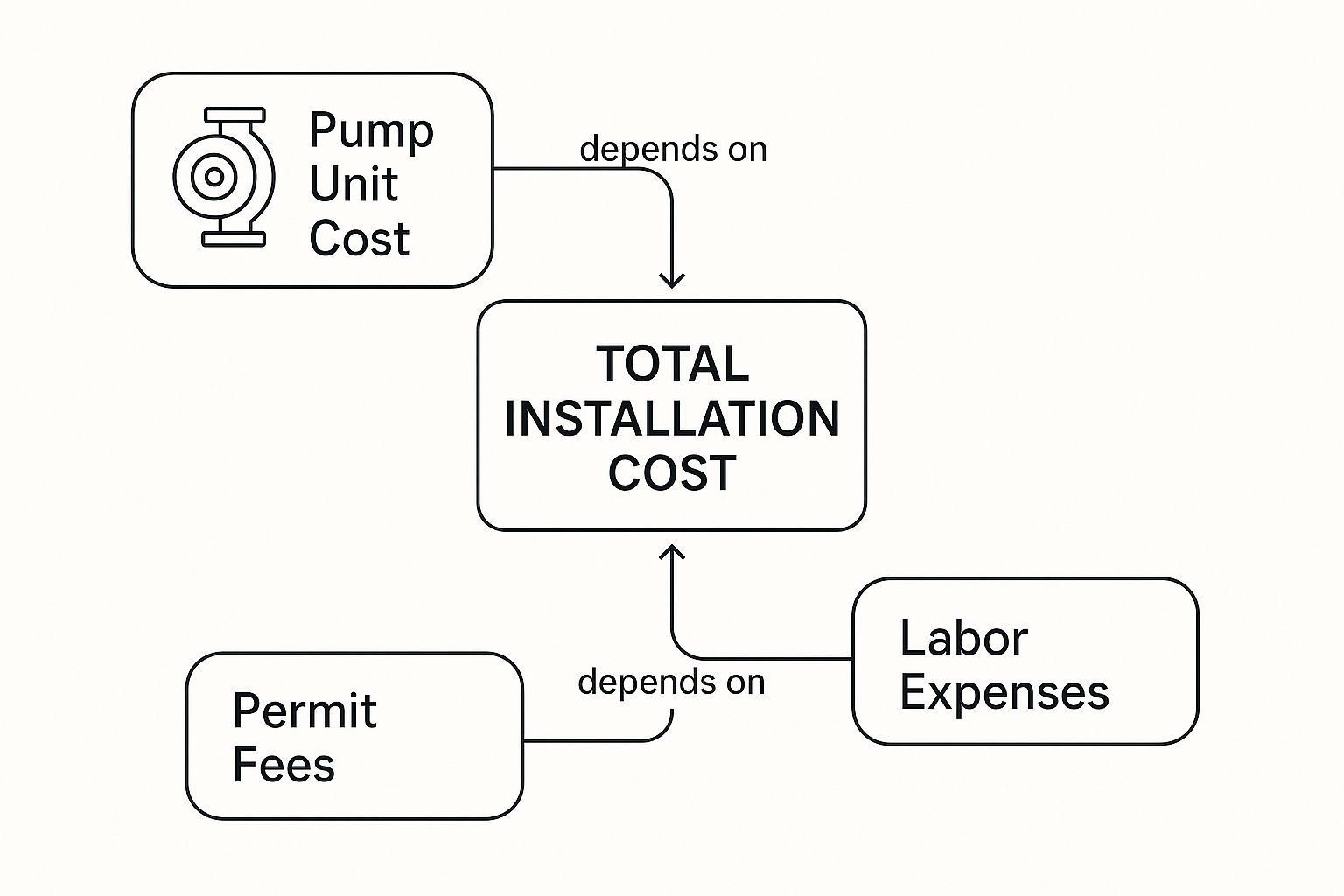
As you can see, what you pay for the pump and what you pay the pro to put it in are the two biggest slices of the pie that make up your total investment.
Lifespan and Performance Showdown
Beyond the price tag, you need to think about how these pumps perform in the real world and how long they'll last. Each type is built for different scenarios, so choosing the right one means getting protection you can actually count on.
A pedestal pump’s greatest strength is its impressive lifespan, which can reach up to 30 years with proper maintenance. Its weakness is its lower power, making it best for basements with only minor or occasional water seepage.
A submersible pump has a different story. Because it lives and works underwater, its parts are exposed to more wear and tear, giving it a shorter lifespan of around 5 to 15 years. But during that time, it delivers superior, heavy-duty performance, moving huge volumes of water quietly and effectively.
So, which one is right for you?
- Choose a pedestal pump if: Your budget is the main driver, your basement only ever gets a little damp, and you aren't bothered by the noise when it runs.
- Choose a submersible pump if: Your house is in a flood-prone area, you need to be able to move a lot of water fast, and you prefer a quiet, out-of-sight solution.
Breaking Down Sump Pump Replacement Costs
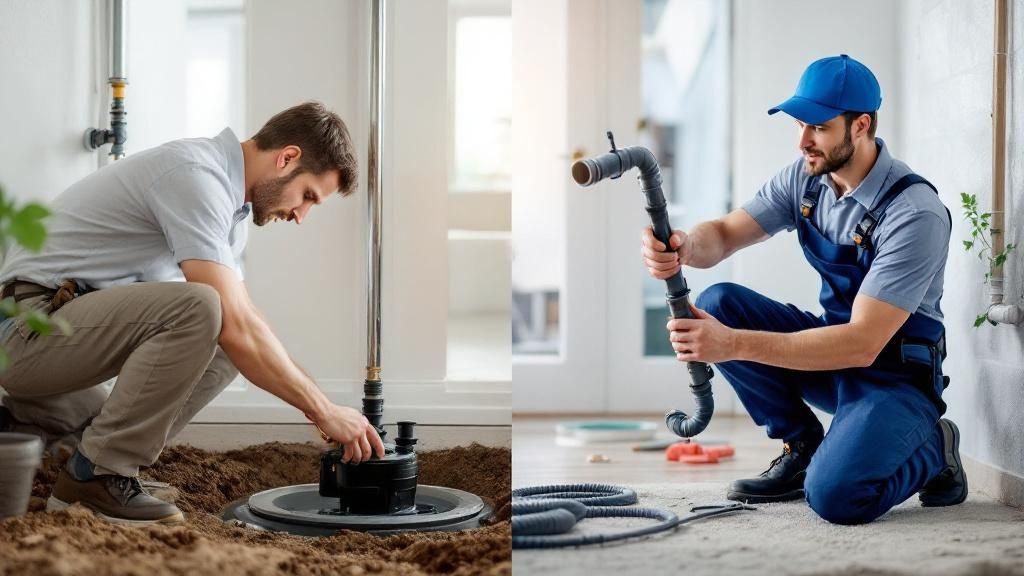
If you're facing a sump pump replacement, I have some good news. Swapping out an old, tired unit is a much simpler—and more affordable—project than installing one from scratch.
Think about it: all the heavy lifting is already done. The messy, labor-intensive work of breaking through concrete, digging the sump pit, and running the main drainage lines is in the past. When you're just replacing a pump, the job boils down to two main costs: the new pump itself and the plumber's time to disconnect the old one and get the new one humming.
On average, a professional sump pump replacement costs about $1,354, though most homeowners will see a final bill somewhere between $642 and $2,107. The final price tag really depends on the type of pump you select and any unique quirks of your current setup. To get a better handle on budgeting, you can dig into the detailed cost data from sources like HomeAdvisor.
When to Budget for a Replacement
A sump pump isn't a "forever" appliance. And trust me, you'd much rather be proactive about replacing it than reactive when your basement is filling with water during a downpour. If your pump is starting to act up, it's sending you a clear signal that it’s time to plan for a new one.
A typical sump pump has a lifespan of around 10 years. If your pump is getting close to that age, it's a smart move to consider replacing it, even if it hasn't failed yet.
Beyond age, your pump will often give you other clues that it's on its last legs. Catching these early can save you from a massive headache down the line.
Key Warning Signs Your Sump Pump Is Failing
- Strange Noises: A healthy pump has a smooth, consistent hum. If you start hearing loud grinding, rattling, or gurgling, that's a red flag. It usually means internal parts are worn out or damaged.
- Constant Running: Is your pump running even when the pit is dry? That's a sign it's working overtime. This could be a faulty switch or, more seriously, a pump that's too small for the job and is headed for a premature burnout.
- Visible Rust or Corrosion: If you can see rust on the pump's body, it means corrosion is eating away at the components. This can lead to leaks and, eventually, total failure.
- Excessive Vibrations: A pump that shakes violently when it kicks on might have a damaged impeller—the part that actually moves the water. This imbalance can cause the whole unit to fail catastrophically.
Recognizing these issues early is key to preventing them from snowballing into bigger, more expensive trouble. If you’re noticing these or other issues, it might be worth learning about other common plumbing problems in Monterey that could need your attention.
Professional Installation vs. DIY Cost Analysis
Deciding whether to hire a professional or tackle a sump pump installation yourself is a major fork in the road. On one side, you have potential cost savings; on the other, you have guaranteed expertise and safety. Before you pick up a tool or a phone, you need a clear-eyed view of both paths.
The primary appeal of the DIY route is, of course, saving money on labor. With professional labor rates typically ranging from $45 to $200 per hour, handling the job yourself means your main out-of-pocket cost is just the pump and materials like PVC pipe and fittings. That can easily save you several hundred dollars, which is an attractive prospect for any homeowner.
But this path is filled with potential pitfalls that can quickly erase those savings and end up costing you far more in the long run.
The Real Cost of a DIY Mistake
Going the DIY route for a sump pump installation isn't like painting a room, where a mistake is easily fixed. A botched installation can lead to a cascade of expensive and dangerous problems. If the pump isn't seated correctly, the check valve fails, or the discharge line is improperly angled, the result is often a flooded basement—the very disaster you were trying to prevent.
Beyond the risk of water damage, there are serious safety concerns. This job involves both plumbing and electrical systems. Improper wiring is a significant fire or electrocution hazard, especially in an area specifically designed to collect water.
What’s more, most cities have specific building codes for sump pump installations, covering everything from electrical connections to drainage discharge. A DIY job that violates these codes can lead to fines and will have to be torn out and redone by a professional anyway. In a crisis, having reliable help is crucial; knowing about local emergency plumbing services can be a lifesaver if a project goes south.
What Professional Labor Costs Actually Buy You
When you hire a licensed plumber, you're paying for more than just a pair of hands. You are investing in peace of mind. Here’s what that hourly rate truly covers:
- Certified Expertise: A pro knows exactly how to size the pump for your home, ensuring it’s powerful enough to do the job without being expensive overkill.
- Code Compliance: They understand local building codes and will make sure your installation is safe, legal, and up to standard.
- Proper Tools & Technique: A professional arrives with the right equipment, from jackhammers for breaking concrete to the expertise for secure electrical and plumbing connections.
- Warranty & Accountability: A professional installation is almost always backed by a warranty on both the parts and the labor. If something goes wrong, they come back and fix it.
Self-Assessment Checklist: Before you commit to a DIY installation, be honest with yourself. Do you have the necessary skills, tools, and knowledge? A mistake here doesn't just mean a failed project; it means a potential catastrophe for your home.
How to Save Money on Your Sump Pump Project
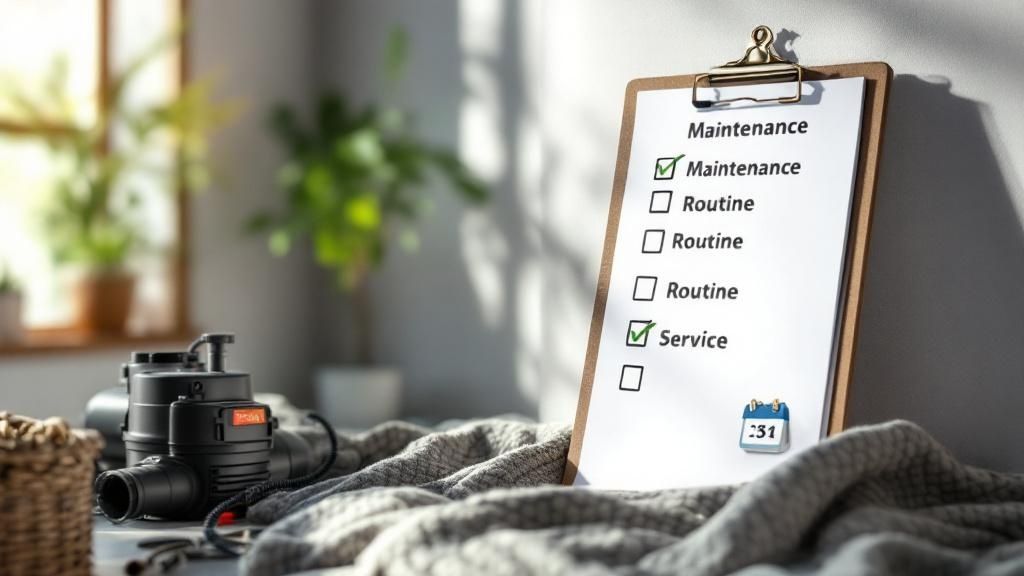
Knowing the potential cost of a sump pump is one thing, but figuring out how to trim that final bill is where the real savvy comes in. With some smart planning, you can make a cost-effective choice that doesn't cut corners on protecting your home.
The single best move you can make? Get at least three quotes from different licensed and insured plumbers. This isn't just about finding the rock-bottom price; it's about understanding what the fair market rate is for the work in your area. Seeing a few different proposals helps you spot any outliers—bids that are suspiciously low or surprisingly high—and make a well-informed decision.
Right-Sizing Your Investment
Another place you can find significant savings is by choosing the right pump for your actual needs. It's easy to think bigger is always better, but buying a super-powerful pump when you don't need it is just paying for horsepower you'll never use. It's like buying a giant commercial air conditioner to cool a small apartment—total overkill and a waste of money.
A good plumber will assess your home’s specific situation, like the local water table and your basement’s flooding risk, to recommend a pump that offers solid protection without an inflated price tag.
You can also find more general advice on trimming expenses, as many of the same principles apply to different projects. For a broader perspective, you can explore our guide on how to save on plumbing repairs.
A quality sump pump with a battery backup system might seem like a major expense, but it’s a smart investment. The upfront cost is minimal compared to the thousands of dollars you could spend on cleanup and repairs after a single power outage during a storm.
Proactive Maintenance for Long-Term Savings
Finally, some of the best savings aren't about the initial purchase but about making your equipment last. While a pro should always handle the installation, there are simple DIY maintenance tasks you can do to keep your pump humming along for years.
- Clean the Pit Annually: Take a few minutes to clear out any dirt, small rocks, or other gunk that has settled in the sump pit. This simple step prevents clogs that can easily burn out the pump's motor.
- Test the System Regularly: Every few months, just pour a bucket of water into the pit. You're looking to see that the pump kicks on automatically, runs smoothly, and then shuts itself off.
- Inspect the Discharge Line: Check the pipe that carries water away from your home. Make sure it's clear of obstructions and directs water at least 10-20 feet away from your foundation.
This basic upkeep can seriously delay the need for a costly replacement, saving you hundreds of dollars over the life of your pump.
Sump Pump Questions We Hear From Homeowners
Even after you've worked out a budget, it’s natural to have a few more questions about what it really means to own and maintain a sump pump. Getting clear, straightforward answers is the best way to feel confident about protecting your home.
How Often Should I Plan on Replacing My Sump Pump?
A quality, well-installed sump pump should give you about 10 years of reliable service. Some models might last a bit longer, especially pedestal pumps that are kept clean, but thinking of it as a decade-long investment is a smart way to plan. You don't want to find out it's failed during the worst storm of the year—that's a gamble that almost never pays off.
Is a Battery Backup System Really Worth the Extra Money?
Without a doubt. Think of a battery backup as your home's ultimate insurance policy against a flooded basement. The very storms that dump enough rain to put your pump to the test are often the same ones that knock out the power grid.
A battery backup might add $150 to $300 or more to your initial installation cost, but it can easily prevent thousands of dollars in water damage during a single power outage.
What Can I Do Myself to Keep My Sump Pump Running Longer?
A little bit of simple, regular maintenance can go a long way in extending your pump's life and pushing back that replacement date.
- Clean Out the Pit: Once a year, unplug the pump and scoop out any gravel, sludge, or other gunk that's collected in the sump pit. This helps prevent clogs that can burn out the motor.
- Give It a Test Run: Every few months, just pour a big bucket of water into the pit. You want to see the float switch rise and hear the pump kick on smoothly. It’s a quick check that confirms everything is working.
- Check the Discharge Pipe: Take a walk outside and make sure the pipe that carries water away from your house is clear. Look for blockages from leaves or dirt and ensure it's pointing the water well away from your foundation.
When you need a sump pump installed right the first time by professionals you can count on, call the experts at Alvarez Plumbing. Our certified plumbers will make sure your home is protected with a high-quality system built to last. Visit us online to schedule your service today.