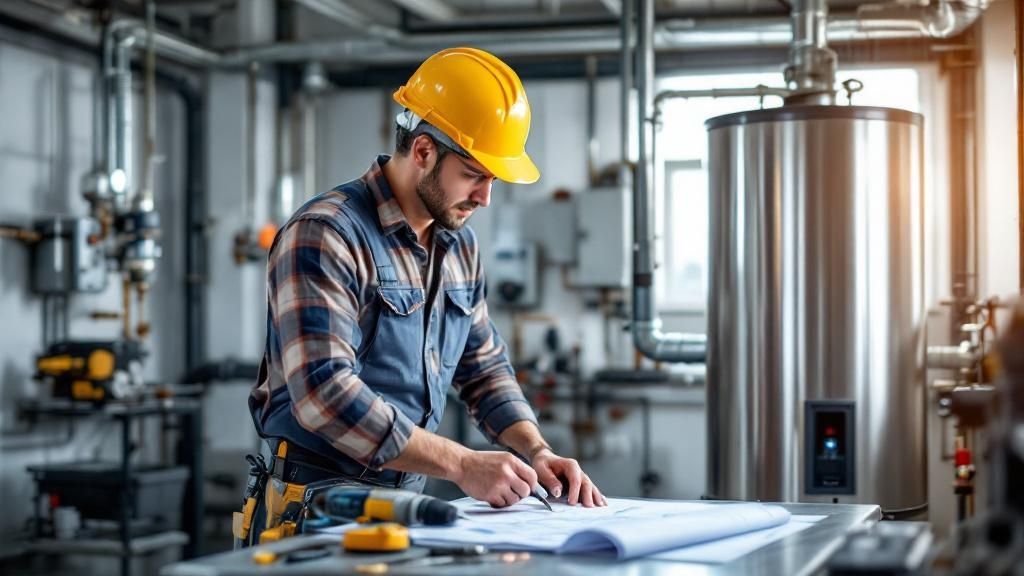
A successful commercial water heater installation is so much more than just connecting a few pipes and calling it a day. It all starts with a meticulous pre-installation game plan. This is where the real work happens—a detailed site assessment, a smart look at your hot water needs, and a clear understanding of local codes.
Getting this planning stage right is the single most important factor in preventing costly headaches and making sure your new system runs like a dream from day one.
Your Pre-Installation Game Plan
Before anyone even thinks about picking up a tool, a solid plan is what separates a smooth, on-budget project from one that's a magnet for trouble. This isn't just a checklist; it's a full-blown strategy for success. The groundwork you lay here is what determines the efficiency, safety, and long-term health of your entire hot water system.
It's a big deal. The U.S. commercial water heater market was valued at $554.9 million in 2024, and it's only getting bigger. As sectors like healthcare and hospitality modernize, the push for high-efficiency units is driving major growth. You can dig into the numbers and trends over on GMInsights.com.
Conducting a Real-World Site Assessment
First things first, you need to get your eyes on the actual installation space. Go to the mechanical room and look beyond just the old unit you're replacing. A professional walkthrough catches the kinds of problems that can derail a project fast.
- Space and Clearances: Get out the tape measure. You need the physical footprint, height, and all the surrounding space. Newer high-efficiency or heat pump models can be surprisingly taller or wider than older units. Manufacturers list specific clearances for maintenance access and airflow, and ignoring them can void your warranty or create a serious safety risk.
- Utility Infrastructure: Take a hard look at the existing connections. Is the gas line big enough for the BTU rating on a powerful new heater? Does the electrical panel have a dedicated, properly sized breaker ready to go? Are the water lines in good shape, free of corrosion, and sized to handle the flow you need?
- Ventilation Pathways: This is non-negotiable for any gas or propane heater. You absolutely must have a clear, code-compliant path for the exhaust vent. This means scouting for any obstructions, making sure the path has the right slope, and checking that the vent terminates a safe distance from windows, doors, and air intakes, as required by local code.
To make sure nothing gets missed, we always run through a quick but critical assessment before we start. It helps organize the process and ensures all the key variables are accounted for upfront.
Here’s a look at the core factors we evaluate:
Critical Pre-Installation Assessment Factors
| Assessment Area | Key Considerations | Why It Matters |
|---|---|---|
| Physical Space | Unit dimensions (H x W x D), required maintenance clearances, accessibility for future service. | A unit that doesn't fit or can't be serviced properly is a recipe for disaster. It can void warranties and create unsafe conditions. |
| Utility Capacity | Gas line size (BTU rating), electrical panel amperage and voltage, water line diameter and pressure. | Undersized utilities will starve your new heater of the fuel or power it needs, leading to poor performance and potential damage. |
| Ventilation & Airflow | Clear path for exhaust, vent termination location, adequate combustion air supply. | Improper ventilation is a major safety hazard (carbon monoxide risk) and a leading cause of premature equipment failure. |
| Hot Water Demand | Peak usage times, fixture count, special equipment needs (e.g., high-temp dishwashers). | Getting this wrong leads to either constant hot water shortages or paying to heat water you never use. |
| Code & Permits | Local plumbing, mechanical, and electrical codes; required permit types and application process. | Non-compliant work can result in fines, forced removal of the equipment, and significant liability issues. |
Nailing down these details before a single pipe is cut is the difference between a smooth installation and a project plagued by expensive, last-minute surprises.
Evaluating Current and Future Hot Water Demand
One of the most common mistakes we see is simply swapping out an old water heater for a new one of the exact same size. Your facility’s needs have likely changed over the years. A smart facility manager doesn't just put a band-aid on today's problem; they plan for what's coming next.
Imagine a hotel that just opened a new guest wing or a restaurant that upgraded its dishwasher to a high-temp sanitizing model. Both of these changes send peak hot water demand through the roof. If you install an undersized unit, you're signing up for a future of complaints and operational headaches. On the flip side, an oversized unit is a waste of money upfront and will burn through energy unnecessarily for years.
A proper demand analysis isn't just about counting sinks and showers. It’s about understanding the real-world rhythm of your building—the morning rush in an apartment complex, the kitchen and laundry running full-tilt in a hospital, or the steady, constant draw of an industrial process.
Demystifying Permits and Code Compliance
Finally, no pre-installation plan is complete without tackling the paperwork. An installation done without the right permits is not only illegal but can also force you to rip everything out and start over. It's a huge liability you don't want.
Your first call should be to your local municipal building department. Their plumbing and mechanical divisions will tell you exactly what codes you need to follow and which permits are required for your specific project—usually a mix of plumbing, electrical, and sometimes gas permits.
Get your documentation ready before you apply. Having the equipment spec sheets and a basic site plan on hand can make the approval process go much faster. Taking care of this early ensures your commercial water heater installation is by-the-book from the very beginning.
Choosing the Right Commercial Water Heater
Getting the right water heater for your business is easily the most important decision you'll make during the entire project. This one choice ripples through everything, from what you pay in monthly utilities to whether your customers or tenants are happy. It's a decision that has to go way beyond a simple spec sheet; you're really matching the right technology to the unique rhythm and demands of your business.
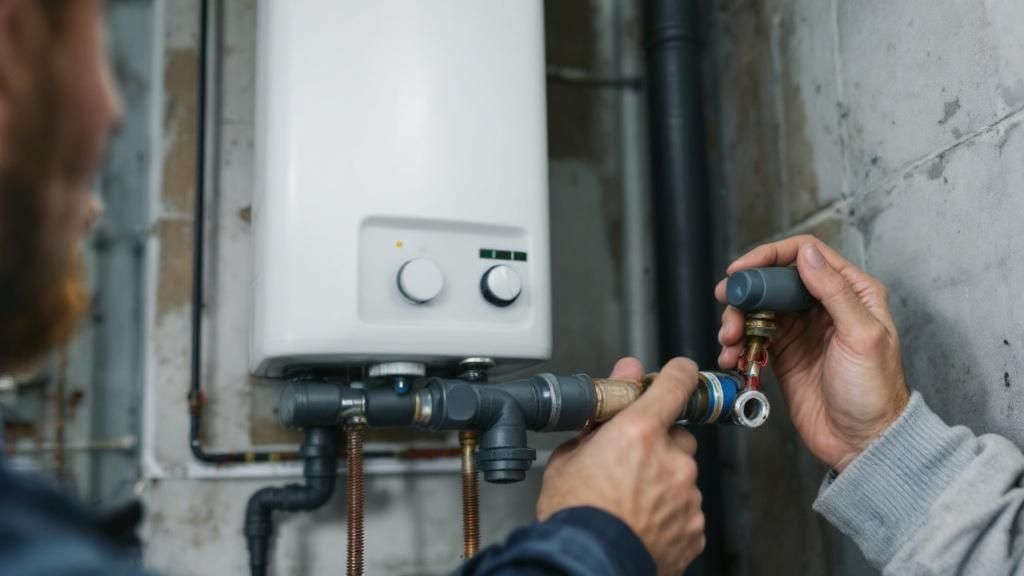
Tank vs. Tankless vs. Hybrid Systems
The classic debate between a big tank heater and a newer tankless unit is one we see all the time, but the truth is, each has its place in a commercial setting. Now, hybrid models are in the mix, too, blending features from both worlds.
-
Traditional Tank-Style Heaters: These are the workhorses of the industry. They keep a large volume of hot water ready to go, which is perfect for businesses that see sudden, massive demand spikes—think of a hotel's morning shower rush. Their lower price tag and simpler installation are big draws, but they do have a downside: "standby heat loss" from constantly keeping all that water hot.
-
High-Efficiency Tankless Models: Tankless, or on-demand, systems fire up to heat water only as it's needed. Their biggest selling point is efficiency, since they aren't burning energy when no one is using hot water. This can really add up in long-term savings. They're also quite compact, which is a huge bonus when floor space is tight. Just remember, their output is measured in gallons per minute (GPM), so for a larger facility, you might need to install several units in parallel to keep up.
-
Modern Hybrid (Heat Pump) Systems: These are pretty clever. Instead of creating heat with an element, they use electricity to pull ambient heat from the surrounding air and transfer it into the water—kind of like a refrigerator running in reverse. They are incredibly energy-efficient but need more space and good airflow to work properly. Their recovery rate can be a bit slower, making them a better fit for businesses with steady, predictable hot water usage rather than sharp peaks.
Gas vs. Electric Heaters in Commercial Settings
Your fuel source is the other major fork in the road. Both gas and electric can power tank and tankless heaters, but their operating costs and what's needed for installation are very different.
Electric water heaters are usually simpler and cheaper to get up and running, especially if you already have the right high-amperage electrical service on site. A big plus is that they don't require venting, giving you much more flexibility on where you can place them. This simplicity is a key reason why electric models captured 51.3% of the global water heater revenue share in 2023. It’s a massive market, projected to climb from USD 32.12 billion in 2025 to USD 48.68 billion by 2034.
Gas heaters, on the other hand, almost always have lower day-to-day running costs because natural gas is typically cheaper than electricity. They also heat water much faster than their electric counterparts, a critical advantage for high-volume users. The tradeoff is a more complex and expensive installation that requires dedicated gas lines and very specific, safety-critical venting.
It often comes down to this: are you more concerned with the lower upfront installation cost of an electric unit, or the long-term operational savings of gas? An experienced plumber can run the numbers based on your local utility rates to make the decision crystal clear.
Calculating Your True Peak Demand
One of the costliest mistakes we see in a commercial water heater installation is undersizing the unit. You absolutely have to figure out your facility's true peak demand, not just a daily average.
For a restaurant, that peak moment might be when the high-temp dishwasher, a three-compartment sink, and a couple of handwashing stations are all going at once. For a gym, it's that post-workout rush when every single shower is occupied. A pro will do a fixture count and use a formula based on GPM flow rates to nail down this peak number.
This calculation tells you the total GPM capacity you'll need for a tankless system. For a tank-style heater, it determines the storage capacity (in gallons) and, just as importantly, the First Hour Rating (FHR)—that’s the amount of hot water the heater can pump out in one hour of heavy use. Getting this right is what ensures you never have to deal with the chaos of running out of hot water. For a closer look at the installation job itself, check out our guide on water heater installation in Monterey.
Navigating Permits and Code Compliance
Installing a commercial water heater without the right permits isn't just a simple oversight. It's a major safety gamble and a legal headache waiting to happen. While tackling the paperwork for a commercial water heater installation can feel like a maze, it’s an absolutely critical step that protects your business, your people, and your property. Getting this right from the very beginning is the only way to avoid the sting of failed inspections, expensive do-overs, and frustrating project delays.
Your first call should always be to your local municipal building department. This is your single source of truth. Don't ever rely on hearsay or what was done on a project years ago—codes are constantly updated. What passed inspection five years back could easily get you a red tag today. You'll need to ask about the specific plumbing, gas, and electrical codes that apply to your exact project.
Finding Your Local Codes
The best place to start your search is your city or county's official website. Look for sections labeled "Building Department," "Planning," or "Permits." While most areas base their rules on the International Plumbing Code (IPC) or the Uniform Plumbing Code (UPC), they almost always have local amendments that are just as important.
A quick phone call can save you days of trouble. Ask the clerk which specific codes they enforce and what paperwork they require for the permit application. They can tell you exactly what you need to submit for a smooth approval.
Preparing a Bulletproof Permit Application
Any seasoned contractor will tell you: a complete and well-organized application gets approved the fastest. Showing up with missing information is the quickest way to get sent to the back of the line.
To make sure your permit package sails through, it should always include these key items:
- Equipment Specification Sheets: You’ll need the manufacturer's spec sheets for the new water heater. This document gives the inspector all the essential details, like the unit's BTU rating, electrical needs, and safety certifications.
- A Simple Site Plan: A basic drawing showing where the new unit will be installed is a must. It needs to clearly mark clearances from walls, the new vent path, and the locations of water, gas, and electrical shut-offs.
- Contractor Information: The application will require the license and insurance details of the professional plumbing contractor doing the installation. This confirms a qualified expert is on the job.
One of the most common myths we hear is that a simple "like-for-like" replacement doesn't need a permit. This is almost always wrong. In nearly every jurisdiction, replacing a gas or large electric commercial water heater requires a permit due to the serious safety risks tied to gas lines and high-voltage electrical work.
Common Compliance Traps to Avoid
Even with a permit in hand, an installation can still fail inspection if it violates code. We see the same mistakes trip people up time and time again—the ones that lead to costly delays and rework.
Watch out for these common compliance issues:
- Improper Venting Materials: Using the wrong type of pipe for the exhaust is a critical mistake. For instance, using a standard single-wall vent pipe where a double-wall B-vent is required creates a legitimate fire hazard.
- Missing Combustion Air Supply: High-BTU gas heaters are hungry for oxygen. If the mechanical room is too small or sealed too tightly, the unit can be starved for air. This leads to incomplete combustion, which produces deadly carbon monoxide.
- Incorrect Safety Device Installation: The Temperature and Pressure (T&P) relief valve is a non-negotiable safety feature. Its discharge pipe must run downward and end in a safe, visible spot. Capping this pipe or reducing its size creates a genuine explosion risk.
Successfully navigating the permitting process is a fundamental part of any major plumbing project. For businesses in Monterey County that need a hand with these complexities, learning more about professional commercial plumbing services can provide peace of mind and ensure your project is compliant from day one.
Okay, here is the rewritten section. I've focused on adopting the natural, expert tone from the examples, breaking up the text, and making it feel like it's coming from an experienced professional on the job site.
The Commercial Installation Process Unpacked
Once you've done the planning and picked out the right unit, it's time to get hands-on. A professional commercial water heater installation is a serious job where safety and precision are everything. This is where all the pieces—a correctly sized gas line, a perfectly sloped vent, and leak-proof water connections—come together to build a system that's both safe and reliable for years to come.
The first step is always to safely take the old unit offline. This means shutting off and disconnecting the water, gas, and electricity. Then, we carefully drain the tank. This can take a while, especially with a large commercial unit. Only then can the old, heavy beast be carefully maneuvered out of the mechanical room.
This visualization shows how a facility manager might review the cost benefits of a new installation, balancing initial investment with long-term energy savings.
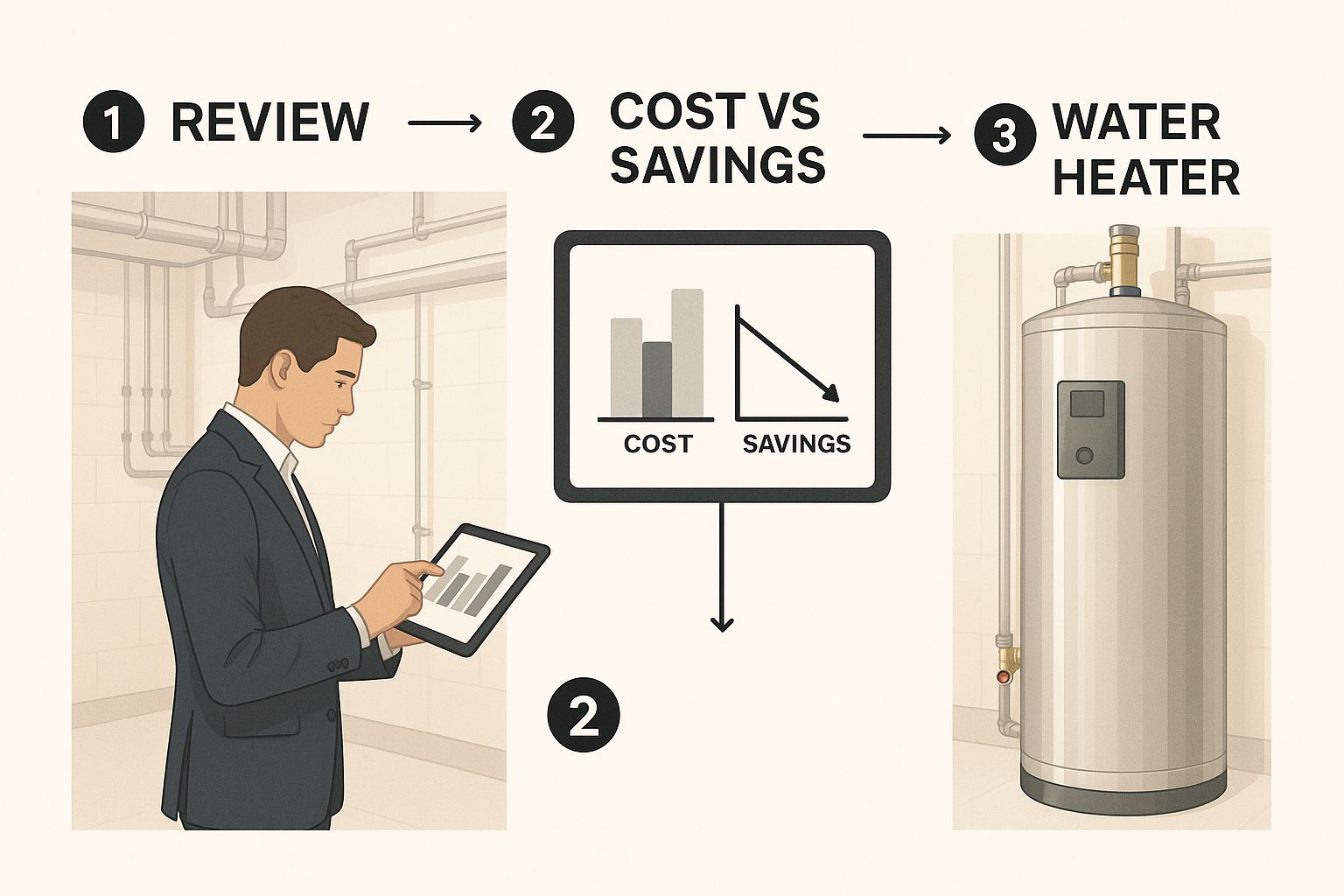
The takeaway here is pretty clear: modern, high-efficiency units might have a higher price tag upfront, but they deliver big savings on your utility bills that boost the facility's bottom line over time.
Proper Placement And Clearances
With the old heater out of the way, the new one can be brought in. Where it sits isn't just about what's convenient; it's dictated by strict manufacturer specs and building codes. A technician will make sure the heater is perfectly level and has enough breathing room on all sides for future maintenance and proper airflow—which is especially critical for heat pump models.
This is also when new support structures get installed. Things like a new, sturdy stand or the seismic straps required in earthquake country are not optional. Cutting corners here doesn't just put you at risk of a failed inspection; it creates a very real safety hazard.
Making The Critical Connections
This is where a plumber's real skill comes into play. The connections for water, fuel, and power have to be absolutely perfect to guarantee safe, efficient operation for the life of the unit.
- Water Lines: A pro knows how to create leak-free joints, whether that means soldering copper or threading galvanized pipe. They'll also install new shut-off valves for easier servicing and add an expansion tank if the local code demands one to handle thermal expansion.
- Gas Lines: For gas heaters, this is the most important connection. A technician ensures the gas line is the right size for the heater's BTU rating. They will always install a drip leg (or sediment trap) right before the gas control valve. This simple part catches any gunk or moisture in the gas supply, protecting the sensitive components inside the heater. A new, easy-to-reach shut-off valve is also a must.
- Electrical Systems: For electric units, a licensed professional has to confirm the circuit breaker and wiring are the correct gauge and amperage for the heater's load. You can't mess around here—loose or undersized electrical connections are a serious fire risk.
A rookie mistake we see all the time is failing to flush the water lines before connecting the new heater. It's a simple step, but it keeps debris from the old plumbing from getting into and damaging the new unit from day one.
If you think there's a problem with your current system or you're planning an upgrade, knowing when you need professional water heater repair and installation services can save you a lot of trouble later on.
The Non-Negotiable Rules Of Venting
When you're dealing with any gas-powered water heater, venting is the most critical safety system. Period. Improper venting is a primary cause of carbon monoxide (CO) poisoning—a silent, deadly threat. There is zero room for error.
The vent pipe, or flue, has to be made of the right material specified by both the manufacturer and local codes. This is often a double-wall B-vent for standard units or a specialized PVC/CPVC for high-efficiency condensing models.
On top of that, the vent needs a consistent, proper upward slope (usually 1/4 inch per foot) so exhaust gases can rise and exit the building naturally. Any dips or sags in the vent pipe can trap condensation, which leads to corrosion and can block the exhaust flow. Finally, the vent must terminate in a safe spot outside, far away from windows, doors, and air intakes, to keep those flue gases from getting back inside. A quality commercial water heater installation depends on getting every single one of these details right.
Commissioning Your New System for Peak Performance
The moment the last connection is tightened on a commercial water heater installation isn't the finish line. Far from it. In my experience, this is where the most critical phase for safety and efficiency truly begins: commissioning. This careful, step-by-step startup sequence is what transforms a freshly installed piece of metal into a reliable, high-performing asset for your business.
The whole process starts by slowly filling the new tank and all the connected hot water lines. A seasoned technician won't just crank open a valve and walk away. They’ll methodically purge all the air from the system, usually by opening faucets at the highest and furthest points in the building. If you skip this, trapped air can lead to those jarring "water hammer" noises and stop the system from working correctly.
The Initial Power-Up and Safety Verification
Once the system is completely full of water and we've bled out all the air, it’s time for a pressure test. We meticulously inspect every single joint and connection for even the tiniest drip while the system is under full city water pressure. Only after confirming everything is bone-dry and secure is it safe to move on to the initial power-up.
This is a moment that demands 100% focus. For a gas heater, we’ll double-check the entire gas line with a detector for leaks. For an electric unit, we confirm the voltage and amperage are exactly what they should be. The startup is always done strictly by the book—the manufacturer’s book, that is.
With the unit up and running, the next job is to test every single safety control. This part is absolutely non-negotiable.
- Temperature and Pressure (T&P) Valve: We manually test the T&P valve to make sure it opens freely. This confirms it will do its job and release water in an over-pressure or high-temperature emergency.
- High-Limit Cutoff: Think of this as the backup parachute. It’s a safety switch designed to shut the heater down if the main thermostat ever fails. We test it to confirm it cuts power at the correct temperature, preventing a dangerous runaway heating scenario.
- Venting and Combustion: For gas models, a combustion analysis is a must. This test verifies the heater is burning fuel cleanly and efficiently, and, most importantly, that all exhaust fumes are venting safely out of your building.
A properly commissioned system isn't just about flipping a switch. It's a formal verification that every component—especially the safety features—functions exactly as designed. This step is your ultimate assurance of a safe and reliable commercial water heater installation.
Setting Temperature and Planning for the Future
Commissioning is also about striking the right balance between saving energy and meeting health codes. The water temperature in the tank itself must be set high enough—typically at least 140°F (60°C)—to kill off harmful bacteria like Legionella. To ensure safety at the tap, we often install mixing valves downstream to deliver cooler water to sinks and fixtures.
Beyond the initial startup, a true professional will help you map out a preventative maintenance plan. This isn't an upsell; it's just common sense for protecting your investment. This kind of planning is becoming more important than ever. The global commercial water heater market, valued at around USD 8 billion in 2024, is projected to nearly double by 2034, all driven by the demand for efficient, long-lasting equipment. You can see the data behind this trend in the latest market analysis.
A solid maintenance schedule should always include:
- Routine Flushing: Flushing the tank annually removes sediment buildup that kills efficiency and promotes corrosion.
- Anode Rod Inspection: Checking and replacing the sacrificial anode rod is the single most effective way to keep the tank from rusting out from the inside.
- Vent Checks: Regularly inspecting the venting system for any blockages, leaks, or corrosion is a vital safety check.
This forward-thinking approach is what ensures you get every bit of service life out of your new unit. To learn more about extending your system's lifespan and efficiency, you can read our guide on how to get the most of your water heater.
Common Questions About Commercial Installation
Even with the best plan in hand, diving into a commercial water heater installation can bring up a lot of questions. We talk to facility managers, business owners, and maintenance supervisors all the time who have specific concerns about how long it will take, what it will cost, and what to expect on installation day. Getting clear, straightforward answers is the key to feeling confident about your investment.
Here, we'll tackle those frequent questions head-on. This isn't generic advice; it's practical information drawn from years of experience in the field.
How Long Does a Commercial Water Heater Installation Take?
This is usually the first thing people ask, and the honest answer is: it really depends on the project's scope. The timeline can shift dramatically based on the job's complexity.
A simple, like-for-like replacement is your fastest scenario. If you're just swapping an old 100-gallon gas heater for a new one of the same size and type—and all your existing plumbing and venting is up to code—a professional team can often get it done in 4 to 8 hours. This assumes the unit is easy to get to and no major changes are needed.
But things get more complicated, and time-consuming, when the project is bigger.
- Switching Fuel Types: Moving from electric to gas? That means running new gas lines, which is a major undertaking requiring permits and specialized skills. You'll also need a completely new venting system.
- Upgrading Technology: If you're going from a traditional tank to a modern tankless system, that often means rerouting plumbing, upgrading electrical circuits, and installing new vents.
- Relocating the Unit: Moving the heater to a new spot in the building involves extensive new plumbing, electrical, and venting work from the ground up.
For these more involved jobs, the physical work can easily stretch from 2 to 3 days. This timeline gives us the room to handle the extra labor and complexity of modifying your building's infrastructure safely.
Don't forget to factor in the "soft" time for permitting and inspections. Depending on how busy your local building department is, this administrative step can add days or even weeks before a single tool comes out of the truck.
Do I Really Need a Professional for This Job?
The answer here is a firm and unequivocal yes. Installing a commercial water heater is not a DIY project. It's not a task for a general handyman, either. The stakes are just too high, and these systems are worlds away from the ones you find in a house.
Commercial units run on high-capacity gas lines, pull heavy-duty electrical loads, and have complex venting requirements that are all governed by strict safety codes. A licensed, professional plumber brings crucial expertise. They know the local codes inside and out, have the right tools, and are trained to handle these powerful systems without putting anyone at risk.
Trying to do this work yourself or hiring someone unqualified can lead to disaster:
- Voided Manufacturer Warranty: Most warranties are immediately voided if the unit isn't installed by a licensed professional.
- Serious Safety Hazards: An improper gas line connection can cause a catastrophic leak or explosion. Faulty wiring is a major fire risk. And incorrect venting can lead to deadly carbon monoxide poisoning.
- Failed Inspections and Fines: Any work that doesn't meet code will fail inspection, forcing you to pay to have it all ripped out and redone correctly. You could also be hit with significant fines.
The potential risk to your property, employees, and customers massively outweighs any money you might think you're saving. For a job this critical, professional expertise is non-negotiable.
What Are the Most Common Installation Mistakes to Avoid?
Over the years, we've been called in to fix a lot of installations gone wrong. A few common—and critical—mistakes pop up again and again, compromising a new system's safety and performance right from the start.
The biggest errors almost always fall into one of three buckets: venting, safety devices, or sizing.
- Improper Venting: With gas heaters, this is the most dangerous mistake we see. Using the wrong material (like a single-wall pipe where a double-wall B-vent is required) or getting the slope wrong can trap exhaust gases. This leads to corrosion, system failure, and potentially fatal carbon monoxide leaks.
- Incorrect T&P Valve Installation: The Temperature and Pressure (T&P) relief valve is your heater’s single most important safety feature. We've seen discharge lines that are the wrong size, are capped off, or are piped uphill. Any of these mistakes can stop the valve from releasing excess pressure, essentially turning the tank into a bomb.
- Undersizing the Unit: Choosing a heater based on price instead of a proper demand analysis is a recipe for constant headaches. An undersized unit will run non-stop, struggle to keep up during peak hours, and leave you with a shortage of hot water when you need it most.
A true professional will be obsessive about these three areas. If you're dealing with recurring issues and aren't sure if it's an installation problem or just normal wear, getting professional water heater repair and replacement services can give you a clear diagnosis and a safe path forward.
How Often Should My Commercial Unit Be Maintained?
Think of preventative maintenance as the key to getting a long, efficient life out of your new water heater. For almost all commercial units, we strongly recommend a full professional service at least once per year.
This annual check-up is much more than a quick glance. A proper service should always include:
- Flushing the tank to clear out sediment and mineral scale that kill efficiency and cause corrosion.
- Inspecting and testing the anode rod, which is the part that sacrifices itself to protect your tank from rust.
- Testing all safety valves and controls to make sure they're working as they should.
- Cleaning and inspecting the burner assembly and vent system on gas models.
For businesses with extremely high demand—like a hotel, restaurant, or busy laundromat—or those in areas with very hard water, bumping that schedule up to every six months is a smart investment. This proactive care catches small problems before they turn into expensive, business-halting breakdowns.
When it comes to the safety and efficiency of your business, you need a plumbing partner you can trust. Alvarez Plumbing has been serving commercial clients throughout Monterey County for over 35 years, ensuring every installation is done right. For expert advice and professional service, visit us at https://alvarezplumbingsalinas.com.